
Presents


Magnus Mårtensson
Microsoft Regional Director, Azure MVP, CEO Loftysoft
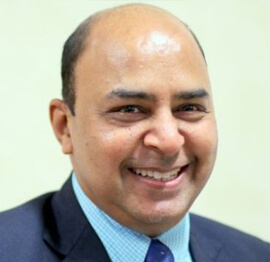
Avirag Jain
Director & CTO R Systems

Mahesh Chand
Founder C# Corner, CEO Mindcracker

Chris Gali
CEO & Co-Founder Graphite

Subinder Khurana
Chief Architect StoryProcess, Founder NASSCOM DeepTech Club

Bryan Rishforth
Investor, Chairman Graphite

Bryn Everson
Director Biz Dev Graphite
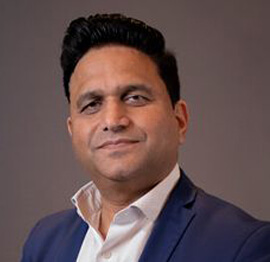
Raj Tiwari
Digital Transformation Leader, Futurist and Visionary

Joseph Guadagno
Microsoft MVP, Lead Quicken Loans

Nikita Sachdev
Entrepreneur, Blockchain Enthusiast & Advisor, Social Media Influencer

Doug Wagner
COO & Founder Adapt Technical Group

Ritesh Modi
Architect, Senior Evangelist, Cloud Architect

Crystal Wenrick
Director Communications Mindcracker

Allen O’Neill
Microsoft MVP, Consulting Engineer/Architect
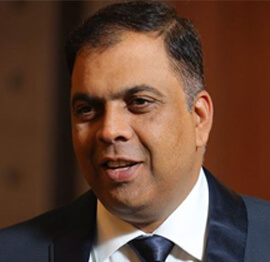
Praveen Kumar
CEO MCN Solutions

Chris Love
Founder Love2Dev, Microsoft MVP, Author

Sanjay Vyas
Microsoft Regional Director, Microsoft MVP, Founder & CEO SkillLabs Technologies

Veena Sarda
Deep Learning Consultant, Author

Sekhar Srinivasan
C# Corner MVP, Microsoft Certified Trainer, Pluralsight Author
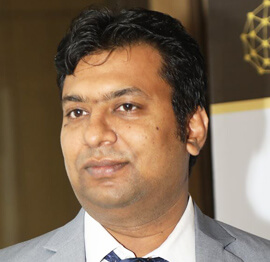
Lalit Bansal
Founder & CEO - EIY SYS

Navdeep Garg
CEO Revinfotech

Prakash Tripathi
Tech Manager/Leader, Microsoft MVP, Blogger
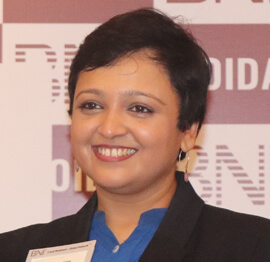
Bhavna Jain
Breakthrough Consultant

Naveen Sharma
Enterprise Architect, Leadership Coach, Author
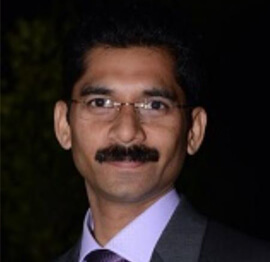
Vidya Vrat Agarwal
Principal Architect, Microsoft MVP, Author

Sheetal Agarwal
Founder Clownselors, Medical Clown, Trainer

Abhishek Kant
Founder GTM Catalyst

Vishnu Saran
Founder & CEO VoiceQube

Sandeep Soni
Founder & CEO Deccansoft, Microsoft Certified Trainer

Parveen Malik
AVP InfoSec & Vulnerability Management, Information Security Expert

Nitin Pandit
Microsoft MVP, Developer Evangelist, Author

Niloshima Srivastava
C# Corner MVP, Tech Architect, Trainer, Blogger

Bala Chirtsabesan
Senior Software Engineer at Microsoft, Author

Manoj Mittal
Sr. Technical Architect, C# Corner MVP, Author

Chandni Di
Co-Founder Voice of Slum

Vithal Wadje
Technical Lead, Microsoft MVP, Author

Shivam Ahuja
Founder SkillCircle, Business Mentor

Chervine Bhiwoo
Solution Architect, Microsoft MVP, Author

Saurabh Jain
Vice President Paytm, Founder Fun2Do Labs, Author

Vinay Solanki
Head IoT at Lenovo, Founder IoT-NCR

Anshu kumari
Founder Blockchainkids, Inventor, Trainer

Amit Singal
CEO Startup Buddy

Dev Pratap
Co-Founder & CEO Voice of Slum

Amey Vartak
Technology Consultant, Full Stack Developer, C# Corner MVP, Author

Viswanatha Swamy
Principal Software Engineer, C# Corner MVP, Author

Sanket Verma
Research Engineer @ Ballistics (Forensics) and Chair, PyData Delhi

Sourabh Somani
Lead Developer, Microsoft MVP, Author

Abhishek Mishra
Software Architect, C# Corner MVP, Author

Siddharth Vaghasia
Technical Consultant, C# Corner MVP, Blogger
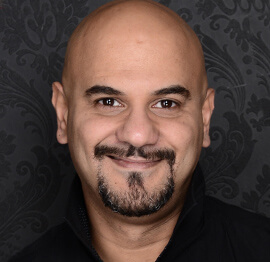
Bassam Alugili
Senior Software Specialist, Database Expert

S Ravi Kumar
Solution Architect, C# Corner MVP, Author

Sundaram Subramanian
Full Stack Developer, C# Corner MVP, Speaker

Deepesh Somani
Solution Architect, Microsoft MVP, Author

Debasis Saha
Technical Project Manager, C# Corner MVP, Blogger, Author
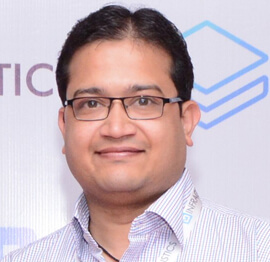
Vipul Jain
Software Architect, C# Corner MVP, Author

Akshay Patel
Technical Architect, Microsoft Certified Trainer, C# Corner MVP, Author

Stephen Simon
RPA Developer, Evangelist, Author
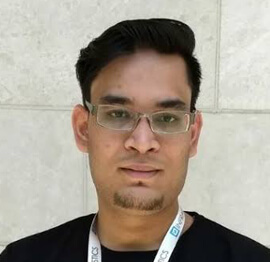
Vivek Sharma
Founder Kingster636, AR/VR Specialist

Jeetendra Gund
Technical Lead, C# Corner MVP, Author

Sujal Beniwal
AI Enthusiast, Student

M Viknaraj
Microsoft MVP, Azure Architect, Author

Prasham Sabadra
Software Architect, C# Corner MVP, Trainer, Author

Aakash Maurya
Senior Developer, C# Corner MVP, Speaker

Ankit Sharma
Senior Software Engineer, C# Corner MVP, Author

Mangesh Gaherwar
Team Lead, C# Corner MVP, Author

Viral Jain
Technical Consultant, C# Corner MVP, Author

Bhasker Das
Solution Architect, Evangelist

Manish Dwivedi
Associate Project Manager

Ck Nitin
Programmer, Author

Rohit Gupta
Technical Trainer, Author

Manish Tewatia
Full-stack Marketer, UX Designer

Bhavya Gaur
Technical Illustrator

Rohit Tomar
SEO/SMO Expert
Web Track
Cloud & Data Track
Dev Track
Registration & Breakfast
Future of Desktop Apps with JS (ElectronJs)
Nitin Pandit
Building Serverless Microservices Using Microsoft Azure
Vithal Wadje
Innovating RPA: A Robot for Every Person
Stephen Simon
Managing Cloud Storage Accounts using Logic Apps
Viknaraj Manogararajah
Data visualization using Python
Sekhar Srinivasan
Going Cross platform with AR Foundation
Vivek Sharma
Keynote
Managing your Azure dependencies in ASP.NET Core apps using VS
Bala Chirtsabesan
Securing Applications on Intelligent Azure
Abhishek Mishra
Getting started with Blazor the Framework of Future
S Ravi Kumar
Lunch
Build Progressive Web Apps using Angular 9
Debasis Saha
Build and deploy to any platform using Azure DevOps
Chervine Bhiwoo
Deep Dive in Azure Service Bus
Akshay Patel
Build a Native Mobile Application using React Native and JavaScript
Joseph Guadagno
Making sense of Web Job, Web Job SDK and Functions in Azure
Prakash Tripathi
CloudFront Distribution in AWS
Viral Jain
Tea Break
Introduction to PowerBI
Aakash Maurya
Build Advanced SPFx solutions with React and Graph API
Siddharth Vaghasia
Build Business Intelligence Analyst (BIA) Skills
Sundaram Subramanian
Deep dive of Power Platform – AI BUILDER
Prasham Sabadra
Panel 1
What's new in SharePoint development
Vipul Jain
Build a SSO (Single Sign On) based Native JavaScript application with Microsoft Identity within 10 minutes
Manoj Mittal
Panel 2
Applications and working of AI
Veena Sarda
Deploying serverless API's with .Net core 3.0 on AWS & Azure
Amey Vartak
Panel 3
Blockchain with .NET Core (Ark)
Anshu Kumari
Closing Note & Prize Distribution
Dev Track
Cloud Track
Architecture Track
Emerging Tech Track
Registration & Breakfast
Creating Full-Stack Web Apps Using Server-Side Blazor
Ankit Sharma
Real time face recognition with MS Cognitive Services
Niloshima Srivastava
Building Scalable APIs with GraphQL
Jeetendra Gund
Future of development with AI and Blockchain
Navdeep Garg
Debugging Tips and Tricks with Visual Studio 2019
Joseph Guadagno
Azure Containers
Abhishek Kant
Enterprise Architecture
Naveen Sharma
Bot Framework - learn it fast and look like a boss!
Allen O’Neill
Keynote
.Net Core & C# 8 Performance
David McCarter
Working with Azure kubernetes services
Ritesh Modi
Becoming an Architect
Vidyavrat Agarwal
Why Techies Need to Learn Product Management
Saurabh Jain
Lunch
Build a rules engine in .Net Core
Sanjay Vyas
Building CI and CD Pipeline using Azure DevOps
Sandeep Soni
Entity Framework Core - Tips and Tricks, Performance Optimization, and Tuning
Bassam Alugili
Hacking your way into Data Science
Sanket Verma
Speed up your .Net Core Website
Sourabh Somani
Azure
Magnus Mårtensson
Demystifying Open Distro for Elasticsearch
Suman Debnath
Future of Data
Shivam Ahuja
Tea Break
gRPC with C# and .Net Core
Mangesh Gaherwar
Panel 1
Essentials of Cloud security
Parveen Malik
Power platform and Dynamics 365
Deepesh Somani
Microservices - the gRPC Way
Viswanatha Swamy
Panel 2
Reserved
Reserved
Closing Note & Prize Distribution
Building a Logging Middleware with Stack Trace and Request ID in ASP.NET
Software teams across Australia, from fintechs in Sydney to resource platforms in Perth, depend on detailed observability to diagnose production issues. A well-instrumented ASP.NET application captures every layer of a request, from the incoming URL to the deepest database call, and ties them together with a single identifier. Logging middleware sits at the front of the request pipeline, decorating each call with context that survives across services and threads. Without this context, debugging a slow checkout or a broken integration resembles finding a needle in a haystack.
This guide walks through the design and implementation of a custom logging middleware that emits structured events, captures request correlation identifiers, and records stack traces when exceptions occur. The approach works with the standard ASP.NET Core pipeline and integrates with popular sinks such as Serilog, Application Insights, and Seq. Along the way, the article considers regulatory realities such as the Notifiable Data Breaches scheme under the Privacy Act 1988 and APRA CPS 234, both of which influence log design choices in production systems.
The role of structured logging in distributed ASP.NET systems
Structured logging replaces human-readable sentences with key-value pairs that machines can parse, index, and aggregate. In a typical ASP.NET Core application, the default logger writes plain text to the console or debug window, which is adequate for local development but limiting once the system scales. A request that travels through a web server, an API gateway, several microservices, and a database leaves a wake of disconnected log entries. Operators need a way to pull every event for a single user action into a coherent story.
Request identifiers solve this problem. A request ID, sometimes called a correlation ID, is a short token attached to the inbound HTTP request and copied into every log entry, metric, and outgoing call. When a customer in Adelaide reports that their insurance claim failed, the support team can search the logs for the identifier, and the entire journey appears in chronological sequence. Australian financial institutions regulated under APRA CPS 234 must demonstrate that they can reconstruct events leading to an incident, making correlation identifiers a practical requirement rather than a luxury.
Stack traces complement request IDs by showing the call path that produced an error. A captured stack trace reveals which method, file, and line number raised the exception, dramatically reducing the time engineers spend reproducing defects. When combined with structured properties such as UserId, TenantId, and Environment, the resulting log entry becomes a rich diagnostic record suitable for triage and post-incident review.
Designing the middleware pipeline
Middleware in ASP.NET Core forms a chain where each component can inspect, modify, short-circuit, or pass through the HTTP context. Logging middleware typically appears early in the chain so that subsequent components run inside its context. The standard pattern involves three responsibilities wrapped around the next delegate: pre-execution logging, exception capture, and post-execution logging.
Pre-execution logging records the start of the request, including the HTTP method, path, query string, and client IP. Exception capture wraps the next delegate in a try-catch block, records the exception with its stack trace, and rethrows or translates the error into an appropriate HTTP response. Post-execution logging records the outcome, including the status code and any computed metrics such as elapsed milliseconds.
Developers building SaaS products for the Australian market often need to honour state-level health data rules, particularly when serving customers in New South Wales and Victoria. Logging middleware provides a natural place to enrich requests with compliance metadata, such as a flag indicating whether Personally Identifiable Information appears in the payload. Adding this enrichment at the boundary ensures that downstream components inherit the context without needing to recompute it, and a clear correlation strategy pays dividends during incident response.
Capturing stack traces and request IDs
The implementation of the middleware uses three primary building blocks: a request ID generator, an exception capture routine, and a structured logger. The request ID generator reads the X-Request-ID header if the caller provided it, or generates a new GUID if the header is missing. Storing the identifier on the HttpContext.Items collection makes it available to downstream components without polluting the global log context.
The exception capture routine wraps the next delegate in a try-catch block. When an exception occurs, the middleware logs the event with the exception object, which includes the stack trace, and then either rethrows the exception or returns a sanitised error response. The choice depends on the application's error handling conventions and regulatory obligations. Healthcare applications subject to the My Health Records Act must avoid leaking patient identifiers into logs, so sanitisation becomes a critical step during exception capture.
Common logging libraries used in Australia-hosted ASP.NET applications differ in configuration surface, ecosystem, and performance characteristics:
| Library | Structured logging | Built-in sinks | Performance overhead | Typical use case |
|---|---|---|---|---|
| Serilog | Yes, first-class | Console, File, Seq, Application Insights | Low to moderate | Modern microservices, complex pipelines |
| NLog | Yes, via structured targets | Console, File, Database, Slack | Moderate | Enterprise .NET Framework and Core apps |
| log4net | Partial, requires configuration | File, SMTP, custom appenders | Low | Legacy systems, batch processing |
After selecting a library, the middleware uses the configured logger to emit events at appropriate levels. Information-level logging suits routine request flow, Warning-level logging handles recoverable errors, and Error-level logging captures unhandled exceptions. Including the request ID and stack trace in every event ensures that operators can correlate events across services during root cause analysis.
Integrating with Application Insights and distributed traces
Application Insights is a popular choice for teams operating in Australian regions, including the Azure Australia East and Australia Southeast data centres. The Application Insights SDK automatically captures request telemetry, dependency calls, and exceptions, but custom properties such as a business-specific tenant identifier require manual enrichment. The logging middleware reads the tenant identifier from the route or claims, attaches it to the current Activity, and includes it in every log entry.
Distributed tracing builds on the Activity class, which represents a unit of work in the OpenTelemetry ecosystem. ASP.NET Core automatically creates an Activity for each inbound request and propagates the trace context through HTTP headers. The middleware enriches the current Activity by setting tags such as request.path, request.method, and custom.application. These tags appear in the Application Insights transaction view and provide rich context for debugging multi-step operations.
For teams seeking further reading on related performance topics, the optimizing-linq-queries-for-large-datasets-in-c article explores techniques for reducing memory pressure when querying big data sets. Efficient queries reduce log volume because fewer exceptions occur, which keeps the logging pipeline responsive under load. The connection between query optimisation and observability is often direct in high-traffic systems.
Performance considerations and production best practices
Logging introduces overhead, and high-throughput applications must balance observability against latency. Asynchronous sinks buffer log events in memory and flush them to disk or the network in the background, reducing the time spent on I/O during the request. Serilog's async wrapper and NLog's async targets both provide this capability with minimal configuration, making them suitable for latency-critical services hosted in Australian regions.
Sampling provides another lever for controlling log volume. Instead of recording every event in detail, the middleware can log a percentage of requests in full and a summary of the remainder. Application Insights offers adaptive sampling that automatically adjusts the volume based on the application's traffic, ensuring that telemetry stays within budget while preserving diagnostic value for unusual events such as failed payments.
Security considerations deserve attention as well. Logs frequently contain sensitive data, including authentication tokens, personal identifiers, and payment details. The middleware should sanitise sensitive fields before logging, and access to log storage must follow the principle of least privilege. Australian government systems subject to the Protective Security Policy Framework require documented controls over log access, making sanitisation a compliance matter rather than a stylistic choice. Production deployments spanning multiple regions for disaster recovery rely on centralised log aggregation using tools such as Seq, Elasticsearch, or Azure Log Analytics, with retention policies aligned to the seven-year obligation for certain financial records under the Corporations Act 2001.








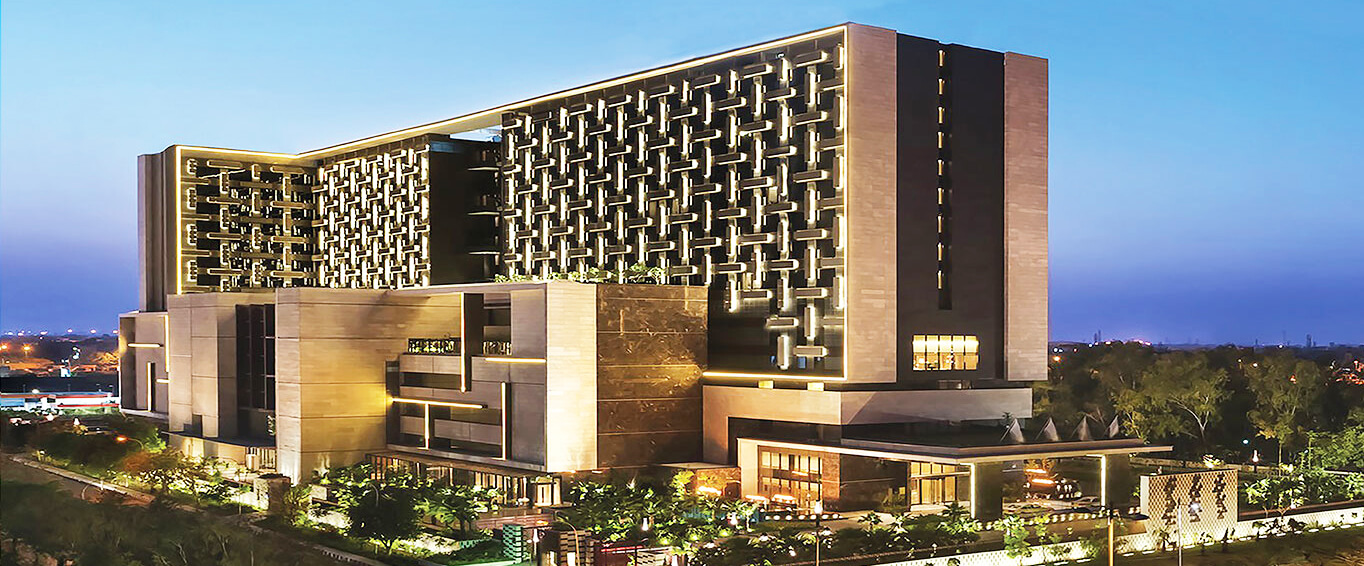
1, CBD, Maharaj Surajmal Road, Near Yamuna Sports Complex, Delhi, 110032




GENERAL QUERIES
Manish Tewatia
manish@csharpcon.com
+91-9718-431-042
TICKET QUERIES
Atul Gupta
conference@csharpcon.com
+91-9910-125-804