

Presents


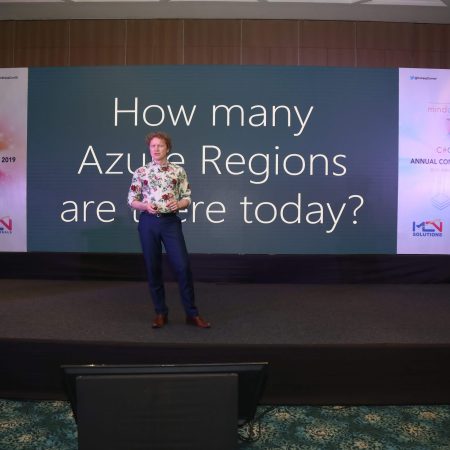
Magnus Mårtensson
Microsoft Regional Director, Azure MVP, CEO Loftysoft

Avirag Jain
Director & CTO R Systems

Mahesh Chand
Founder C# Corner, CEO Mindcracker

Chris Gali
CEO & Co-Founder Graphite

Subinder Khurana
Chief Architect StoryProcess, Founder NASSCOM DeepTech Club

Bryan Rishforth
Investor, Chairman Graphite

Bryn Everson
Director Biz Dev Graphite

Raj Tiwari
Digital Transformation Leader, Futurist and Visionary

Joseph Guadagno
Microsoft MVP, Lead Quicken Loans

Nikita Sachdev
Entrepreneur, Blockchain Enthusiast & Advisor, Social Media Influencer

Doug Wagner
COO & Founder Adapt Technical Group

Ritesh Modi
Architect, Senior Evangelist, Cloud Architect

Crystal Wenrick
Director Communications Mindcracker

Allen O’Neill
Microsoft MVP, Consulting Engineer/Architect

Praveen Kumar
CEO MCN Solutions

Chris Love
Founder Love2Dev, Microsoft MVP, Author

Sanjay Vyas
Microsoft Regional Director, Microsoft MVP, Founder & CEO SkillLabs Technologies

Veena Sarda
Deep Learning Consultant, Author

Sekhar Srinivasan
C# Corner MVP, Microsoft Certified Trainer, Pluralsight Author

Lalit Bansal
Founder & CEO - EIY SYS

Navdeep Garg
CEO Revinfotech

Prakash Tripathi
Tech Manager/Leader, Microsoft MVP, Blogger

Bhavna Jain
Breakthrough Consultant

Naveen Sharma
Enterprise Architect, Leadership Coach, Author

Vidya Vrat Agarwal
Principal Architect, Microsoft MVP, Author

Sheetal Agarwal
Founder Clownselors, Medical Clown, Trainer

Abhishek Kant
Founder GTM Catalyst

Vishnu Saran
Founder & CEO VoiceQube

Sandeep Soni
Founder & CEO Deccansoft, Microsoft Certified Trainer

Parveen Malik
AVP InfoSec & Vulnerability Management, Information Security Expert

Nitin Pandit
Microsoft MVP, Developer Evangelist, Author

Niloshima Srivastava
C# Corner MVP, Tech Architect, Trainer, Blogger

Bala Chirtsabesan
Senior Software Engineer at Microsoft, Author

Manoj Mittal
Sr. Technical Architect, C# Corner MVP, Author

Chandni Di
Co-Founder Voice of Slum

Vithal Wadje
Technical Lead, Microsoft MVP, Author

Shivam Ahuja
Founder SkillCircle, Business Mentor

Chervine Bhiwoo
Solution Architect, Microsoft MVP, Author

Saurabh Jain
Vice President Paytm, Founder Fun2Do Labs, Author

Vinay Solanki
Head IoT at Lenovo, Founder IoT-NCR

Anshu kumari
Founder Blockchainkids, Inventor, Trainer

Amit Singal
CEO Startup Buddy

Dev Pratap
Co-Founder & CEO Voice of Slum

Amey Vartak
Technology Consultant, Full Stack Developer, C# Corner MVP, Author

Viswanatha Swamy
Principal Software Engineer, C# Corner MVP, Author

Sanket Verma
Research Engineer @ Ballistics (Forensics) and Chair, PyData Delhi

Sourabh Somani
Lead Developer, Microsoft MVP, Author

Abhishek Mishra
Software Architect, C# Corner MVP, Author

Siddharth Vaghasia
Technical Consultant, C# Corner MVP, Blogger

Bassam Alugili
Senior Software Specialist, Database Expert

S Ravi Kumar
Solution Architect, C# Corner MVP, Author

Sundaram Subramanian
Full Stack Developer, C# Corner MVP, Speaker

Deepesh Somani
Solution Architect, Microsoft MVP, Author

Debasis Saha
Technical Project Manager, C# Corner MVP, Blogger, Author

Vipul Jain
Software Architect, C# Corner MVP, Author

Akshay Patel
Technical Architect, Microsoft Certified Trainer, C# Corner MVP, Author

Stephen Simon
RPA Developer, Evangelist, Author

Vivek Sharma
Founder Kingster636, AR/VR Specialist

Jeetendra Gund
Technical Lead, C# Corner MVP, Author

Sujal Beniwal
AI Enthusiast, Student

M Viknaraj
Microsoft MVP, Azure Architect, Author

Prasham Sabadra
Software Architect, C# Corner MVP, Trainer, Author

Aakash Maurya
Senior Developer, C# Corner MVP, Speaker

Ankit Sharma
Senior Software Engineer, C# Corner MVP, Author

Mangesh Gaherwar
Team Lead, C# Corner MVP, Author

Viral Jain
Technical Consultant, C# Corner MVP, Author

Bhasker Das
Solution Architect, Evangelist

Manish Dwivedi
Associate Project Manager

Ck Nitin
Programmer, Author

Rohit Gupta
Technical Trainer, Author

Manish Tewatia
Full-stack Marketer, UX Designer

Bhavya Gaur
Technical Illustrator

Rohit Tomar
SEO/SMO Expert
Web Track
Cloud & Data Track
Dev Track
Registration & Breakfast
Future of Desktop Apps with JS (ElectronJs)
Nitin Pandit
Building Serverless Microservices Using Microsoft Azure
Vithal Wadje
Innovating RPA: A Robot for Every Person
Stephen Simon
Managing Cloud Storage Accounts using Logic Apps
Viknaraj Manogararajah
Data visualization using Python
Sekhar Srinivasan
Going Cross platform with AR Foundation
Vivek Sharma
Keynote
Managing your Azure dependencies in ASP.NET Core apps using VS
Bala Chirtsabesan
Securing Applications on Intelligent Azure
Abhishek Mishra
Getting started with Blazor the Framework of Future
S Ravi Kumar
Lunch
Build Progressive Web Apps using Angular 9
Debasis Saha
Build and deploy to any platform using Azure DevOps
Chervine Bhiwoo
Deep Dive in Azure Service Bus
Akshay Patel
Build a Native Mobile Application using React Native and JavaScript
Joseph Guadagno
Making sense of Web Job, Web Job SDK and Functions in Azure
Prakash Tripathi
CloudFront Distribution in AWS
Viral Jain
Tea Break
Introduction to PowerBI
Aakash Maurya
Build Advanced SPFx solutions with React and Graph API
Siddharth Vaghasia
Build Business Intelligence Analyst (BIA) Skills
Sundaram Subramanian
Deep dive of Power Platform – AI BUILDER
Prasham Sabadra
Panel 1
What's new in SharePoint development
Vipul Jain
Build a SSO (Single Sign On) based Native JavaScript application with Microsoft Identity within 10 minutes
Manoj Mittal
Panel 2
Applications and working of AI
Veena Sarda
Deploying serverless API's with .Net core 3.0 on AWS & Azure
Amey Vartak
Panel 3
Blockchain with .NET Core (Ark)
Anshu Kumari
Closing Note & Prize Distribution
Dev Track
Cloud Track
Architecture Track
Emerging Tech Track
Registration & Breakfast
Creating Full-Stack Web Apps Using Server-Side Blazor
Ankit Sharma
Real time face recognition with MS Cognitive Services
Niloshima Srivastava
Building Scalable APIs with GraphQL
Jeetendra Gund
Future of development with AI and Blockchain
Navdeep Garg
Debugging Tips and Tricks with Visual Studio 2019
Joseph Guadagno
Azure Containers
Abhishek Kant
Enterprise Architecture
Naveen Sharma
Bot Framework - learn it fast and look like a boss!
Allen O’Neill
Keynote
.Net Core & C# 8 Performance
David McCarter
Working with Azure kubernetes services
Ritesh Modi
Becoming an Architect
Vidyavrat Agarwal
Why Techies Need to Learn Product Management
Saurabh Jain
Lunch
Build a rules engine in .Net Core
Sanjay Vyas
Building CI and CD Pipeline using Azure DevOps
Sandeep Soni
Entity Framework Core - Tips and Tricks, Performance Optimization, and Tuning
Bassam Alugili
Hacking your way into Data Science
Sanket Verma
Speed up your .Net Core Website
Sourabh Somani
Azure
Magnus Mårtensson
Demystifying Open Distro for Elasticsearch
Suman Debnath
Future of Data
Shivam Ahuja
Tea Break
gRPC with C# and .Net Core
Mangesh Gaherwar
Panel 1
Essentials of Cloud security
Parveen Malik
Power platform and Dynamics 365
Deepesh Somani
Microservices - the gRPC Way
Viswanatha Swamy
Panel 2
Reserved
Reserved
Closing Note & Prize Distribution
Optimizing LINQ Queries for Large Datasets in C#
Large datasets expose weaknesses that remain invisible during local development. A LINQ query may feel instantaneous against a few thousand rows, then become a serious performance bottleneck when it processes millions of records in an Azure-hosted production database. The difference usually comes from query translation, data movement, indexing, and how much work occurs in the application rather than the database.
For C# developers, LINQ offers a clear and expressive way to filter, project, group, and join data. Its convenience can also hide expensive operations such as client-side evaluation, unnecessary materialisation, repeated enumeration, and unbounded result sets. Understanding what the query provider does with each expression is essential when building responsive APIs and reliable background services.
This matters across Australian software teams, from financial platforms in Sydney and Melbourne to logistics systems supporting Perth mining operations and Brisbane distribution networks. Data volumes can grow quickly when applications collect telemetry, transaction histories, customer activity, or compliance records over several years.
The strongest improvements usually come from a small set of disciplined practices: keep filtering close to the data source, select only required columns, use suitable indexes, page deliberately, and measure the generated SQL. The following techniques apply to Entity Framework Core, LINQ-to-Objects, and many systems that expose an IQueryable<T> provider.
Understand Where LINQ Executes
LINQ syntax looks similar whether it is querying an in-memory collection or a relational database, but the execution model is different. IEnumerable<T> generally evaluates delegates in the .NET process, while IQueryable<T> builds an expression tree that a provider translates into SQL or another data-source query language.
This distinction determines where CPU, memory, and network bandwidth are consumed. With a database-backed collection, calling ToList() early retrieves the current result set and changes all later operations into in-memory processing. A filter applied before materialisation can become a SQL WHERE clause; the same filter applied afterwards may require every candidate row to cross the network first.
Deferred execution also means that declaring a query does not usually run it. Operations such as ToListAsync, FirstAsync, CountAsync, and SingleAsync trigger execution. Enumerating the same query multiple times can therefore issue multiple database calls, especially when the query is stored and reused without caching its results.
Filter, Project, And Limit Early
A large query should reduce rows and columns as soon as the business requirement allows. Apply selective Where clauses before sorting, grouping, or joining large sets. If a customer needs a list of active orders for the current month, there is little value in loading historical orders and filtering them in C#.
Projection is equally important. Selecting full entity objects can retrieve fields that the screen or API never uses, including large text columns, binary data, and navigation properties. A focused projection produces smaller result sets and often simpler SQL:
var orders = await db.Orders
    .AsNoTracking()
    .Where(o => o.CustomerId == customerId &&
                o.CreatedUtc >= monthStart &&
                o.Status == OrderStatus.Open)
    .OrderByDescending(o => o.CreatedUtc)
    .Select(o => new OrderSummary
    {
        Id = o.Id,
        Reference = o.Reference,
        CreatedUtc = o.CreatedUtc,
        Total = o.Total
    })
    .Take(100)
    .ToListAsync();
Take protects an endpoint from accidental unbounded responses, but it should be paired with a meaningful ordering. Without OrderBy, the database is free to return rows in an unspecified order, which can produce inconsistent pages and inefficient query plans.
Choose Indexes That Match Access Patterns
LINQ cannot compensate for an unsuitable database design. The database needs indexes that support the predicates, joins, and ordering generated by common application queries. For a query filtering by CustomerId and Status, an index beginning with those columns may be useful, although the best arrangement depends on selectivity and the database engine.
Review the SQL generated by Entity Framework Core and inspect the execution plan rather than guessing. An index can be ignored when a function is applied to an indexed column, when an implicit type conversion occurs, or when the predicate returns a very large proportion of the table. Expressions such as ToLower() or Contains() may also prevent efficient use of a conventional index, depending on the provider.
A covering index can reduce table lookups when it includes columns frequently returned by a read query. Indexes still have a cost: inserts and updates become more expensive, storage grows, and maintenance takes longer. This trade-off is particularly relevant for Australian retail, banking, and public-sector systems that process high write volumes alongside reporting traffic.
Avoid Accidental Client-Side Work
Methods that cannot be translated by the LINQ provider may force client-side evaluation or cause a runtime exception, depending on the Entity Framework Core version and query location. Custom C# methods, complex object comparisons, and unsupported date or string operations deserve close attention.
A common performance mistake is calling AsEnumerable() or ToList() before the expensive part of a query. Once the pipeline has moved into LINQ-to-Objects, the database can no longer optimise later filters or joins. Keep provider-translatable operations in the database portion, then materialise only when application-side logic is genuinely required.
Navigation properties can introduce a related problem. Iterating through parent entities and reading a child collection may trigger one query per parent, known as the N+1 query pattern. Use a projection, an intentional Include, or a grouped query based on the required shape. A projection is often preferable when the API needs a compact read model rather than tracked entity graphs.
| Technique | Typical benefit | Main risk | Suitable use |
|---|---|---|---|
Early Where filtering |
Fewer rows scanned and transferred | Poor selectivity may limit gains | Date, tenant, status, or ownership filters |
Narrow Select projection |
Lower memory and network usage | Missing fields may require redesign | API responses, reports, read-only screens |
AsNoTracking |
Less change-tracking overhead | Changes are not persisted automatically | Read-only queries |
| Keyset pagination | Stable performance on deep pages | Requires a suitable continuation key | Feeds, audit logs, transaction histories |
| Compiled queries | Lower repeated translation overhead | More code and limited flexibility | Hot paths with stable query shapes |
| Database-side aggregation | Less data sent to the application | Provider-specific translation issues | Counts, totals, grouped reporting |
Use Pagination That Scales
Offset pagination with Skip and Take is easy to implement, but deep offsets can become increasingly expensive. To return page 5000, a database may still need to locate and discard a large number of preceding rows before returning the requested records.
Keyset pagination, sometimes called seek pagination, uses the last item from the previous page as a boundary. If records are ordered by CreatedUtc and Id, the next query can request rows after that composite position. This approach avoids scanning discarded pages and gives more stable performance for long-running feeds.
var page = await db.Events
    .AsNoTracking()
    .Where(e => e.TenantId == tenantId &&
        (e.CreatedUtc < cursorDate ||
         (e.CreatedUtc == cursorDate && e.Id < cursorId)))
    .OrderByDescending(e => e.CreatedUtc)
    .ThenByDescending(e => e.Id)
    .Select(e => new EventRow
    {
        Id = e.Id,
        CreatedUtc = e.CreatedUtc,
        Type = e.Type
    })
    .Take(50)
    .ToListAsync();
The ordering columns should be indexed and deterministic. A unique tie-breaker such as an ID prevents duplicate or missing records when several rows share the same timestamp. This is useful for Australian delivery tracking, market activity streams, and support portals where users expect consistent scrolling through a large history.
Reduce Tracking And Repeated Work
Entity Framework Core tracks retrieved entities by default so that changes can be detected and saved. Tracking adds memory use and identity-resolution work, which can be unnecessary for read-only operations. AsNoTracking() is a straightforward optimisation for query endpoints, exports, dashboards, and search results.
Do not use it indiscriminately where entities will be updated through the same context. A tracked entity may be the simplest choice for a small edit workflow. For read-heavy services, however, no-tracking queries can reduce allocations and improve throughput, especially when many concurrent requests run in an Australian cloud region.
Repeated enumeration is another avoidable cost. If a query is needed several times, materialise it once when the result size is safe, or redesign the operation so that the database performs one aggregate query. Calling Count() and then enumerating the same unmaterialised query can produce two database requests; sometimes that is necessary, but it should be deliberate.
Practical Checks Before Release
- Inspect generated SQL for every high-volume query
- Confirm filters and joins have appropriate indexes
- Replace full entities with focused projection models
- Check that pagination has deterministic ordering
- Test with production-like row counts and data distribution
Improve Aggregation And Joins
Aggregations such as Count, Sum, Average, and grouped projections should usually execute in the database. Pulling millions of records into memory to calculate a total wastes network capacity and application resources. A query such as await db.Invoices.Where(...).SumAsync(i => i.Amount) allows the database engine to use its optimised aggregation mechanisms.
Joins can become expensive when both sides are large, especially if expressions prevent indexes from being used. Ensure join keys have compatible types and avoid transforming them within the join condition. Filtering each source before joining can reduce the intermediate result, provided the filter reflects the required business logic.
For complex reports, separate read models or database views may be more appropriate than forcing a transactional entity model to serve every analytical need. Australian organisations handling GST records, regulatory reporting, or energy usage data often benefit from a dedicated reporting store, scheduled summaries, or partitioned history rather than running heavy queries against the operational database.
Measure Performance In Production
A query that performs well in a developer database may behave differently with realistic cardinality, skewed values, concurrent users, and cloud latency. Benchmark with representative data volumes and include cold-cache and warm-cache scenarios. Local testing in Canberra or Adelaide does not reproduce every network and service characteristic of an Azure deployment in Australia East.
Capture duration, result size, database CPU, logical reads, timeout rates, and query frequency. Application Insights, database performance dashboards, and structured logging can reveal whether the problem is translation, an inefficient execution plan, connection contention, or excessive materialisation. Record query shape rather than sensitive customer data when logging in production.
Compiled queries can help when the same query shape executes very frequently and translation overhead is measurable. They are not a substitute for indexes or sensible projections. Likewise, asynchronous methods improve thread usage during I/O waits, but ToListAsync() does not make an inherently expensive query cheap.
Signals Worth Monitoring
- Queries with unusually high logical reads or duration
- Endpoints returning large or unpredictable payloads
- Repeated SQL commands within a single request
- Database timeouts during peak Australian business hours
Treat optimisation as an evidence-based cycle: reproduce the issue, inspect the generated SQL, examine the execution plan, change one meaningful variable, and measure again. A readable LINQ expression is valuable, but its real quality is determined by the work performed across the database, network, and .NET process. When those layers are considered together, C# applications can remain responsive as customer records, operational events, and business history continue to grow.


















1, CBD, Maharaj Surajmal Road, Near Yamuna Sports Complex, Delhi, 110032





GENERAL QUERIES
Manish Tewatia
manish@csharpcon.com
+91-9718-431-042
TICKET QUERIES
Atul Gupta
conference@csharpcon.com
+91-9910-125-804