

Presents


Magnus Mårtensson
Microsoft Regional Director, Azure MVP, CEO Loftysoft

Avirag Jain
Director & CTO R Systems

Mahesh Chand
Founder C# Corner, CEO Mindcracker

Chris Gali
CEO & Co-Founder Graphite

Subinder Khurana
Chief Architect StoryProcess, Founder NASSCOM DeepTech Club

Bryan Rishforth
Investor, Chairman Graphite

Bryn Everson
Director Biz Dev Graphite

Raj Tiwari
Digital Transformation Leader, Futurist and Visionary

Joseph Guadagno
Microsoft MVP, Lead Quicken Loans

Nikita Sachdev
Entrepreneur, Blockchain Enthusiast & Advisor, Social Media Influencer

Doug Wagner
COO & Founder Adapt Technical Group

Ritesh Modi
Architect, Senior Evangelist, Cloud Architect

Crystal Wenrick
Director Communications Mindcracker

Allen O’Neill
Microsoft MVP, Consulting Engineer/Architect

Praveen Kumar
CEO MCN Solutions

Chris Love
Founder Love2Dev, Microsoft MVP, Author

Sanjay Vyas
Microsoft Regional Director, Microsoft MVP, Founder & CEO SkillLabs Technologies

Veena Sarda
Deep Learning Consultant, Author

Sekhar Srinivasan
C# Corner MVP, Microsoft Certified Trainer, Pluralsight Author

Lalit Bansal
Founder & CEO - EIY SYS

Navdeep Garg
CEO Revinfotech

Prakash Tripathi
Tech Manager/Leader, Microsoft MVP, Blogger

Bhavna Jain
Breakthrough Consultant

Naveen Sharma
Enterprise Architect, Leadership Coach, Author

Vidya Vrat Agarwal
Principal Architect, Microsoft MVP, Author

Sheetal Agarwal
Founder Clownselors, Medical Clown, Trainer

Abhishek Kant
Founder GTM Catalyst

Vishnu Saran
Founder & CEO VoiceQube

Sandeep Soni
Founder & CEO Deccansoft, Microsoft Certified Trainer

Parveen Malik
AVP InfoSec & Vulnerability Management, Information Security Expert

Nitin Pandit
Microsoft MVP, Developer Evangelist, Author

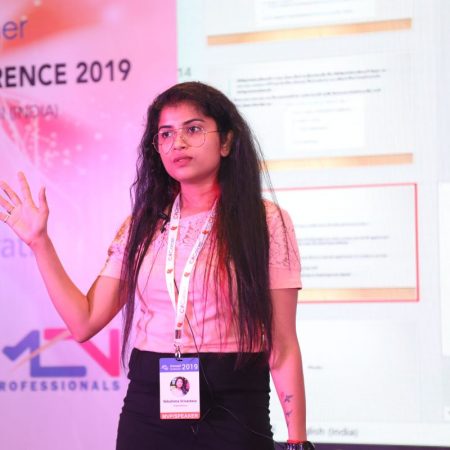
Niloshima Srivastava
C# Corner MVP, Tech Architect, Trainer, Blogger

Bala Chirtsabesan
Senior Software Engineer at Microsoft, Author

Manoj Mittal
Sr. Technical Architect, C# Corner MVP, Author

Chandni Di
Co-Founder Voice of Slum

Vithal Wadje
Technical Lead, Microsoft MVP, Author

Shivam Ahuja
Founder SkillCircle, Business Mentor

Chervine Bhiwoo
Solution Architect, Microsoft MVP, Author

Saurabh Jain
Vice President Paytm, Founder Fun2Do Labs, Author

Vinay Solanki
Head IoT at Lenovo, Founder IoT-NCR

Anshu kumari
Founder Blockchainkids, Inventor, Trainer

Amit Singal
CEO Startup Buddy

Dev Pratap
Co-Founder & CEO Voice of Slum

Amey Vartak
Technology Consultant, Full Stack Developer, C# Corner MVP, Author

Viswanatha Swamy
Principal Software Engineer, C# Corner MVP, Author

Sanket Verma
Research Engineer @ Ballistics (Forensics) and Chair, PyData Delhi

Sourabh Somani
Lead Developer, Microsoft MVP, Author

Abhishek Mishra
Software Architect, C# Corner MVP, Author

Siddharth Vaghasia
Technical Consultant, C# Corner MVP, Blogger

Bassam Alugili
Senior Software Specialist, Database Expert

S Ravi Kumar
Solution Architect, C# Corner MVP, Author

Sundaram Subramanian
Full Stack Developer, C# Corner MVP, Speaker

Deepesh Somani
Solution Architect, Microsoft MVP, Author

Debasis Saha
Technical Project Manager, C# Corner MVP, Blogger, Author

Vipul Jain
Software Architect, C# Corner MVP, Author

Akshay Patel
Technical Architect, Microsoft Certified Trainer, C# Corner MVP, Author

Stephen Simon
RPA Developer, Evangelist, Author

Vivek Sharma
Founder Kingster636, AR/VR Specialist

Jeetendra Gund
Technical Lead, C# Corner MVP, Author

Sujal Beniwal
AI Enthusiast, Student

M Viknaraj
Microsoft MVP, Azure Architect, Author

Prasham Sabadra
Software Architect, C# Corner MVP, Trainer, Author

Aakash Maurya
Senior Developer, C# Corner MVP, Speaker

Ankit Sharma
Senior Software Engineer, C# Corner MVP, Author

Mangesh Gaherwar
Team Lead, C# Corner MVP, Author

Viral Jain
Technical Consultant, C# Corner MVP, Author

Bhasker Das
Solution Architect, Evangelist

Manish Dwivedi
Associate Project Manager

Ck Nitin
Programmer, Author

Rohit Gupta
Technical Trainer, Author

Manish Tewatia
Full-stack Marketer, UX Designer

Bhavya Gaur
Technical Illustrator

Rohit Tomar
SEO/SMO Expert
Web Track
Cloud & Data Track
Dev Track
Registration & Breakfast
Future of Desktop Apps with JS (ElectronJs)
Nitin Pandit
Building Serverless Microservices Using Microsoft Azure
Vithal Wadje
Innovating RPA: A Robot for Every Person
Stephen Simon
Managing Cloud Storage Accounts using Logic Apps
Viknaraj Manogararajah
Data visualization using Python
Sekhar Srinivasan
Going Cross platform with AR Foundation
Vivek Sharma
Keynote
Managing your Azure dependencies in ASP.NET Core apps using VS
Bala Chirtsabesan
Securing Applications on Intelligent Azure
Abhishek Mishra
Getting started with Blazor the Framework of Future
S Ravi Kumar
Lunch
Build Progressive Web Apps using Angular 9
Debasis Saha
Build and deploy to any platform using Azure DevOps
Chervine Bhiwoo
Deep Dive in Azure Service Bus
Akshay Patel
Build a Native Mobile Application using React Native and JavaScript
Joseph Guadagno
Making sense of Web Job, Web Job SDK and Functions in Azure
Prakash Tripathi
CloudFront Distribution in AWS
Viral Jain
Tea Break
Introduction to PowerBI
Aakash Maurya
Build Advanced SPFx solutions with React and Graph API
Siddharth Vaghasia
Build Business Intelligence Analyst (BIA) Skills
Sundaram Subramanian
Deep dive of Power Platform – AI BUILDER
Prasham Sabadra
Panel 1
What's new in SharePoint development
Vipul Jain
Build a SSO (Single Sign On) based Native JavaScript application with Microsoft Identity within 10 minutes
Manoj Mittal
Panel 2
Applications and working of AI
Veena Sarda
Deploying serverless API's with .Net core 3.0 on AWS & Azure
Amey Vartak
Panel 3
Blockchain with .NET Core (Ark)
Anshu Kumari
Closing Note & Prize Distribution
Dev Track
Cloud Track
Architecture Track
Emerging Tech Track
Registration & Breakfast
Creating Full-Stack Web Apps Using Server-Side Blazor
Ankit Sharma
Real time face recognition with MS Cognitive Services
Niloshima Srivastava
Building Scalable APIs with GraphQL
Jeetendra Gund
Future of development with AI and Blockchain
Navdeep Garg
Debugging Tips and Tricks with Visual Studio 2019
Joseph Guadagno
Azure Containers
Abhishek Kant
Enterprise Architecture
Naveen Sharma
Bot Framework - learn it fast and look like a boss!
Allen O’Neill
Keynote
.Net Core & C# 8 Performance
David McCarter
Working with Azure kubernetes services
Ritesh Modi
Becoming an Architect
Vidyavrat Agarwal
Why Techies Need to Learn Product Management
Saurabh Jain
Lunch
Build a rules engine in .Net Core
Sanjay Vyas
Building CI and CD Pipeline using Azure DevOps
Sandeep Soni
Entity Framework Core - Tips and Tricks, Performance Optimization, and Tuning
Bassam Alugili
Hacking your way into Data Science
Sanket Verma
Speed up your .Net Core Website
Sourabh Somani
Azure
Magnus Mårtensson
Demystifying Open Distro for Elasticsearch
Suman Debnath
Future of Data
Shivam Ahuja
Tea Break
gRPC with C# and .Net Core
Mangesh Gaherwar
Panel 1
Essentials of Cloud security
Parveen Malik
Power platform and Dynamics 365
Deepesh Somani
Microservices - the gRPC Way
Viswanatha Swamy
Panel 2
Reserved
Reserved
Closing Note & Prize Distribution
Building a CRUD REST API with Minimal APIs in .NET 7
For developers heading to the C# Corner Annual Conference 2020, the modern .NET track is one of the most crowded rooms on the agenda. Attendees arrive after months of watching the .NET team strip away ceremony and boilerplate, and they want to know how little code they can ship while still running a production-grade service. Minimal APIs in .NET 7 deliver exactly that, replacing the heavy scaffolding of MVC controllers with a few lines of lambda-rich C#.
In Australia's software scene, this matters because teams in Sydney, Melbourne, Brisbane, and Perth are often small, lean, and asked to move fast for fintechs, agtech startups, and government digital projects. A single developer can stand up a service, deploy it to an Australian Azure region, and still leave the office in time to grab a flat white before the trams stop running in the CBD. The rest of this walkthrough shows how to build a CRUD REST API with Minimal APIs in .NET 7, from a blank dotnet new web project through to a hosted endpoint that respects local data residency.
Why Minimal APIs Matter for Modern .NET Teams
Minimal APIs arrived as a response to years of feedback from teams that wanted to write a tiny service without fighting the conventions of ASP.NET Core MVC. In .NET 7 the experience matured: route groups, typed results, filters, and OpenAPI support all moved out of preview and became first-class citizens. For a CRUD-style microservice, that translates into a single Program.cs file that anyone in the team can read on a Monday morning without skimming three layers of inheritance.
Australian engineering managers appreciate this for hiring reasons. The country imports senior .NET talent from the UK, India, and South-East Asia, and short onboarding time is a competitive edge. A new starter joining a Sydney-based health platform can read a Minimal API codebase over a coffee at a café in Surry Hills and contribute a new endpoint before the next standup. The same person, given a sprawling controller-heavy project, might spend their first week untangling attribute routes.
Setting Up the Project in .NET 7
Open a terminal on a Windows, macOS, or Linux machine and run dotnet new web -n Orders.Api -f net7.0. That single command scaffolds a project with Program.cs as the only meaningful file. Add a few NuGet packages: Microsoft.EntityFrameworkCore.Sqlite for local development and Microsoft.EntityFrameworkCore.SqlServer for production, plus Swashbuckle.AspNetCore if you want a quick OpenAPI surface for the conference demos.
Edit the csproj to enable nullable reference types and implicit usings, then add <TreatWarningsAsErrors>true</TreatWarningsAsErrors> to keep the codebase honest. Many Australian dev shops treat warnings as errors from day one because they operate under strict compliance regimes, especially in banking and federal government. With the project ready, the next step is to model the data the API will expose.
Defining the Data Model and Repository Layer
Even with Minimal APIs, the rule of keeping domain types separate from HTTP concerns still applies. Create an Order record with an Id, CustomerId, Amount, Currency, and CreatedAtUtc. Use a record type because value semantics play nicely with JSON serialisation, and they remove a whole class of bugs around accidental mutation. For an Australian fintech the Currency field will usually be AUD, but storing it explicitly leaves room for cross-border work.
A thin repository interface keeps things testable. Something like IOrderRepository with GetAllAsync, GetByIdAsync, AddAsync, UpdateAsync, and DeleteAsync is enough for a CRUD service. Register the implementation with the DI container in Program.cs, swapping the in-memory version for an Entity Framework Core implementation when the database is wired up. The combination of Minimal APIs and a clean repository is a sweet spot for solo developers in Adelaide building internal tools for local councils.
Implementing CRUD Endpoints with Minimal APIs
Route groups make the endpoint mapping readable. A block such as app.MapGroup("/orders").WithTags("Orders") followed by MapGet, MapPost, MapPut, and MapDelete lambdas is the entire HTTP surface for the resource. Each lambda takes an IOrderRepository parameter, resolves the request, and returns a Results.Ok(...), Results.Created(...), or Results.NotFound() typed result. This pattern is what attendees at C# Corner will see in many of the conference sessions, and it is the recommended way to build a CRUD REST API with Minimal APIs in .NET 7.
Before locking in the pattern, it helps to compare it with the alternatives that older .NET teams still maintain.
| Concern | Minimal APIs in .NET 7 | MVC controllers | Legacy Web API |
|---|---|---|---|
| Lines of code for hello-world endpoint | About 3 | About 15 | About 25 |
| Boilerplate per endpoint | Low | Medium | High |
| Built-in OpenAPI generation | Yes | Yes | No, manual |
| Filters and middleware support | Yes | Yes | Limited |
| Best fit for the workload | Microservices and CRUD | Full web applications | Legacy maintenance |
Filters attach cross-cutting behaviour without polluting the handlers. A simple ValidateFilter checks ModelState before the lambda runs and short-circuits with a 400 response. A logging filter wraps the endpoint in a stopwatch and emits a structured log entry with the route template and elapsed milliseconds, which is gold for ops teams in Brisbane watching latency during peak AEST trading hours. Adding WithOpenApi() and WithName(...) at this stage sets up the service for free Swagger documentation and link generation.
Validation, Error Handling, and Observability
Minimal APIs play well with the same validation ecosystem that MVC developers already know. Plug in FluentValidation, register validators as transient services, and call validator.ValidateAsync inside the POST and PUT handlers. Return a Results.ValidationProblem(errors) so clients receive a standard RFC 7807 problem-details payload. Localised error messages can be sourced from IStringLocalizer for Australian English, which is occasionally useful when a user sees "colour" instead of "color" in their validation response.
For error handling, an exception-handling middleware that wraps app.UseExceptionHandler(...) keeps stack traces out of HTTP responses in production. Pair this with Serilog or the built-in Microsoft.Extensions.Logging and a sink such as Seq or Application Insights. Australian teams often default to Application Insights because it ships with the Azure subscription already negotiated through the enterprise agreement, and the Melbourne-based Microsoft team has been pushing adoption hard with local partners.
Testing Locally and in CI
Run dotnet run and curl the endpoints. A smoke test suite using WebApplicationFactory<Program> and xUnit gives end-to-end coverage that boots the API in-memory and exercises every route. Australian teams with a strong financial-services presence, including the big four banks' engineering outposts in Sydney, treat integration tests as non-negotiable. The cost of skipping them is a Sev-1 incident that hits the ATO-fed reconciliation pipelines at 9 a.m. AEDT.
Wire the same test project into a GitHub Actions or Azure DevOps pipeline. Cache the NuGet packages by hashing the csproj, restore on a hosted Linux agent, run dotnet test, and publish coverage to Coveralls or SonarQube. Set a quality gate of 80 percent line coverage for the repository and handler code; relax it only for the Program.cs composition root, which is mostly configuration.
Deploying and Operating in the Australian Cloud
Deployment decisions in Australia lean heavily on latency and data sovereignty. The Australia East (Sydney) and Australia Southeast (Melbourne) regions cover most workloads, with Australia Central (Canberra) reserved for government and defence tenants that require specific certifications. Pick a region close to the user base, then add a second region only when the business case is solid; cross-region replication is not free, and Azure bandwidth between Sydney and Melbourne can rack up surprising bills on a usage-based invoice.
Pair the deployment with Azure Cosmos DB when the workload needs global distribution, low-latency reads, or elastic throughput. The official write-up on Azure Cosmos DB globally walks through partition keys, consistency levels, and change-feed patterns that line up neatly with Minimal API handlers. For workloads that stay inside Australia, a SQL database in Australia East plus a Basic App Service plan is enough for a CRUD service handling a few thousand requests per minute.
Before shipping, tick off the operational habits that separate a demo from a real service:
- Enable HTTPS redirection, HSTS, and a sensible CORS policy from the first deployment.
- Ship OpenAPI metadata through Swashbuckle or NSwag, and publish a client package for downstream .NET teams.
- Wire health checks for liveness and readiness, including a database ping, and expose them at
/health/liveand/health/ready. - Add an integration test that posts a real order and reads it back, so the happy path stays green across refactors.
- Configure structured logging with correlation IDs that flow from the gateway all the way to repository calls.
- Use
dotnet user-secretsor Azure Key Vault for connection strings, never check secrets into git. - Document the runbook for on-call, including how to roll back an App Service slot swap during a Sydney trading-day incident.
These habits matter even more in the Australian market, where compliance teams routinely request SOC 2 reports, IRAP assessments, and APRA CPS 234 evidence. A service that ticks the boxes on observability, secret management, and deployment hygiene sails through vendor onboarding, while a sloppy one spends three months answering questionnaires.









1, CBD, Maharaj Surajmal Road, Near Yamuna Sports Complex, Delhi, 110032





GENERAL QUERIES
Manish Tewatia
manish@csharpcon.com
+91-9718-431-042
TICKET QUERIES
Atul Gupta
conference@csharpcon.com
+91-9910-125-804