

Presents


Magnus Mårtensson
Microsoft Regional Director, Azure MVP, CEO Loftysoft
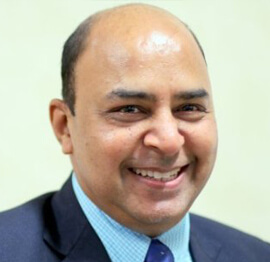
Avirag Jain
Director & CTO R Systems

Mahesh Chand
Founder C# Corner, CEO Mindcracker

Chris Gali
CEO & Co-Founder Graphite

Subinder Khurana
Chief Architect StoryProcess, Founder NASSCOM DeepTech Club

Bryan Rishforth
Investor, Chairman Graphite

Bryn Everson
Director Biz Dev Graphite
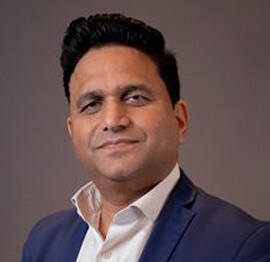
Raj Tiwari
Digital Transformation Leader, Futurist and Visionary

Joseph Guadagno
Microsoft MVP, Lead Quicken Loans

Nikita Sachdev
Entrepreneur, Blockchain Enthusiast & Advisor, Social Media Influencer

Doug Wagner
COO & Founder Adapt Technical Group

Ritesh Modi
Architect, Senior Evangelist, Cloud Architect

Crystal Wenrick
Director Communications Mindcracker

Allen O’Neill
Microsoft MVP, Consulting Engineer/Architect
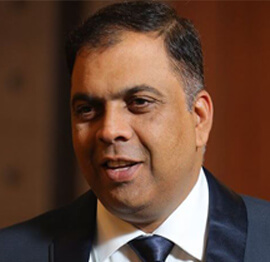
Praveen Kumar
CEO MCN Solutions

Chris Love
Founder Love2Dev, Microsoft MVP, Author

Sanjay Vyas
Microsoft Regional Director, Microsoft MVP, Founder & CEO SkillLabs Technologies

Veena Sarda
Deep Learning Consultant, Author

Sekhar Srinivasan
C# Corner MVP, Microsoft Certified Trainer, Pluralsight Author
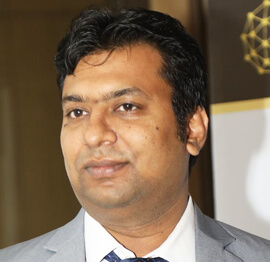
Lalit Bansal
Founder & CEO - EIY SYS

Navdeep Garg
CEO Revinfotech

Prakash Tripathi
Tech Manager/Leader, Microsoft MVP, Blogger
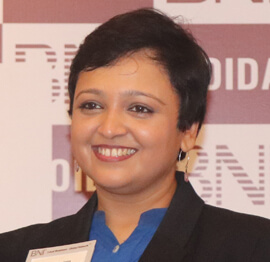
Bhavna Jain
Breakthrough Consultant

Naveen Sharma
Enterprise Architect, Leadership Coach, Author

Vidya Vrat Agarwal
Principal Architect, Microsoft MVP, Author

Sheetal Agarwal
Founder Clownselors, Medical Clown, Trainer

Abhishek Kant
Founder GTM Catalyst

Vishnu Saran
Founder & CEO VoiceQube

Sandeep Soni
Founder & CEO Deccansoft, Microsoft Certified Trainer

Parveen Malik
AVP InfoSec & Vulnerability Management, Information Security Expert

Nitin Pandit
Microsoft MVP, Developer Evangelist, Author

Niloshima Srivastava
C# Corner MVP, Tech Architect, Trainer, Blogger

Bala Chirtsabesan
Senior Software Engineer at Microsoft, Author

Manoj Mittal
Sr. Technical Architect, C# Corner MVP, Author

Chandni Di
Co-Founder Voice of Slum

Vithal Wadje
Technical Lead, Microsoft MVP, Author

Shivam Ahuja
Founder SkillCircle, Business Mentor

Chervine Bhiwoo
Solution Architect, Microsoft MVP, Author

Saurabh Jain
Vice President Paytm, Founder Fun2Do Labs, Author

Vinay Solanki
Head IoT at Lenovo, Founder IoT-NCR

Anshu kumari
Founder Blockchainkids, Inventor, Trainer

Amit Singal
CEO Startup Buddy

Dev Pratap
Co-Founder & CEO Voice of Slum

Amey Vartak
Technology Consultant, Full Stack Developer, C# Corner MVP, Author

Viswanatha Swamy
Principal Software Engineer, C# Corner MVP, Author

Sanket Verma
Research Engineer @ Ballistics (Forensics) and Chair, PyData Delhi

Sourabh Somani
Lead Developer, Microsoft MVP, Author

Abhishek Mishra
Software Architect, C# Corner MVP, Author

Siddharth Vaghasia
Technical Consultant, C# Corner MVP, Blogger

Bassam Alugili
Senior Software Specialist, Database Expert

S Ravi Kumar
Solution Architect, C# Corner MVP, Author

Sundaram Subramanian
Full Stack Developer, C# Corner MVP, Speaker

Deepesh Somani
Solution Architect, Microsoft MVP, Author

Debasis Saha
Technical Project Manager, C# Corner MVP, Blogger, Author

Vipul Jain
Software Architect, C# Corner MVP, Author

Akshay Patel
Technical Architect, Microsoft Certified Trainer, C# Corner MVP, Author

Stephen Simon
RPA Developer, Evangelist, Author

Vivek Sharma
Founder Kingster636, AR/VR Specialist

Jeetendra Gund
Technical Lead, C# Corner MVP, Author

Sujal Beniwal
AI Enthusiast, Student

M Viknaraj
Microsoft MVP, Azure Architect, Author

Prasham Sabadra
Software Architect, C# Corner MVP, Trainer, Author

Aakash Maurya
Senior Developer, C# Corner MVP, Speaker

Ankit Sharma
Senior Software Engineer, C# Corner MVP, Author

Mangesh Gaherwar
Team Lead, C# Corner MVP, Author

Viral Jain
Technical Consultant, C# Corner MVP, Author
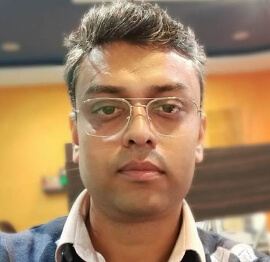
Bhasker Das
Solution Architect, Evangelist

Manish Dwivedi
Associate Project Manager

Ck Nitin
Programmer, Author

Rohit Gupta
Technical Trainer, Author

Manish Tewatia
Full-stack Marketer, UX Designer

Bhavya Gaur
Technical Illustrator

Rohit Tomar
SEO/SMO Expert
Web Track
Cloud & Data Track
Dev Track
Registration & Breakfast
Future of Desktop Apps with JS (ElectronJs)
Nitin Pandit
Building Serverless Microservices Using Microsoft Azure
Vithal Wadje
Innovating RPA: A Robot for Every Person
Stephen Simon
Managing Cloud Storage Accounts using Logic Apps
Viknaraj Manogararajah
Data visualization using Python
Sekhar Srinivasan
Going Cross platform with AR Foundation
Vivek Sharma
Keynote
Managing your Azure dependencies in ASP.NET Core apps using VS
Bala Chirtsabesan
Securing Applications on Intelligent Azure
Abhishek Mishra
Getting started with Blazor the Framework of Future
S Ravi Kumar
Lunch
Build Progressive Web Apps using Angular 9
Debasis Saha
Build and deploy to any platform using Azure DevOps
Chervine Bhiwoo
Deep Dive in Azure Service Bus
Akshay Patel
Build a Native Mobile Application using React Native and JavaScript
Joseph Guadagno
Making sense of Web Job, Web Job SDK and Functions in Azure
Prakash Tripathi
CloudFront Distribution in AWS
Viral Jain
Tea Break
Introduction to PowerBI
Aakash Maurya
Build Advanced SPFx solutions with React and Graph API
Siddharth Vaghasia
Build Business Intelligence Analyst (BIA) Skills
Sundaram Subramanian
Deep dive of Power Platform – AI BUILDER
Prasham Sabadra
Panel 1
What's new in SharePoint development
Vipul Jain
Build a SSO (Single Sign On) based Native JavaScript application with Microsoft Identity within 10 minutes
Manoj Mittal
Panel 2
Applications and working of AI
Veena Sarda
Deploying serverless API's with .Net core 3.0 on AWS & Azure
Amey Vartak
Panel 3
Blockchain with .NET Core (Ark)
Anshu Kumari
Closing Note & Prize Distribution
Dev Track
Cloud Track
Architecture Track
Emerging Tech Track
Registration & Breakfast
Creating Full-Stack Web Apps Using Server-Side Blazor
Ankit Sharma
Real time face recognition with MS Cognitive Services
Niloshima Srivastava
Building Scalable APIs with GraphQL
Jeetendra Gund
Future of development with AI and Blockchain
Navdeep Garg
Debugging Tips and Tricks with Visual Studio 2019
Joseph Guadagno
Azure Containers
Abhishek Kant
Enterprise Architecture
Naveen Sharma
Bot Framework - learn it fast and look like a boss!
Allen O’Neill
Keynote
.Net Core & C# 8 Performance
David McCarter
Working with Azure kubernetes services
Ritesh Modi
Becoming an Architect
Vidyavrat Agarwal
Why Techies Need to Learn Product Management
Saurabh Jain
Lunch
Build a rules engine in .Net Core
Sanjay Vyas
Building CI and CD Pipeline using Azure DevOps
Sandeep Soni
Entity Framework Core - Tips and Tricks, Performance Optimization, and Tuning
Bassam Alugili
Hacking your way into Data Science
Sanket Verma
Speed up your .Net Core Website
Sourabh Somani
Azure
Magnus Mårtensson
Demystifying Open Distro for Elasticsearch
Suman Debnath
Future of Data
Shivam Ahuja
Tea Break
gRPC with C# and .Net Core
Mangesh Gaherwar
Panel 1
Essentials of Cloud security
Parveen Malik
Power platform and Dynamics 365
Deepesh Somani
Microservices - the gRPC Way
Viswanatha Swamy
Panel 2
Reserved
Reserved
Closing Note & Prize Distribution
Implementing Secure Password Hashing with BCrypt in C
Password credentials are among the most frequently attacked parts of an application estate. If a database is copied, weak password storage can let attackers test guesses at enormous speed. A slow, salted password hash changes that economics by making each attempted password materially more expensive. It also gives C services a portable format that can move between operating systems and languages.
BCrypt offers per-password salting, a configurable work factor and an intentionally expensive key schedule, so stolen hashes are harder to attack with GPUs. For software professionals working across cloud, DevOps, data and web tracks at the C# Corner Annual Conference 2020, the real work extends beyond copying a snippet: teams must control entropy, input length, cost, storage and verification as one authentication lifecycle.
Why BCrypt Belongs in Password Storage
BCrypt was designed for password storage rather than general-purpose integrity checks. Its salt prevents identical passwords from producing identical hashes, while its work factor makes each verification deliberately costly. The encoded result contains the algorithm version, cost and salt, allowing the login service to verify old records and recognise when a password should be rehashed. Unlike SHA-256 or MD5, BCrypt is not designed to be calculated in microseconds.
For Australian organisations subject to the Privacy Act 1988, APP 11 requires reasonable security controls for personal information, and OAIC guidance expects authentication mechanisms to be proportionate to the risk. A managed hashing policy supports that obligation by limiting offline cracking without creating an expensive bespoke protocol. Teams should document the approved algorithm, cost floor, migration process and responsibility for reviewing it.
The name creates a serious implementation trap: Windows exposes a provider-based BCrypt API for general cryptographic primitives, but that API does not implement the bcrypt password algorithm. Passing a password to BCryptHashData would therefore produce a fast general-purpose digest, not a suitable password hash. New designs may consider Argon2id, while BCrypt remains a mature choice where C portability and established hash interoperability matter.
Building a Portable C Foundation
A C project should use a maintained implementation of the OpenBSD bcrypt algorithm, commonly exposed through bcrypt_gensalt, bcrypt_hashpw and bcrypt_checkpw. Package it through the normal build and dependency process rather than copying cryptographic code into the repository. Pin the reviewed version, build it on every supported platform, and test the resulting binary against published bcrypt vectors before releasing it.
The basic registration flow is compact, but the surrounding error handling still matters:
#include <bcrypt.h>
#include <stddef.h>

char salt[BCRYPT_HASHSIZE];
char stored_hash[BCRYPT_HASHSIZE];

if (bcrypt_gensalt(12, "$2b$", salt, sizeof salt) != 0) {
    /* Handle randomness or allocation failure. */
}

if (bcrypt_hashpw(password, salt, stored_hash) != 0) {
    /* Handle hashing failure. */
}

if (bcrypt_checkpw(password, stored_hash) == 0) {
    /* The password matched. */
}
bcrypt_gensalt creates the salt and encodes the selected cost. The C API accepts a null-terminated password, so the application must also enforce the byte limit and encoding rules described later. Keep the output buffer at the implementation’s documented size, and distinguish allocation or randomness failure from a rejected password.
A maintained library should source salt from the operating system’s cryptographically secure random generator. Do not replace that path with rand() or timestamp-based data. Where an application needs separate random values, use getrandom on Linux or BCryptGenRandom on Windows; those APIs generate random bytes, not bcrypt hashes. Run compiler warnings, address and undefined-behaviour sanitizers in test builds, and keep the dependency patched.
| Option | Cost characteristics | Offline attack resistance | Password-handling note |
|---|---|---|---|
| BCrypt | Configurable work factor with memory-hard setup | Strong against parallel guessing | 72-byte input boundary and mature C support |
| Argon2id | Tunable memory, iterations and parallelism | Very strong with properly tuned memory | Strong choice for new systems with suitable runtime support |
| PBKDF2-HMAC-SHA-256 | Tunable iterations | Good, but easier to parallelise | Widely interoperable and comparatively easy to integrate |
| SHA-256 | Minimal computational cost | Poor | Unsuitable for password storage |
Hashing Passwords Under Explicit Rules
Define the password contract before hashing. Accept UTF-8, reject embedded null bytes, and reject inputs longer than 72 bytes because BCrypt ignores material beyond that boundary. Count bytes rather than visible characters: 72 bytes can represent fewer than 72 Unicode characters. Decide explicitly whether canonically equivalent Unicode forms are treated as equal, and apply the same rule during registration and login. Never pre-hash with an unkeyed digest to bypass the limit.
Choose the cost from measurements on production-class hardware, not a developer’s laptop. A cost of 12 represents 2^12 rounds and is a common starting point, but latency and throughput vary sharply across ARM servers, virtual machines and cloud regions. Select the highest cost that meets the authentication service’s latency budget, benchmark it under concurrent login load, and review it when hardware changes. The cost is stored in every hash, so it can be raised without an immediate mass reset.
Use the $2b$ form for new BCrypt hashes and accept only reviewed variants during verification. Store the encoded hash as one opaque value; do not split the salt from the result in application code. Its 128-bit salt, cost value and digest travel together in a compact ASCII string. A pepper can add a secret held in a managed key vault, but it introduces rotation and availability responsibilities and must be applied consistently. Without a documented pepper design, the random salt and tuned cost are safer than improvised secret handling.
Verifying Credentials Without Leaking Timing
Verification should use the library’s password-checking routine rather than strcmp or a home-grown digest comparison. bcrypt_checkpw returns success only when the candidate matches and internally applies the cost recorded in the stored hash. A mismatch and a malformed record should reach the caller as the same generic authentication failure, while diagnostic detail remains in protected logs.
For an unknown account, run the candidate through a fixed dummy hash at the current cost. This keeps the expensive work and response path similar to a known account without allowing attackers to distinguish valid usernames through timing. Apply rate limits per account and source address, but avoid permanent lockouts that can be exploited to deny service. Add multi-factor authentication or passkeys for sensitive actions, especially where password fallback remains exposed.
Password resets need a separate, carefully controlled path. Generate a high-entropy reset token with a CSPRNG, store only its digest, make it single-use and short-lived, and revoke active sessions after a successful reset. Australian banks and fintechs operating under APRA CPS 230 may add stronger assurance requirements beyond this baseline. Credential-stuffing controls and breached-password screening can further reject known risky credentials without revealing whether a particular account exists.
Hardening Authentication Across Production Services
Treat password material as sensitive throughout its lifecycle. Remove candidate buffers after use with a platform-aware memory-clearing function, although application code cannot guarantee that a compiler or operating system never copies them. Disable core dumps around authentication workers, redact request bodies in tracing, and keep plaintext out of logs, metrics and exception messages. Rate limiting must be paired with capacity limits so an attack on BCrypt cannot exhaust the entire login tier.
Many Australian services run across Sydney and Melbourne, with Microsoft Azure regions commonly mapped to Australia East and Australia Southeast. Place authentication workers near users and protect each region consistently, then test failover because the same cost can consume different capacity on different hardware. Store any pepper in Azure Key Vault or an equivalent secrets service, cache it only in protected process memory, and plan how authentication behaves during a secrets-service outage.
C# applications can call this native code through P/Invoke, and Microsoft’s cooperative cancellation guidance is useful when background workers must stop accepting jobs while allowing an in-flight hash to finish before resources are released. Migration should be staged: classify existing hashes, rehash on successful login when policy permits, force resets for weak or unsalted records, and monitor fallback paths. ASD cryptographic guidance and ACSC advice can support the wider control review, while the C# Corner conference’s DevOps and cloud material offers practical context for operating the control as an owned service.








1, CBD, Maharaj Surajmal Road, Near Yamuna Sports Complex, Delhi, 110032





GENERAL QUERIES
Manish Tewatia
manish@csharpcon.com
+91-9718-431-042
TICKET QUERIES
Atul Gupta
conference@csharpcon.com
+91-9910-125-804