

Presents


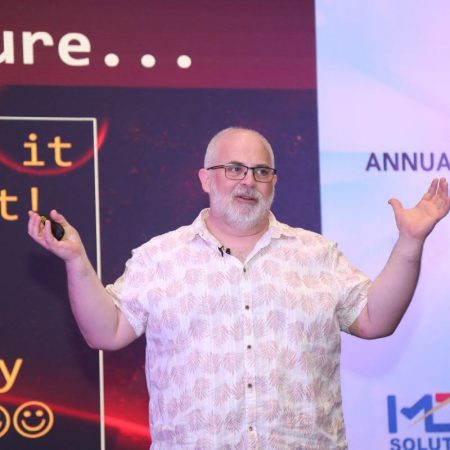
Magnus Mårtensson
Microsoft Regional Director, Azure MVP, CEO Loftysoft

Avirag Jain
Director & CTO R Systems

Mahesh Chand
Founder C# Corner, CEO Mindcracker

Chris Gali
CEO & Co-Founder Graphite

Subinder Khurana
Chief Architect StoryProcess, Founder NASSCOM DeepTech Club

Bryan Rishforth
Investor, Chairman Graphite

Bryn Everson
Director Biz Dev Graphite

Raj Tiwari
Digital Transformation Leader, Futurist and Visionary

Joseph Guadagno
Microsoft MVP, Lead Quicken Loans

Nikita Sachdev
Entrepreneur, Blockchain Enthusiast & Advisor, Social Media Influencer

Doug Wagner
COO & Founder Adapt Technical Group

Ritesh Modi
Architect, Senior Evangelist, Cloud Architect

Crystal Wenrick
Director Communications Mindcracker

Allen O’Neill
Microsoft MVP, Consulting Engineer/Architect

Praveen Kumar
CEO MCN Solutions

Chris Love
Founder Love2Dev, Microsoft MVP, Author

Sanjay Vyas
Microsoft Regional Director, Microsoft MVP, Founder & CEO SkillLabs Technologies

Veena Sarda
Deep Learning Consultant, Author

Sekhar Srinivasan
C# Corner MVP, Microsoft Certified Trainer, Pluralsight Author

Lalit Bansal
Founder & CEO - EIY SYS

Navdeep Garg
CEO Revinfotech

Prakash Tripathi
Tech Manager/Leader, Microsoft MVP, Blogger

Bhavna Jain
Breakthrough Consultant

Naveen Sharma
Enterprise Architect, Leadership Coach, Author

Vidya Vrat Agarwal
Principal Architect, Microsoft MVP, Author

Sheetal Agarwal
Founder Clownselors, Medical Clown, Trainer

Abhishek Kant
Founder GTM Catalyst

Vishnu Saran
Founder & CEO VoiceQube

Sandeep Soni
Founder & CEO Deccansoft, Microsoft Certified Trainer

Parveen Malik
AVP InfoSec & Vulnerability Management, Information Security Expert

Nitin Pandit
Microsoft MVP, Developer Evangelist, Author

Niloshima Srivastava
C# Corner MVP, Tech Architect, Trainer, Blogger

Bala Chirtsabesan
Senior Software Engineer at Microsoft, Author

Manoj Mittal
Sr. Technical Architect, C# Corner MVP, Author

Chandni Di
Co-Founder Voice of Slum

Vithal Wadje
Technical Lead, Microsoft MVP, Author

Shivam Ahuja
Founder SkillCircle, Business Mentor

Chervine Bhiwoo
Solution Architect, Microsoft MVP, Author

Saurabh Jain
Vice President Paytm, Founder Fun2Do Labs, Author

Vinay Solanki
Head IoT at Lenovo, Founder IoT-NCR

Anshu kumari
Founder Blockchainkids, Inventor, Trainer

Amit Singal
CEO Startup Buddy

Dev Pratap
Co-Founder & CEO Voice of Slum

Amey Vartak
Technology Consultant, Full Stack Developer, C# Corner MVP, Author

Viswanatha Swamy
Principal Software Engineer, C# Corner MVP, Author

Sanket Verma
Research Engineer @ Ballistics (Forensics) and Chair, PyData Delhi

Sourabh Somani
Lead Developer, Microsoft MVP, Author

Abhishek Mishra
Software Architect, C# Corner MVP, Author

Siddharth Vaghasia
Technical Consultant, C# Corner MVP, Blogger

Bassam Alugili
Senior Software Specialist, Database Expert

S Ravi Kumar
Solution Architect, C# Corner MVP, Author

Sundaram Subramanian
Full Stack Developer, C# Corner MVP, Speaker

Deepesh Somani
Solution Architect, Microsoft MVP, Author

Debasis Saha
Technical Project Manager, C# Corner MVP, Blogger, Author

Vipul Jain
Software Architect, C# Corner MVP, Author

Akshay Patel
Technical Architect, Microsoft Certified Trainer, C# Corner MVP, Author

Stephen Simon
RPA Developer, Evangelist, Author

Vivek Sharma
Founder Kingster636, AR/VR Specialist

Jeetendra Gund
Technical Lead, C# Corner MVP, Author

Sujal Beniwal
AI Enthusiast, Student

M Viknaraj
Microsoft MVP, Azure Architect, Author

Prasham Sabadra
Software Architect, C# Corner MVP, Trainer, Author

Aakash Maurya
Senior Developer, C# Corner MVP, Speaker

Ankit Sharma
Senior Software Engineer, C# Corner MVP, Author

Mangesh Gaherwar
Team Lead, C# Corner MVP, Author

Viral Jain
Technical Consultant, C# Corner MVP, Author

Bhasker Das
Solution Architect, Evangelist

Manish Dwivedi
Associate Project Manager

Ck Nitin
Programmer, Author

Rohit Gupta
Technical Trainer, Author

Manish Tewatia
Full-stack Marketer, UX Designer

Bhavya Gaur
Technical Illustrator

Rohit Tomar
SEO/SMO Expert
Web Track
Cloud & Data Track
Dev Track
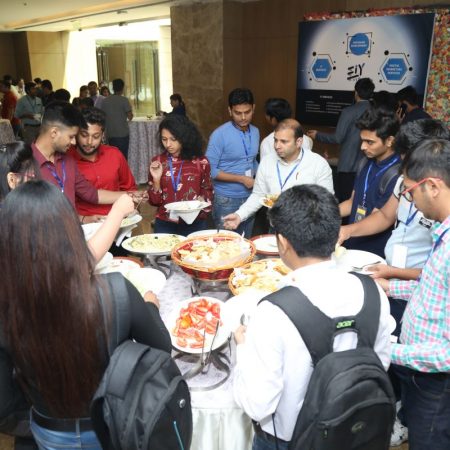
Registration & Breakfast
Future of Desktop Apps with JS (ElectronJs)
Nitin Pandit
Building Serverless Microservices Using Microsoft Azure
Vithal Wadje
Innovating RPA: A Robot for Every Person
Stephen Simon
Managing Cloud Storage Accounts using Logic Apps
Viknaraj Manogararajah
Data visualization using Python
Sekhar Srinivasan
Going Cross platform with AR Foundation
Vivek Sharma
Keynote
Managing your Azure dependencies in ASP.NET Core apps using VS
Bala Chirtsabesan
Securing Applications on Intelligent Azure
Abhishek Mishra
Getting started with Blazor the Framework of Future
S Ravi Kumar
Lunch
Build Progressive Web Apps using Angular 9
Debasis Saha
Build and deploy to any platform using Azure DevOps
Chervine Bhiwoo
Deep Dive in Azure Service Bus
Akshay Patel
Build a Native Mobile Application using React Native and JavaScript
Joseph Guadagno
Making sense of Web Job, Web Job SDK and Functions in Azure
Prakash Tripathi
CloudFront Distribution in AWS
Viral Jain
Tea Break
Introduction to PowerBI
Aakash Maurya
Build Advanced SPFx solutions with React and Graph API
Siddharth Vaghasia
Build Business Intelligence Analyst (BIA) Skills
Sundaram Subramanian
Deep dive of Power Platform – AI BUILDER
Prasham Sabadra
Panel 1
What's new in SharePoint development
Vipul Jain
Build a SSO (Single Sign On) based Native JavaScript application with Microsoft Identity within 10 minutes
Manoj Mittal
Panel 2
Applications and working of AI
Veena Sarda
Deploying serverless API's with .Net core 3.0 on AWS & Azure
Amey Vartak
Panel 3
Blockchain with .NET Core (Ark)
Anshu Kumari
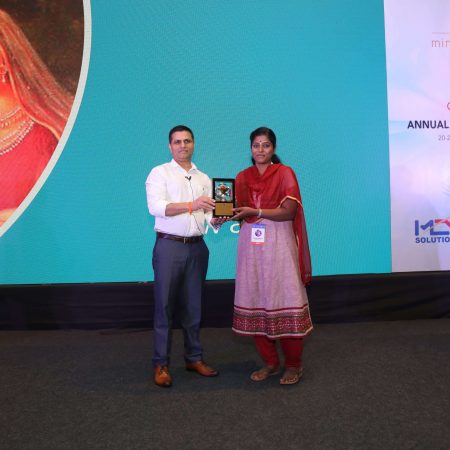
Closing Note & Prize Distribution
Dev Track
Cloud Track
Architecture Track
Emerging Tech Track
Registration & Breakfast
Creating Full-Stack Web Apps Using Server-Side Blazor
Ankit Sharma
Real time face recognition with MS Cognitive Services
Niloshima Srivastava
Building Scalable APIs with GraphQL
Jeetendra Gund
Future of development with AI and Blockchain
Navdeep Garg
Debugging Tips and Tricks with Visual Studio 2019
Joseph Guadagno
Azure Containers
Abhishek Kant
Enterprise Architecture
Naveen Sharma
Bot Framework - learn it fast and look like a boss!
Allen O’Neill
Keynote
.Net Core & C# 8 Performance
David McCarter
Working with Azure kubernetes services
Ritesh Modi
Becoming an Architect
Vidyavrat Agarwal
Why Techies Need to Learn Product Management
Saurabh Jain
Lunch
Build a rules engine in .Net Core
Sanjay Vyas
Building CI and CD Pipeline using Azure DevOps
Sandeep Soni
Entity Framework Core - Tips and Tricks, Performance Optimization, and Tuning
Bassam Alugili
Hacking your way into Data Science
Sanket Verma
Speed up your .Net Core Website
Sourabh Somani
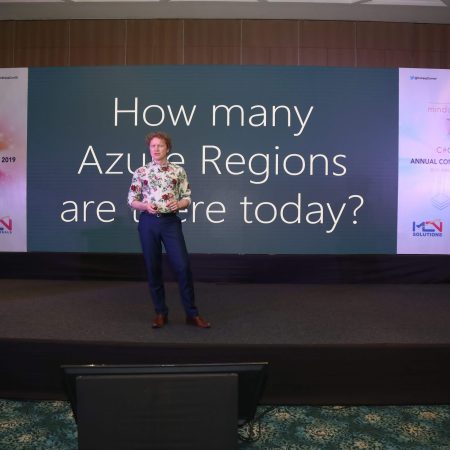
Azure
Magnus Mårtensson
Demystifying Open Distro for Elasticsearch
Suman Debnath
Future of Data
Shivam Ahuja
Tea Break
gRPC with C# and .Net Core
Mangesh Gaherwar
Panel 1
Essentials of Cloud security
Parveen Malik
Power platform and Dynamics 365
Deepesh Somani
Microservices - the gRPC Way
Viswanatha Swamy
Panel 2
Reserved
Reserved
Closing Note & Prize Distribution
Implementing OData endpoints in ASP.NET Core Web API
Modern business APIs must support filtering, sorting, paging and related data without forcing every client to invent a different convention. OData provides a consistent HTTP-based query vocabulary, while ASP.NET Core supplies the hosting, routing, dependency injection and security needed for production services. Together, they form a practical foundation for catalogue, inventory and reporting integrations.
That consistency matters when mobile apps, partner systems and internal tools consume the same service. Query options such as $filter, $select, $orderby, $expand, $top, $skip and $count travel in a predictable form, reducing bespoke endpoints and duplicated client logic. The standard is especially useful where consumers need navigation across entities rather than a single fixed response shape.
This article focuses on an OData v4 service built with ASP.NET Core Web API. It covers model registration, controller routing, query controls, authorisation, testing and deployment rather than treating configuration as a one-line exercise. The goal is a maintainable endpoint that remains capable as the entity model and user base grow.
Those needs are familiar to Australian development teams. A Sydney team may publish services used by a Melbourne operations centre, while a Brisbane business may integrate warehouses, farms or mines with cloud systems. Digital banking, delivery services and superannuation portals have also made reliable, self-describing APIs an everyday dependency rather than a specialist experiment.
Comparing OData implementation approaches
The ASP.NET Core OData package is usually the strongest fit when clients benefit from a standard query language and metadata document. A custom REST contract can be simpler for a narrow internal API, while GraphQL suits clients that need highly shaped responses. These options are not interchangeable: the published contract, tooling and team skills should drive the choice.
| Approach | Query model | Main advantage | Main trade-off |
|---|---|---|---|
| ASP.NET Core OData | Standard OData v4 | Discovery, filtering, expansion and reusable clients | Requires conventions and deliberate query controls |
| Custom REST query objects | Bespoke parameters | Exact control over a small response contract | Every filter and sort rule must be maintained separately |
| GraphQL | Client-selected fields | Flexible response shapes for application clients | Introduces a different schema, gateway and operational model |
Use the OData package when several consumers need ad hoc exploration of the same resources or when existing OData tooling should recognise the service. A custom API is often cheaper for one known screen, and GraphQL can be persuasive for graph-shaped mobile experiences. A short design record comparing expected queries, client teams and governance burden prevents the wrong contract becoming permanent.
Developers working across C#, Microsoft Azure and web development can keep the service within familiar framework components while exposing a standards-based contract. The service can sit behind API Management for throttling and publishing while controllers retain authority over business rules. Keep that boundary explicit: a gateway can limit traffic, but it cannot decide whether a signed-in user may expand a customer record or order by an internal margin field.
Configuring the OData model
Start with the Microsoft.AspNetCore.OData package and a compatible Microsoft.OData.ModelBuilder package, then register OData alongside MVC. A route component named api gives the service a stable prefix and supplies the formatting and query pipeline. Version these dependencies with the target .NET release so the runtime, EF Core and OData libraries remain aligned.
builder.Services
    .AddControllers()
    .AddOData(options =>
    {
        options.EnableQuery = true;
        options.MaxTop = 100;
        options.AddRouteComponents(
            "api",
            new ODataRouteComponentOptions("api"));
    });
The entity model should describe keys, required values, concurrency tokens and navigation properties that clients may legitimately traverse. ODataConventionModelBuilder can infer much of this from EF Core conventions, but explicit keys and relationship mappings remove ambiguity. Register only approved entity sets, and avoid exposing audit columns, soft-delete markers or internal ownership fields merely because they exist on the database model.
Use a dedicated DTO or persistence model when the public contract must differ from the database schema. The model builder maps those types into an Entity Data Model, allowing /api/$metadata to remain accurate even when the underlying records use another shape. Define navigation properties deliberately: an Orders collection on Customer becomes an expansion path, so each allowed path needs a reason, an authorisation rule and a query-cost limit.
Building controllers and query endpoints
An OData controller inherits from ODataController, and query handling comes from EnableQuery. Keep controllers thin: retrieve an IQueryable, apply only authorised filters, and let OData translate supported query options into provider expressions. This preserves parameterisation and avoids manually concatenating values from the request.
[Authorize(Policy = "catalog.read")]
[Route("api/Products")]
public class ProductsController : ODataController
{
    private readonly CatalogDbContext _db;

    public ProductsController(CatalogDbContext db) => _db = db;

    [EnableQuery(PageSize = 50)]
    [HttpGet]
    public IActionResult Get(
        [FromQuery] ODataQueryOptions<Product> query)
    {
        return Ok(query.ApplyTo(_db.Products.AsNoTracking()));
    }
}
Query support is not an invitation to execute any filter against any column. Restrict allowed options, validate filterable and sortable properties, set a server-side maximum, and treat $expand as a separate privilege. Deep expansion can multiply database work even when the returned page looks small. For large collections, prefer keyset pagination or OData continuation tokens over repeated $skip offsets, and make $count optional because calculating it may require an additional scan.
Write operations need the same discipline. Validate request DTOs, apply business rules inside the domain or application layer, and use explicit transactions when a change spans aggregates. Return Created with the canonical resource URL, or NoContent when appropriate. Consistent 400, 401, 403, 404 and 409 responses tell clients whether to correct a query, refresh credentials, request another resource or resolve a state conflict.
Securing and testing the endpoint
Authentication establishes identity, but authorisation must be evaluated against the requested rows. A policy can require a catalog.read scope for collection reads and a stronger catalog.write scope for changes. Apply tenant or ownership restrictions before querying, and repeat them after expansion so a permitted product cannot reveal a restricted order or supplier. Never rely on a hidden navigation property as a security boundary.
Australian privacy obligations belong in the endpoint design, not only in a later compliance review. The Privacy Act 1988 and Australian Privacy Principles may apply to personal information, while the Notifiable Data Breaches scheme requires eligible incidents to be assessed and notified. Victorian health and community-service records can also fall under state privacy legislation. Teams can use the OData implementation guidance as a companion while documenting lawful purposes, minimised fields, retention and access controls.
Security testing should cover both ordinary and hostile requests. Check that unauthorised access returns 401 or 403, sensitive properties cannot be selected, unsupported query syntax fails cleanly, and maximum page sizes cannot be bypassed. Store .http examples for metadata and representative queries, then run them through integration tests with WebApplicationFactory. Contract tests should also verify error shapes because clients often depend on consistent status codes and problem details.
A practical deployment checklist for Australian teams
Place the service in an Australian Azure region that matches users and approved data-residency needs, such as Australia East for Sydney or Australia Southeast for Melbourne. Confirm the paired-region, backup and disaster-recovery design as part of the data assessment; a nominal Australian deployment location does not remove every cross-border access or support scenario. Keep configuration in the hosting platform, use managed identity where possible and rotate secrets automatically.
The local market adds practical constraints. Retail, logistics, mining, agriculture and health organisations often combine modern cloud APIs with field devices, partner systems and slower links. Support server-driven paging, bounded payloads and clear retry guidance rather than assuming every consumer can request large expanded graphs. Observability should connect request latency, query options, database duration and status codes without logging personal or commercially sensitive values.
A release-ready service benefits from the following practices:
- Pin compatible .NET, ASP.NET Core OData and EF Core versions.
- Enforce allowlisted filters, sorts, expansions and maximum page sizes.
- Authorise every entity, expanded property and write operation.
- Test metadata, encoded queries, errors and authorisation boundaries.
- Measure query latency, expansion depth, throttling and dependency failures.
- Document privacy, retention, data residency and incident-response responsibilities.
Validate these controls with production-like load tests and a staged rollout, then monitor the first real query patterns. Changes to the entity model can alter metadata and client-generated links, so publish compatibility notes and version breaking contracts. A small consumer SDK or generated request examples can reduce support pressure while keeping the OData surface consistent across Australian offices and external partners.










1, CBD, Maharaj Surajmal Road, Near Yamuna Sports Complex, Delhi, 110032





GENERAL QUERIES
Manish Tewatia
manish@csharpcon.com
+91-9718-431-042
TICKET QUERIES
Atul Gupta
conference@csharpcon.com
+91-9910-125-804