

Presents


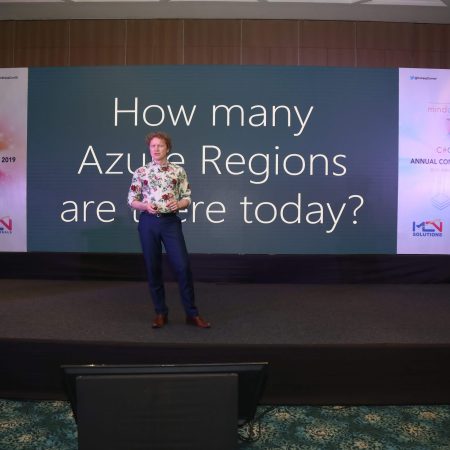
Magnus Mårtensson
Microsoft Regional Director, Azure MVP, CEO Loftysoft

Avirag Jain
Director & CTO R Systems

Mahesh Chand
Founder C# Corner, CEO Mindcracker

Chris Gali
CEO & Co-Founder Graphite

Subinder Khurana
Chief Architect StoryProcess, Founder NASSCOM DeepTech Club

Bryan Rishforth
Investor, Chairman Graphite

Bryn Everson
Director Biz Dev Graphite

Raj Tiwari
Digital Transformation Leader, Futurist and Visionary

Joseph Guadagno
Microsoft MVP, Lead Quicken Loans

Nikita Sachdev
Entrepreneur, Blockchain Enthusiast & Advisor, Social Media Influencer

Doug Wagner
COO & Founder Adapt Technical Group

Ritesh Modi
Architect, Senior Evangelist, Cloud Architect

Crystal Wenrick
Director Communications Mindcracker

Allen O’Neill
Microsoft MVP, Consulting Engineer/Architect
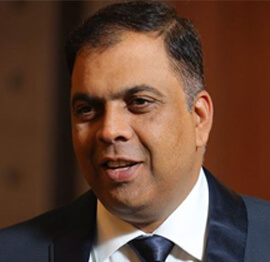
Praveen Kumar
CEO MCN Solutions

Chris Love
Founder Love2Dev, Microsoft MVP, Author

Sanjay Vyas
Microsoft Regional Director, Microsoft MVP, Founder & CEO SkillLabs Technologies

Veena Sarda
Deep Learning Consultant, Author

Sekhar Srinivasan
C# Corner MVP, Microsoft Certified Trainer, Pluralsight Author

Lalit Bansal
Founder & CEO - EIY SYS

Navdeep Garg
CEO Revinfotech

Prakash Tripathi
Tech Manager/Leader, Microsoft MVP, Blogger

Bhavna Jain
Breakthrough Consultant

Naveen Sharma
Enterprise Architect, Leadership Coach, Author

Vidya Vrat Agarwal
Principal Architect, Microsoft MVP, Author

Sheetal Agarwal
Founder Clownselors, Medical Clown, Trainer

Abhishek Kant
Founder GTM Catalyst

Vishnu Saran
Founder & CEO VoiceQube

Sandeep Soni
Founder & CEO Deccansoft, Microsoft Certified Trainer

Parveen Malik
AVP InfoSec & Vulnerability Management, Information Security Expert

Nitin Pandit
Microsoft MVP, Developer Evangelist, Author

Niloshima Srivastava
C# Corner MVP, Tech Architect, Trainer, Blogger

Bala Chirtsabesan
Senior Software Engineer at Microsoft, Author

Manoj Mittal
Sr. Technical Architect, C# Corner MVP, Author

Chandni Di
Co-Founder Voice of Slum

Vithal Wadje
Technical Lead, Microsoft MVP, Author

Shivam Ahuja
Founder SkillCircle, Business Mentor

Chervine Bhiwoo
Solution Architect, Microsoft MVP, Author

Saurabh Jain
Vice President Paytm, Founder Fun2Do Labs, Author

Vinay Solanki
Head IoT at Lenovo, Founder IoT-NCR

Anshu kumari
Founder Blockchainkids, Inventor, Trainer

Amit Singal
CEO Startup Buddy

Dev Pratap
Co-Founder & CEO Voice of Slum

Amey Vartak
Technology Consultant, Full Stack Developer, C# Corner MVP, Author

Viswanatha Swamy
Principal Software Engineer, C# Corner MVP, Author

Sanket Verma
Research Engineer @ Ballistics (Forensics) and Chair, PyData Delhi

Sourabh Somani
Lead Developer, Microsoft MVP, Author

Abhishek Mishra
Software Architect, C# Corner MVP, Author

Siddharth Vaghasia
Technical Consultant, C# Corner MVP, Blogger

Bassam Alugili
Senior Software Specialist, Database Expert

S Ravi Kumar
Solution Architect, C# Corner MVP, Author

Sundaram Subramanian
Full Stack Developer, C# Corner MVP, Speaker

Deepesh Somani
Solution Architect, Microsoft MVP, Author

Debasis Saha
Technical Project Manager, C# Corner MVP, Blogger, Author

Vipul Jain
Software Architect, C# Corner MVP, Author

Akshay Patel
Technical Architect, Microsoft Certified Trainer, C# Corner MVP, Author

Stephen Simon
RPA Developer, Evangelist, Author

Vivek Sharma
Founder Kingster636, AR/VR Specialist

Jeetendra Gund
Technical Lead, C# Corner MVP, Author

Sujal Beniwal
AI Enthusiast, Student

M Viknaraj
Microsoft MVP, Azure Architect, Author

Prasham Sabadra
Software Architect, C# Corner MVP, Trainer, Author

Aakash Maurya
Senior Developer, C# Corner MVP, Speaker

Ankit Sharma
Senior Software Engineer, C# Corner MVP, Author

Mangesh Gaherwar
Team Lead, C# Corner MVP, Author

Viral Jain
Technical Consultant, C# Corner MVP, Author

Bhasker Das
Solution Architect, Evangelist

Manish Dwivedi
Associate Project Manager

Ck Nitin
Programmer, Author

Rohit Gupta
Technical Trainer, Author

Manish Tewatia
Full-stack Marketer, UX Designer

Bhavya Gaur
Technical Illustrator

Rohit Tomar
SEO/SMO Expert
Web Track
Cloud & Data Track
Dev Track
Registration & Breakfast
Future of Desktop Apps with JS (ElectronJs)
Nitin Pandit
Building Serverless Microservices Using Microsoft Azure
Vithal Wadje
Innovating RPA: A Robot for Every Person
Stephen Simon
Managing Cloud Storage Accounts using Logic Apps
Viknaraj Manogararajah
Data visualization using Python
Sekhar Srinivasan
Going Cross platform with AR Foundation
Vivek Sharma
Keynote
Managing your Azure dependencies in ASP.NET Core apps using VS
Bala Chirtsabesan
Securing Applications on Intelligent Azure
Abhishek Mishra
Getting started with Blazor the Framework of Future
S Ravi Kumar
Lunch
Build Progressive Web Apps using Angular 9
Debasis Saha
Build and deploy to any platform using Azure DevOps
Chervine Bhiwoo
Deep Dive in Azure Service Bus
Akshay Patel
Build a Native Mobile Application using React Native and JavaScript
Joseph Guadagno
Making sense of Web Job, Web Job SDK and Functions in Azure
Prakash Tripathi
CloudFront Distribution in AWS
Viral Jain
Tea Break
Introduction to PowerBI
Aakash Maurya
Build Advanced SPFx solutions with React and Graph API
Siddharth Vaghasia
Build Business Intelligence Analyst (BIA) Skills
Sundaram Subramanian
Deep dive of Power Platform – AI BUILDER
Prasham Sabadra
Panel 1
What's new in SharePoint development
Vipul Jain
Build a SSO (Single Sign On) based Native JavaScript application with Microsoft Identity within 10 minutes
Manoj Mittal
Panel 2
Applications and working of AI
Veena Sarda
Deploying serverless API's with .Net core 3.0 on AWS & Azure
Amey Vartak
Panel 3
Blockchain with .NET Core (Ark)
Anshu Kumari
Closing Note & Prize Distribution
Dev Track
Cloud Track
Architecture Track
Emerging Tech Track
Registration & Breakfast
Creating Full-Stack Web Apps Using Server-Side Blazor
Ankit Sharma
Real time face recognition with MS Cognitive Services
Niloshima Srivastava
Building Scalable APIs with GraphQL
Jeetendra Gund
Future of development with AI and Blockchain
Navdeep Garg
Debugging Tips and Tricks with Visual Studio 2019
Joseph Guadagno
Azure Containers
Abhishek Kant
Enterprise Architecture
Naveen Sharma
Bot Framework - learn it fast and look like a boss!
Allen O’Neill
Keynote
.Net Core & C# 8 Performance
David McCarter
Working with Azure kubernetes services
Ritesh Modi
Becoming an Architect
Vidyavrat Agarwal
Why Techies Need to Learn Product Management
Saurabh Jain
Lunch
Build a rules engine in .Net Core
Sanjay Vyas
Building CI and CD Pipeline using Azure DevOps
Sandeep Soni
Entity Framework Core - Tips and Tricks, Performance Optimization, and Tuning
Bassam Alugili
Hacking your way into Data Science
Sanket Verma
Speed up your .Net Core Website
Sourabh Somani
Azure
Magnus Mårtensson
Demystifying Open Distro for Elasticsearch
Suman Debnath
Future of Data
Shivam Ahuja
Tea Break
gRPC with C# and .Net Core
Mangesh Gaherwar
Panel 1
Essentials of Cloud security
Parveen Malik
Power platform and Dynamics 365
Deepesh Somani
Microservices - the gRPC Way
Viswanatha Swamy
Panel 2
Reserved
Reserved
Closing Note & Prize Distribution
Building a JSON Patch endpoint in ASP.NET Core Web API
Modern backend teams across Sydney, Melbourne, and Brisbane routinely deal with client applications that need to mutate a subset of fields on a server-side resource without replacing it entirely. Full PUT requests force clients to send the entire object, which wastes bandwidth and risks unintended overwrites. A well-implemented JSON Patch endpoint solves both problems while keeping the contract RESTful and aligned with what mobile clients actually send.
The JSON Patch specification, formally RFC 6902, defines a series of operations such as add, remove, replace, move, copy, and test that can be applied to a target JSON document. ASP.NET Core ships with first-class support for this standard through Microsoft.AspNetCore.JsonPatch and Microsoft.AspNetCore.Mvc.NewtonsoftJson, making it straightforward for Australian development shops to expose efficient partial-update endpoints in their public and internal APIs.
JSON Patch fundamentals and the RFC 6902 specification
Before writing any code, it helps to understand exactly what RFC 6902 promises. Each patch document is a JSON array of operation objects. Every operation carries an op member naming the action, a path member locating the target using a JSON Pointer (RFC 6901), and an optional value member holding the new data. For example, {"op":"replace","path":"/email","value":"new@example.com"} instructs the server to swap the email field in one atomic call.
The specification also defines evaluation order, atomicity, and error semantics. A patch document must be processed as a single transaction: if one operation fails, the whole request is rejected. This behaviour pairs nicely with the strict expectations of Australian regulators around data integrity, particularly in finance and healthcare where partial application of a change could create an inconsistent record in the source of truth.
Because the operations target specific paths, a misbehaving client cannot stomp on fields it has no business touching, as long as the server enforces a strict allow-list of addresses. That guarantee matters when an API is consumed by mobile apps in regions with patchy 4G coverage along the Nullarbor Plain, where every kilobyte saved on the wire translates to a smoother user experience and lower data costs.
Project setup and required NuGet packages
To follow this walkthrough, you should have the .NET 8 SDK installed locally, alongside an IDE of your choice such as Visual Studio 2022, JetBrains Rider, or VS Code with the C# Dev Kit extension. From a terminal in the project directory, scaffold a new Web API and pull in the patch libraries in a single pass.
dotnet new webapi -n CustomerService
cd CustomerService
dotnet add package Microsoft.AspNetCore.JsonPatch
If your project already uses Newtonsoft.Json rather than System.Text.Json, also add Microsoft.AspNetCore.Mvc.NewtonsoftJson and register the formatter in Program.cs with AddNewtonsoftJson(). For teams in Adelaide or Perth running greenfield services, the default System.Text.Json pipeline is usually sufficient and avoids the extra dependency.
You will also need a persistence layer. For brevity this guide uses EF Core with SQLite, but the patch logic itself is independent of the database. Many Australian consultancies standardise on SQL Server for enterprise work and PostgreSQL for startups; both work transparently here, and the choice rarely changes more than a connection string.
Crafting the Patch endpoint with JsonPatchDocument
Create a simple domain entity, a database context, and a controller exposing a PATCH method. The controller signature is what makes the integration feel idiomatic in ASP.NET Core, and the code stays short because the framework does the heavy lifting of walking the operations and applying them to the model.
[HttpPatch("{id:int}")]
public async Task<IActionResult> PatchCustomer(int id,
    [FromBody] JsonPatchDocument<Customer> patchDoc,
    CancellationToken ct)
{
    var customer = await _db.Customers.FindAsync(new object[] { id }, ct);
    if (customer is null) return NotFound();

    patchDoc.ApplyTo(customer, ModelState);

    if (!ModelState.IsValid) return ValidationProblem(ModelState);

    await _db.SaveChangesAsync(ct);
    return NoContent();
}
Three details deserve attention. First, ApplyTo mutates the entity directly, so any field-level invariants on Customer should be enforced inside the model rather than relying on the database alone. Second, calling ModelState.AddModelError from inside an OperationFilter lets you reject invalid patches with rich diagnostic output. Third, returning NoContent() aligns with the REST convention that a successful partial update carries no representation body.
For teams operating under the Australian Privacy Principles, this last point is worth noting: the API never echoes sensitive fields back to the caller, reducing the surface area for accidental PII disclosure in logs and proxies that route through Canberra-based government gateways.
| Approach | Payload size | Atomicity | Built-in validation | Effort to add | Best fit |
|---|---|---|---|---|---|
| Full PUT | Largest | Whole document | Standard data annotations | Lowest | Resources with few fields and infrequent changes |
| Custom delta DTO | Medium | Whole document | Custom | Medium | Closed client ecosystems where both ends are owned |
| JSON Patch (RFC 6902) | Smallest | Per-operation atomicity | Path-level via filters | Medium | Public or partner APIs with partial updates |
| GraphQL mutation | Medium | Per-field | Schema-driven | Higher | Apps with complex relational mutations |
Validation, error handling, and observability
Validation in a JSON Patch endpoint has two layers: structural validation of the patch document itself, and business-rule validation of the resulting entity. The built-in [FromBody] model binder catches malformed JSON and reports a 400 with details. To restrict the set of operations a client may invoke, inject an IObjectModelValidator or write a custom action filter that walks the patch document before ApplyTo runs and rejects anything outside an allow-list of paths.
Error responses should follow the RFC 7807 Problem Details shape that ASP.NET Core already serialises when you return ValidationProblem. Include the failed operation index and the offending path in the errors dictionary so mobile clients in regional Queensland or Tasmania can show users exactly what went wrong without a round of guesswork.
Observability ties into tracing. Once a patch endpoint is live, you will want to see how long each PATCH takes, which paths are most frequently targeted, and how often validation fails. OpenTelemetry provides that visibility. If you want a practical walkthrough of wiring it up in .NET, this distributed tracing walkthrough covers exactly the patterns you would apply here. Pair the trace data with structured Serilog or ILogger output, and you have a complete picture of every mutating request hitting your service from Sydney CBD to the Pilbara.
Testing and documenting the JSON Patch endpoint
The final piece is verification. Use WebApplicationFactory together with the in-memory provider to spin up the API inside an xUnit or NUnit project, then submit patch documents directly with HttpClient. Cover the happy path, an attempt to add an invalid path, a test operation that fails, and an atomicity check that confirms a mid-document failure leaves the resource untouched.
Swagger ships a slightly bare-bones representation of JSON Patch, so consider installing Swashbuckle.AspNetCore.JsonPatch or writing a small custom filter to expose the operation shapes in the OpenAPI document. Many Australian teams publish their API contracts to a central portal; richer schemas reduce back-and-forth between frontend and backend during sprint planning, which matters when product managers split their week between Melbourne and remote work from a coastal town.
Operational checklist for production rollouts
- Reject patches targeting properties outside an explicit allow-list and return a clear error.
- Wrap
ApplyToandSaveChangesAsyncin a single transaction so failures roll back consistently with the atomicity guarantee of RFC 6902. - Log the patch document, the resulting state, and a correlation id, but redact PII before it leaves the process boundary.
- Publish the supported operations in your OpenAPI document so client teams in Melbourne and across the country know exactly what they can send.
- Rate-limit PATCH endpoints separately from GETs because they trigger database writes and downstream notifications.
- Pin the JsonPatch NuGet package to a known-good version and review CVE advisories on each upgrade.
- Add an integration test that submits a deliberately broken operation followed by a valid one and asserts that no state changes occurred.











1, CBD, Maharaj Surajmal Road, Near Yamuna Sports Complex, Delhi, 110032





GENERAL QUERIES
Manish Tewatia
manish@csharpcon.com
+91-9718-431-042
TICKET QUERIES
Atul Gupta
conference@csharpcon.com
+91-9910-125-804