

Presents


Magnus Mårtensson
Microsoft Regional Director, Azure MVP, CEO Loftysoft

Avirag Jain
Director & CTO R Systems

Mahesh Chand
Founder C# Corner, CEO Mindcracker

Chris Gali
CEO & Co-Founder Graphite

Subinder Khurana
Chief Architect StoryProcess, Founder NASSCOM DeepTech Club

Bryan Rishforth
Investor, Chairman Graphite

Bryn Everson
Director Biz Dev Graphite

Raj Tiwari
Digital Transformation Leader, Futurist and Visionary

Joseph Guadagno
Microsoft MVP, Lead Quicken Loans

Nikita Sachdev
Entrepreneur, Blockchain Enthusiast & Advisor, Social Media Influencer

Doug Wagner
COO & Founder Adapt Technical Group

Ritesh Modi
Architect, Senior Evangelist, Cloud Architect

Crystal Wenrick
Director Communications Mindcracker

Allen O’Neill
Microsoft MVP, Consulting Engineer/Architect

Praveen Kumar
CEO MCN Solutions

Chris Love
Founder Love2Dev, Microsoft MVP, Author

Sanjay Vyas
Microsoft Regional Director, Microsoft MVP, Founder & CEO SkillLabs Technologies

Veena Sarda
Deep Learning Consultant, Author

Sekhar Srinivasan
C# Corner MVP, Microsoft Certified Trainer, Pluralsight Author

Lalit Bansal
Founder & CEO - EIY SYS

Navdeep Garg
CEO Revinfotech

Prakash Tripathi
Tech Manager/Leader, Microsoft MVP, Blogger

Bhavna Jain
Breakthrough Consultant

Naveen Sharma
Enterprise Architect, Leadership Coach, Author

Vidya Vrat Agarwal
Principal Architect, Microsoft MVP, Author

Sheetal Agarwal
Founder Clownselors, Medical Clown, Trainer

Abhishek Kant
Founder GTM Catalyst

Vishnu Saran
Founder & CEO VoiceQube

Sandeep Soni
Founder & CEO Deccansoft, Microsoft Certified Trainer

Parveen Malik
AVP InfoSec & Vulnerability Management, Information Security Expert

Nitin Pandit
Microsoft MVP, Developer Evangelist, Author

Niloshima Srivastava
C# Corner MVP, Tech Architect, Trainer, Blogger

Bala Chirtsabesan
Senior Software Engineer at Microsoft, Author

Manoj Mittal
Sr. Technical Architect, C# Corner MVP, Author

Chandni Di
Co-Founder Voice of Slum

Vithal Wadje
Technical Lead, Microsoft MVP, Author

Shivam Ahuja
Founder SkillCircle, Business Mentor

Chervine Bhiwoo
Solution Architect, Microsoft MVP, Author

Saurabh Jain
Vice President Paytm, Founder Fun2Do Labs, Author

Vinay Solanki
Head IoT at Lenovo, Founder IoT-NCR

Anshu kumari
Founder Blockchainkids, Inventor, Trainer

Amit Singal
CEO Startup Buddy

Dev Pratap
Co-Founder & CEO Voice of Slum

Amey Vartak
Technology Consultant, Full Stack Developer, C# Corner MVP, Author

Viswanatha Swamy
Principal Software Engineer, C# Corner MVP, Author

Sanket Verma
Research Engineer @ Ballistics (Forensics) and Chair, PyData Delhi

Sourabh Somani
Lead Developer, Microsoft MVP, Author

Abhishek Mishra
Software Architect, C# Corner MVP, Author

Siddharth Vaghasia
Technical Consultant, C# Corner MVP, Blogger

Bassam Alugili
Senior Software Specialist, Database Expert

S Ravi Kumar
Solution Architect, C# Corner MVP, Author

Sundaram Subramanian
Full Stack Developer, C# Corner MVP, Speaker

Deepesh Somani
Solution Architect, Microsoft MVP, Author

Debasis Saha
Technical Project Manager, C# Corner MVP, Blogger, Author

Vipul Jain
Software Architect, C# Corner MVP, Author

Akshay Patel
Technical Architect, Microsoft Certified Trainer, C# Corner MVP, Author

Stephen Simon
RPA Developer, Evangelist, Author

Vivek Sharma
Founder Kingster636, AR/VR Specialist

Jeetendra Gund
Technical Lead, C# Corner MVP, Author

Sujal Beniwal
AI Enthusiast, Student

M Viknaraj
Microsoft MVP, Azure Architect, Author

Prasham Sabadra
Software Architect, C# Corner MVP, Trainer, Author

Aakash Maurya
Senior Developer, C# Corner MVP, Speaker

Ankit Sharma
Senior Software Engineer, C# Corner MVP, Author

Mangesh Gaherwar
Team Lead, C# Corner MVP, Author

Viral Jain
Technical Consultant, C# Corner MVP, Author

Bhasker Das
Solution Architect, Evangelist

Manish Dwivedi
Associate Project Manager

Ck Nitin
Programmer, Author

Rohit Gupta
Technical Trainer, Author

Manish Tewatia
Full-stack Marketer, UX Designer

Bhavya Gaur
Technical Illustrator

Rohit Tomar
SEO/SMO Expert
Web Track
Cloud & Data Track
Dev Track
Registration & Breakfast
Future of Desktop Apps with JS (ElectronJs)
Nitin Pandit
Building Serverless Microservices Using Microsoft Azure
Vithal Wadje
Innovating RPA: A Robot for Every Person
Stephen Simon
Managing Cloud Storage Accounts using Logic Apps
Viknaraj Manogararajah
Data visualization using Python
Sekhar Srinivasan
Going Cross platform with AR Foundation
Vivek Sharma
Keynote
Managing your Azure dependencies in ASP.NET Core apps using VS
Bala Chirtsabesan
Securing Applications on Intelligent Azure
Abhishek Mishra
Getting started with Blazor the Framework of Future
S Ravi Kumar
Lunch
Build Progressive Web Apps using Angular 9
Debasis Saha
Build and deploy to any platform using Azure DevOps
Chervine Bhiwoo
Deep Dive in Azure Service Bus
Akshay Patel
Build a Native Mobile Application using React Native and JavaScript
Joseph Guadagno
Making sense of Web Job, Web Job SDK and Functions in Azure
Prakash Tripathi
CloudFront Distribution in AWS
Viral Jain
Tea Break
Introduction to PowerBI
Aakash Maurya
Build Advanced SPFx solutions with React and Graph API
Siddharth Vaghasia
Build Business Intelligence Analyst (BIA) Skills
Sundaram Subramanian
Deep dive of Power Platform – AI BUILDER
Prasham Sabadra
Panel 1
What's new in SharePoint development
Vipul Jain
Build a SSO (Single Sign On) based Native JavaScript application with Microsoft Identity within 10 minutes
Manoj Mittal
Panel 2
Applications and working of AI
Veena Sarda
Deploying serverless API's with .Net core 3.0 on AWS & Azure
Amey Vartak
Panel 3
Blockchain with .NET Core (Ark)
Anshu Kumari
Closing Note & Prize Distribution
Dev Track
Cloud Track
Architecture Track
Emerging Tech Track
Registration & Breakfast
Creating Full-Stack Web Apps Using Server-Side Blazor
Ankit Sharma
Real time face recognition with MS Cognitive Services
Niloshima Srivastava
Building Scalable APIs with GraphQL
Jeetendra Gund
Future of development with AI and Blockchain
Navdeep Garg
Debugging Tips and Tricks with Visual Studio 2019
Joseph Guadagno
Azure Containers
Abhishek Kant
Enterprise Architecture
Naveen Sharma
Bot Framework - learn it fast and look like a boss!
Allen O’Neill
Keynote
.Net Core & C# 8 Performance
David McCarter
Working with Azure kubernetes services
Ritesh Modi
Becoming an Architect
Vidyavrat Agarwal
Why Techies Need to Learn Product Management
Saurabh Jain
Lunch
Build a rules engine in .Net Core
Sanjay Vyas
Building CI and CD Pipeline using Azure DevOps
Sandeep Soni
Entity Framework Core - Tips and Tricks, Performance Optimization, and Tuning
Bassam Alugili
Hacking your way into Data Science
Sanket Verma
Speed up your .Net Core Website
Sourabh Somani
Azure
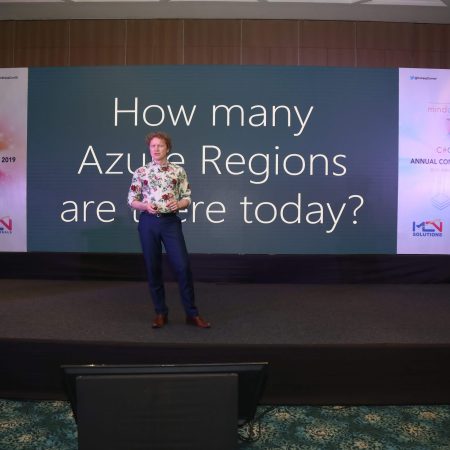
Magnus Mårtensson
Demystifying Open Distro for Elasticsearch
Suman Debnath
Future of Data
Shivam Ahuja
Tea Break
gRPC with C# and .Net Core
Mangesh Gaherwar
Panel 1
Essentials of Cloud security
Parveen Malik
Power platform and Dynamics 365
Deepesh Somani
Microservices - the gRPC Way
Viswanatha Swamy
Panel 2
Reserved
Reserved
Closing Note & Prize Distribution
Using IHostedService for recurring HTTP calls in .NET
Many .NET applications need to contact an external endpoint on a schedule. A service might refresh exchange rates, collect telemetry, synchronise customer records, poll a payment provider, or check the status of a long-running job. Running that work from a controller request is unreliable because it ties background processing to a user’s connection and application traffic.
IHostedService provides a lifecycle-aware way to run recurring HTTP operations inside an ASP.NET Core application or another .NET host. It starts with the application, receives cancellation when the process shuts down, and can share the dependency injection, configuration, logging, and health-check infrastructure already used by the application.
How hosted services fit into the .NET host
An implementation of IHostedService has two central methods: StartAsync and StopAsync. The host calls them when the application starts and stops. The service should use StartAsync to initialise its background operation, rather than keeping the host startup thread busy with an endless loop.
BackgroundService is an abstract base class that implements IHostedService and provides an ExecuteAsync method for the long-running task. It is generally the simplest choice for recurring HTTP calls. The host supplies a cancellation token, so the worker can stop promptly during deployment, a container restart, or a controlled shutdown.
public sealed class PartnerPollingService : BackgroundService
{
    protected override Task ExecuteAsync(CancellationToken stoppingToken)
    {
        return Task.CompletedTask;
    }
}
Register the worker with dependency injection so the generic host can manage it:
builder.Services.AddHostedService<PartnerPollingService>();
A hosted service is usually registered as a singleton. That means its constructor should receive long-lived dependencies such as IHttpClientFactory, configuration options, and logging. A scoped dependency, such as an Entity Framework Core DbContext, should be resolved inside a scope created for each iteration.
Selecting an interval and execution model
A recurring worker needs a clear definition of its schedule. “Every five minutes” can mean five minutes after the previous request finishes, or at fixed clock intervals regardless of request duration. For external HTTP calls, waiting until the previous operation completes before starting the next one is generally safer. It avoids overlapping requests when a partner API becomes slow.
PeriodicTimer is a useful modern .NET option because it works naturally with asynchronous code and cancellation. The first request can run immediately, followed by the configured delay, or the worker can wait for the first tick if an initial delay is preferable.
private readonly TimeSpan _interval = TimeSpan.FromMinutes(5);

protected override async Task ExecuteAsync(CancellationToken stoppingToken)
{
    using var timer = new PeriodicTimer(_interval);

    while (await timer.WaitForNextTickAsync(stoppingToken))
    {
        await PollPartnerAsync(stoppingToken);
    }
}
This approach is preferable to Thread.Sleep, which blocks a thread, and usually clearer than a System.Threading.Timer callback that can make asynchronous exception and overlap handling more complicated. The interval should live in configuration rather than being hard-coded, especially when Australian customers operate across AEST and AEDT or when a partner imposes different limits during local business hours.
Building a safe HTTP polling worker
Use IHttpClientFactory rather than constructing HttpClient repeatedly inside the loop. The factory manages handler lifetimes and connection reuse, helping avoid socket exhaustion and stale DNS information. A named or typed client also gives the external integration a clear place for its base address, headers, timeout, and resilience policy.
public sealed class PartnerPollingService : BackgroundService
{
    private readonly IHttpClientFactory _clientFactory;
    private readonly ILogger<PartnerPollingService> _logger;

    public PartnerPollingService(
        IHttpClientFactory clientFactory,
        ILogger<PartnerPollingService> logger)
    {
        _clientFactory = clientFactory;
        _logger = logger;
    }

    protected override async Task ExecuteAsync(CancellationToken stoppingToken)
    {
        using var timer = new PeriodicTimer(TimeSpan.FromMinutes(5));

        while (await timer.WaitForNextTickAsync(stoppingToken))
        {
            try
            {
                var client = _clientFactory.CreateClient("PartnerApi");
                using var response = await client.GetAsync(
                    "/status",
                    stoppingToken);

                response.EnsureSuccessStatusCode();
                _logger.LogInformation("Partner status retrieved");
            }
            catch (OperationCanceledException) when (stoppingToken.IsCancellationRequested)
            {
                break;
            }
            catch (HttpRequestException ex)
            {
                _logger.LogWarning(ex, "Partner status request failed");
            }
        }
    }
}
The cancellation exception is treated differently from a network failure. Cancellation during shutdown is expected and should not create alarming error logs. A genuine HTTP failure should be recorded with enough context to diagnose the problem without putting access tokens, personal information, or complete response bodies into the logs.
The client can be configured in Program.cs:
builder.Services.AddHttpClient("PartnerApi", client =>
{
    client.BaseAddress = new Uri(builder.Configuration["PartnerApi:BaseUrl"]!);
    client.Timeout = TimeSpan.FromSeconds(30);
});
Controlling retries, timeouts, and rate limits
A recurring HTTP call needs more than an interval. DNS failures, temporary gateway errors, throttling, and partial outages are normal integration conditions. A short timeout prevents one stalled request from holding the worker indefinitely, while bounded retries can handle transient faults.
Retries should be limited and should use backoff with jitter. Retrying immediately from every application instance can create a thundering herd against the partner endpoint. HTTP 429 responses should respect the server’s Retry-After value where possible. Non-idempotent operations require extra care: repeating a POST may create duplicates unless the API supports an idempotency key.
Modern .NET applications can use the resilience handlers from Microsoft.Extensions.Http.Resilience. A policy might retry selected transient status codes, apply an overall timeout, and avoid retrying authentication or validation errors. The schedule and resilience policy solve different problems: the schedule controls normal polling frequency, while the policy controls short-lived failures within an individual polling cycle.
For a service used across Sydney, Perth, and Melbourne, UTC timestamps are a sensible storage and logging standard. Convert to local time only for presentation or business rules. This avoids confusion when daylight saving changes in New South Wales and Victoria but not in Queensland or Western Australia.
Handling dependency injection and application state
Hosted services do not automatically create a dependency injection scope for each loop. If the polling operation stores results through a scoped repository or DbContext, inject IServiceScopeFactory and create a fresh scope per cycle.
await using var scope = _scopeFactory.CreateAsyncScope();
var repository = scope.ServiceProvider
    .GetRequiredService<PartnerRecordRepository>();

await repository.SaveAsync(data, stoppingToken);
A new scope limits the lifetime of database connections and tracked entities. It also prevents state from one iteration leaking into the next. Do not keep a DbContext in a singleton worker field.
If more than one application instance runs, each instance will execute its own hosted service. That may be correct for independent caches, but it is dangerous when the partner must receive one request per interval. In that situation, use a distributed lock, a queue-based scheduler, or a platform scheduler such as Azure Functions, Azure Container Apps jobs, or an external workflow service.
This matters for Australian deployments that scale across multiple availability zones in an Azure Australia East or Australia Southeast region. Horizontal scaling improves availability, yet it also multiplies background workers unless the design explicitly elects a single active poller.
Observability, security, and graceful shutdown
Log the beginning and result of each cycle with structured fields such as operation name, duration, status code, and retry count. Metrics should include successful calls, failures, latency, and the age of the last successful synchronisation. A health check can report when the worker last completed successfully, although a failed partner call should not necessarily make the entire web application unavailable.
Keep credentials in a managed secret store rather than in source control or ordinary configuration files. Azure Key Vault is a common option for .NET workloads, including systems serving Australian organisations that need clear controls around access to customer or operational data. Review whether the integration handles personal information under the Privacy Act 1988 and whether data residency or cross-border transfer requirements apply to the partner.
The worker should pass the host cancellation token through every asynchronous operation. A container platform may allow only a short termination window, so lengthy cleanup or unlimited retries can cause incomplete work. Design each operation to be restartable, and use idempotency or a durable progress marker when a request can be interrupted.
Australian services also need practical operational awareness. An API outage during a Brisbane morning may coincide with a different support window in Europe, while an “arvo” maintenance period may be peak trading time for a local retailer. Alerting should include the partner name, region, and last successful run rather than relying on a generic application-down notification.
Comparing scheduling choices
IHostedService is a strong fit when the recurring operation belongs with the application process and can tolerate restarts. It is easy to deploy with an ASP.NET Core service and gives the worker direct access to application services. Its limitation is that scheduling is tied to process availability, and multiple replicas need coordination.
A dedicated scheduler is often better for critical jobs, long-running imports, or work that must continue while the web application is being upgraded. Azure Functions with a timer trigger, a Kubernetes CronJob, or an Azure Logic App can separate scheduling from request-serving capacity. A queue can add durability when each poll produces work that should be processed independently.
| Approach | Best suited to | Main advantage | Main concern |
|---|---|---|---|
BackgroundService with IHostedService |
Frequent, lightweight polling inside a .NET app | Simple deployment and native dependency injection | Each replica may run the job |
| Azure Functions timer trigger | Independent scheduled integrations | Scheduling and scaling are separated from the web app | Requires separate hosting and operational setup |
| Kubernetes CronJob | Batch-style work with containerised services | Clear run boundaries and cluster scheduling | More infrastructure to operate |
| Queue plus worker | Polling that creates durable units of work | Supports retries, back pressure, and recovery | Adds messaging and monitoring components |
| External workflow scheduler | Business-critical or multi-step processes | Strong orchestration and scheduling controls | Can increase platform cost and complexity |
The decision should reflect the consequence of a missed or duplicated call. A five-minute cache refresh may work well in BackgroundService. A payment reconciliation job or government reporting integration may need durable scheduling, audit records, and a single-execution guarantee that an in-process timer cannot provide by itself.
Testing and deploying the recurring integration
Test the worker without waiting for real time. Inject an interval provider or a clock abstraction, and replace the HTTP client handler with a fake handler that returns success, timeout, throttling, and server-error responses. Verify that cancellation stops the loop, retries remain bounded, and a failed cycle does not terminate future cycles unexpectedly.
Integration tests should check serial execution when a request takes longer than the configured interval. They should also verify JSON validation, authentication headers, idempotency keys, and persistence behaviour. Contract tests with the partner API can detect changes in response fields before production polling starts failing.
During deployment, decide whether the old and new application versions can run simultaneously. Rolling deployments commonly create a short period with two active workers. A distributed lease, leader election, or external scheduler can prevent duplicate calls. Record a correlation ID for each cycle so support teams can trace an HTTP request through logs, metrics, and stored results.
A well-designed hosted worker is small, cancellable, observable, and deliberate about failure. It treats HTTP as an unreliable boundary, keeps secrets out of logs, respects the partner’s limits, and separates scheduling concerns from durable business processing. That balance makes recurring integrations easier to operate for teams supporting .NET systems from Adelaide to the Gold Coast and across distributed cloud environments.



















1, CBD, Maharaj Surajmal Road, Near Yamuna Sports Complex, Delhi, 110032





GENERAL QUERIES
Manish Tewatia
manish@csharpcon.com
+91-9718-431-042
TICKET QUERIES
Atul Gupta
conference@csharpcon.com
+91-9910-125-804