

Presents


Magnus Mårtensson
Microsoft Regional Director, Azure MVP, CEO Loftysoft

Avirag Jain
Director & CTO R Systems

Mahesh Chand
Founder C# Corner, CEO Mindcracker

Chris Gali
CEO & Co-Founder Graphite

Subinder Khurana
Chief Architect StoryProcess, Founder NASSCOM DeepTech Club

Bryan Rishforth
Investor, Chairman Graphite

Bryn Everson
Director Biz Dev Graphite

Raj Tiwari
Digital Transformation Leader, Futurist and Visionary

Joseph Guadagno
Microsoft MVP, Lead Quicken Loans

Nikita Sachdev
Entrepreneur, Blockchain Enthusiast & Advisor, Social Media Influencer

Doug Wagner
COO & Founder Adapt Technical Group

Ritesh Modi
Architect, Senior Evangelist, Cloud Architect

Crystal Wenrick
Director Communications Mindcracker

Allen O’Neill
Microsoft MVP, Consulting Engineer/Architect

Praveen Kumar
CEO MCN Solutions

Chris Love
Founder Love2Dev, Microsoft MVP, Author

Sanjay Vyas
Microsoft Regional Director, Microsoft MVP, Founder & CEO SkillLabs Technologies

Veena Sarda
Deep Learning Consultant, Author

Sekhar Srinivasan
C# Corner MVP, Microsoft Certified Trainer, Pluralsight Author

Lalit Bansal
Founder & CEO - EIY SYS

Navdeep Garg
CEO Revinfotech

Prakash Tripathi
Tech Manager/Leader, Microsoft MVP, Blogger
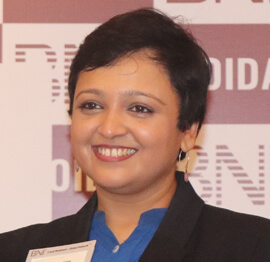
Bhavna Jain
Breakthrough Consultant

Naveen Sharma
Enterprise Architect, Leadership Coach, Author

Vidya Vrat Agarwal
Principal Architect, Microsoft MVP, Author

Sheetal Agarwal
Founder Clownselors, Medical Clown, Trainer

Abhishek Kant
Founder GTM Catalyst

Vishnu Saran
Founder & CEO VoiceQube

Sandeep Soni
Founder & CEO Deccansoft, Microsoft Certified Trainer

Parveen Malik
AVP InfoSec & Vulnerability Management, Information Security Expert

Nitin Pandit
Microsoft MVP, Developer Evangelist, Author

Niloshima Srivastava
C# Corner MVP, Tech Architect, Trainer, Blogger

Bala Chirtsabesan
Senior Software Engineer at Microsoft, Author

Manoj Mittal
Sr. Technical Architect, C# Corner MVP, Author

Chandni Di
Co-Founder Voice of Slum

Vithal Wadje
Technical Lead, Microsoft MVP, Author

Shivam Ahuja
Founder SkillCircle, Business Mentor

Chervine Bhiwoo
Solution Architect, Microsoft MVP, Author

Saurabh Jain
Vice President Paytm, Founder Fun2Do Labs, Author

Vinay Solanki
Head IoT at Lenovo, Founder IoT-NCR

Anshu kumari
Founder Blockchainkids, Inventor, Trainer

Amit Singal
CEO Startup Buddy

Dev Pratap
Co-Founder & CEO Voice of Slum

Amey Vartak
Technology Consultant, Full Stack Developer, C# Corner MVP, Author

Viswanatha Swamy
Principal Software Engineer, C# Corner MVP, Author

Sanket Verma
Research Engineer @ Ballistics (Forensics) and Chair, PyData Delhi

Sourabh Somani
Lead Developer, Microsoft MVP, Author

Abhishek Mishra
Software Architect, C# Corner MVP, Author

Siddharth Vaghasia
Technical Consultant, C# Corner MVP, Blogger

Bassam Alugili
Senior Software Specialist, Database Expert

S Ravi Kumar
Solution Architect, C# Corner MVP, Author

Sundaram Subramanian
Full Stack Developer, C# Corner MVP, Speaker

Deepesh Somani
Solution Architect, Microsoft MVP, Author

Debasis Saha
Technical Project Manager, C# Corner MVP, Blogger, Author

Vipul Jain
Software Architect, C# Corner MVP, Author

Akshay Patel
Technical Architect, Microsoft Certified Trainer, C# Corner MVP, Author

Stephen Simon
RPA Developer, Evangelist, Author

Vivek Sharma
Founder Kingster636, AR/VR Specialist

Jeetendra Gund
Technical Lead, C# Corner MVP, Author

Sujal Beniwal
AI Enthusiast, Student

M Viknaraj
Microsoft MVP, Azure Architect, Author

Prasham Sabadra
Software Architect, C# Corner MVP, Trainer, Author

Aakash Maurya
Senior Developer, C# Corner MVP, Speaker

Ankit Sharma
Senior Software Engineer, C# Corner MVP, Author

Mangesh Gaherwar
Team Lead, C# Corner MVP, Author

Viral Jain
Technical Consultant, C# Corner MVP, Author

Bhasker Das
Solution Architect, Evangelist

Manish Dwivedi
Associate Project Manager

Ck Nitin
Programmer, Author

Rohit Gupta
Technical Trainer, Author

Manish Tewatia
Full-stack Marketer, UX Designer

Bhavya Gaur
Technical Illustrator

Rohit Tomar
SEO/SMO Expert
Web Track
Cloud & Data Track
Dev Track
Registration & Breakfast
Future of Desktop Apps with JS (ElectronJs)
Nitin Pandit
Building Serverless Microservices Using Microsoft Azure
Vithal Wadje
Innovating RPA: A Robot for Every Person
Stephen Simon
Managing Cloud Storage Accounts using Logic Apps
Viknaraj Manogararajah
Data visualization using Python
Sekhar Srinivasan
Going Cross platform with AR Foundation
Vivek Sharma
Keynote
Managing your Azure dependencies in ASP.NET Core apps using VS
Bala Chirtsabesan
Securing Applications on Intelligent Azure
Abhishek Mishra
Getting started with Blazor the Framework of Future
S Ravi Kumar
Lunch
Build Progressive Web Apps using Angular 9
Debasis Saha
Build and deploy to any platform using Azure DevOps
Chervine Bhiwoo
Deep Dive in Azure Service Bus
Akshay Patel
Build a Native Mobile Application using React Native and JavaScript
Joseph Guadagno
Making sense of Web Job, Web Job SDK and Functions in Azure
Prakash Tripathi
CloudFront Distribution in AWS
Viral Jain
Tea Break
Introduction to PowerBI
Aakash Maurya
Build Advanced SPFx solutions with React and Graph API
Siddharth Vaghasia
Build Business Intelligence Analyst (BIA) Skills
Sundaram Subramanian
Deep dive of Power Platform – AI BUILDER
Prasham Sabadra
Panel 1
What's new in SharePoint development
Vipul Jain
Build a SSO (Single Sign On) based Native JavaScript application with Microsoft Identity within 10 minutes
Manoj Mittal
Panel 2
Applications and working of AI
Veena Sarda
Deploying serverless API's with .Net core 3.0 on AWS & Azure
Amey Vartak
Panel 3
Blockchain with .NET Core (Ark)
Anshu Kumari
Closing Note & Prize Distribution
Dev Track
Cloud Track
Architecture Track
Emerging Tech Track
Registration & Breakfast
Creating Full-Stack Web Apps Using Server-Side Blazor
Ankit Sharma
Real time face recognition with MS Cognitive Services
Niloshima Srivastava
Building Scalable APIs with GraphQL
Jeetendra Gund
Future of development with AI and Blockchain
Navdeep Garg
Debugging Tips and Tricks with Visual Studio 2019
Joseph Guadagno
Azure Containers
Abhishek Kant
Enterprise Architecture
Naveen Sharma
Bot Framework - learn it fast and look like a boss!
Allen O’Neill
Keynote
.Net Core & C# 8 Performance
David McCarter
Working with Azure kubernetes services
Ritesh Modi
Becoming an Architect
Vidyavrat Agarwal
Why Techies Need to Learn Product Management
Saurabh Jain
Lunch
Build a rules engine in .Net Core
Sanjay Vyas
Building CI and CD Pipeline using Azure DevOps
Sandeep Soni
Entity Framework Core - Tips and Tricks, Performance Optimization, and Tuning
Bassam Alugili
Hacking your way into Data Science
Sanket Verma
Speed up your .Net Core Website
Sourabh Somani
Azure
Magnus Mårtensson
Demystifying Open Distro for Elasticsearch
Suman Debnath
Future of Data
Shivam Ahuja
Tea Break
gRPC with C# and .Net Core
Mangesh Gaherwar
Panel 1
Essentials of Cloud security
Parveen Malik
Power platform and Dynamics 365
Deepesh Somani
Microservices - the gRPC Way
Viswanatha Swamy
Panel 2
Reserved
Reserved
Closing Note & Prize Distribution
Role-Based Access Control in Blazor with Authorization Policies
When you build line-of-business apps for Australian organisations, whether it's a claims portal for a private health fund in Sydney, a loan-origination system for a mutual bank in Melbourne, or an internal tool for a council in regional Queensland, you quickly hit the same wall: not every user should see every screen, and the rules around who-sees-what are often written into legislation like the Privacy Act or APRA's CPS 234. Role-based access control in Blazor, layered with ASP.NET Core's authorization policies, gives you a clean way to express those rules in code that is testable, auditable, and friendly to the kind of multi-tenant SaaS that many Aussie ISVs are shipping today.
The rest of this piece walks through the building blocks. We'll cover the difference between authentication and authorization, set up role seeding that survives a container restart, define policies beyond simple role checks, apply them in components, and finish with the production hardening that matters once auditors start asking questions — including how to keep access logs consistent across AEST, AEDT, and the various zones your international users might be sitting in.
Authentication, roles, and where policies fit
Authentication answers "who is this person?" and authorization answers "what are they allowed to do?". In Blazor Server and Blazor WebAssembly, both flow through the same ASP.NET Core ClaimsPrincipal, which carries the user's identity, role claims, and any custom claims you issue. Out of the box, you can stick [Authorize(Roles = "Admin")] on a page and the framework checks the role claim, but that approach quickly gets unwieldy. Once you have a dozen roles combining in different ways — for example, a "BranchManager" in Victoria who can also approve NSW loans up to a limit — inline role strings become a maintenance headache.
Policies solve this by letting you encapsulate a rule in one place and refer to it by name. A policy is a named bundle of one or more requirements, and each requirement is a small class that knows how to evaluate itself against the current user. This separation means your controller, page, or component never has to know the business logic of who is allowed to do what; it just asks for PolicyName, and the authorization handler figures out the rest. It's a pattern that lines up nicely with how compliance teams in Australian banks and government agencies prefer to see access rules documented — as discrete, testable units rather than strings sprinkled across a codebase.
Seeding roles in the identity store
Before any policy is useful, you need roles to exist. In a typical Blazor app backed by ASP.NET Core Identity, the RoleManager<IdentityRole> service seeds them at startup. A common pattern is a RoleSeeder hosted service that runs once on boot, creates the roles if they don't exist, and optionally assigns baseline permissions. The roles you pick should reflect your domain: for a health-tech product, you might have Practitioner, Receptionist, PracticeManager, and BillingOfficer; for a financial planning SaaS out of Brisbane, you might use Advisor, Paraplanner, ComplianceReviewer, and Admin.
A few details worth getting right for Australian deployments. Make the seeder idempotent so it's safe to run against a database that already has roles — Kubernetes pods in AKS often restart multiple times during a blue-green deploy, and you don't want a duplicate-key exception crashing the new pod. If you're using a SQL geo-replicated setup across Sydney and Melbourne regions for disaster recovery, ensure the seeding service waits for the primary to be writable before issuing role upserts. When you wire the AddDefaultIdentity call, consider raising the password complexity to a minimum length of 12, no common passwords, and ideally a check against the Pwned Passwords API. Local government and many enterprise customers will quietly fail your security review otherwise.
Defining policies that go beyond a single role
Once the roles are in place, the real work begins. In Program.cs, you register policies with AddAuthorization, which returns an AuthorizationOptions builder. The most common requirement is RequireRole, but it's only the start. RequireClaim lets you check for a custom claim — useful when a user has multiple roles and you need to know which state they operate in, a common pattern in the mutual banks that span NSW, VIC, and QLD. RequireAssertion is the escape hatch that lets you write a lambda against the AuthorizationHandlerContext, perfect for cross-claim rules like "the user's region claim must match the resource's region claim".
For more complex cases, build a custom IAuthorizationRequirement and its handler. A practical example is an OwnsClaimRequirement that lets a caseworker edit their own cases but only managers edit anyone's. Register the handler with DI as scoped, give the policy a stable name like CanEditCase, and you're done. Custom requirements are also a natural home for environment-aware checks — for instance, requiring that the user has accepted the latest terms of service version, which you can roll out incrementally as your legal team updates the wording for the Australian market.
Picking the right approach for a given surface is easier once you map the options against where they run, how granular they get, and what kind of rule they are best at expressing.
| Approach | Where it fits | Granularity | Best for |
|---|---|---|---|
[Authorize(Roles = "...")] attribute |
Pages, components, controllers | Coarse, role-only | Quick gating during prototyping |
AuthorizeView policy parameter |
Conditional UI inside a component | Page-level | Showing or hiding buttons and panels |
IAuthorizationService.AuthorizeAsync |
Inside a service or endpoint handler | Resource-level | Checking ownership, tenancy, or row-level rules |
Custom IAuthorizationHandler |
Multi-rule business logic | Fine-grained | Compliance-heavy, cross-claim, or data-driven policies |
Applying policies in components and endpoints
The two most common ways to enforce a policy in a Blazor app are the [Authorize] attribute and the AuthorizeView component. Use the attribute on @page routes and on API controllers that back your interactive components — that way the framework redirects unauthenticated users to the login page and shows NotAuthorized content to authenticated users who fail the policy. AuthorizeView is the right choice when you want to show different markup to different roles within the same page, for example, hiding a "Refund" button from frontline staff while showing it to team leaders.
For Server-Side Blazor, the policy check happens on the server because the circuit is server-hosted, so you get the same guarantees as a regular ASP.NET Core app. For WebAssembly, the policy is evaluated in the browser using the claims shipped with the user's access token, which means your policy logic must be self-contained and cannot query a database. Most Australian teams build Blazor Server or Blazor United for internal tools and use Blazor WebAssembly only for the read-heavy public surface, which keeps the policy story simple.
When you do need resource-based checks on the client, send the data to a Web API endpoint that itself is protected by the same policy name — the client never makes the access decision alone. This is especially important for healthcare and financial products where a token-tampering bug would land you on the front page of a major newspaper, and where the ATO's notifiable data breach scheme kicks in quickly.
Programmatic checks, auditing, and production hygiene
Sometimes the policy name isn't enough and you need to ask a deeper question: "can this specific user perform this specific action on this specific record?". That's where IAuthorizationService.AuthorizeAsync(user, resource, policyName) comes in. Inject the service into your data layer, run the check before mutating state, and you'll get the same AuthorizationResult object the framework uses internally. This pattern is essential for row-level security in multi-tenant systems and is the basis for the kind of fine-grained audit trails APRA expects under CPS 234.
Speaking of audit trails, every authorization decision is worth logging. Capture the user ID, the policy name, the resource identifier, the result, and a timestamp. That last field is where Australian teams regularly trip up: servers run in UTC, users are spread across AEST, AEDT, ACST, and AWST, and logs often end up in an analytics platform with its own time zone defaults. The cleanest approach is to store every timestamp in UTC, then render it in the viewer's local zone at read time, ideally through a library that understands daylight saving transitions cleanly. If you're already using NodaTime elsewhere, the same approach in time zone handling globally applies directly to your access log pipeline.
Finally, write tests for your policies. The AuthorizationOptions you build in Program.cs can be exercised through PolicyEvaluator, and your custom handlers can be unit-tested by constructing a ClaimsPrincipal with the relevant claims and calling HandleRequirementAsync directly. A solid policy test suite is your best evidence during a security review, which the C# Corner crowd in Melbourne and Sydney keeps reminding each other about at the local .NET meetups.
Recommendations for shipping RBAC in Blazor to production
Putting it all together is less about clever framework tricks and more about consistency. The teams shipping Blazor securely to Australian customers treat role and policy definitions the way they treat database schemas: versioned, code-reviewed, and tested. Once you accept that frame of mind, a lot of the usual RBAC arguments — should this live in the database, in policy files, in attribute strings, or in feature flags — dissolve into a simple answer: the policy easiest to test is the one that will actually be correct.
- Keep the role list in a single constants file and reference it from the seeder, the policies, and any UI dropdowns so a rename never goes out of sync.
- Prefer policies over inline role strings on every public surface and treat raw
[Authorize(Roles = "...")]as a code smell to refactor during the next sprint. - Make the role seeder idempotent and reentrant so it survives container restarts and geo-failover between Australian regions without manual intervention.
- Log every authorization decision with a UTC timestamp and a stable policy name, then render timestamps in the viewer's zone to keep the experience sane for staff who fly between Perth and Sydney in the same week.
- Cover each custom policy with at least one positive and one negative unit test before it lands in the main branch.












1, CBD, Maharaj Surajmal Road, Near Yamuna Sports Complex, Delhi, 110032





GENERAL QUERIES
Manish Tewatia
manish@csharpcon.com
+91-9718-431-042
TICKET QUERIES
Atul Gupta
conference@csharpcon.com
+91-9910-125-804