

Presents


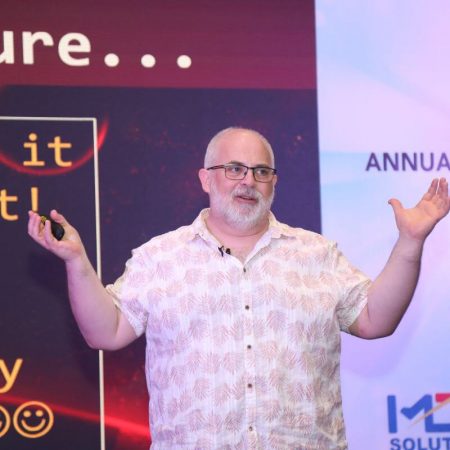
Magnus Mårtensson
Microsoft Regional Director, Azure MVP, CEO Loftysoft

Avirag Jain
Director & CTO R Systems

Mahesh Chand
Founder C# Corner, CEO Mindcracker

Chris Gali
CEO & Co-Founder Graphite

Subinder Khurana
Chief Architect StoryProcess, Founder NASSCOM DeepTech Club

Bryan Rishforth
Investor, Chairman Graphite

Bryn Everson
Director Biz Dev Graphite

Raj Tiwari
Digital Transformation Leader, Futurist and Visionary

Joseph Guadagno
Microsoft MVP, Lead Quicken Loans

Nikita Sachdev
Entrepreneur, Blockchain Enthusiast & Advisor, Social Media Influencer

Doug Wagner
COO & Founder Adapt Technical Group

Ritesh Modi
Architect, Senior Evangelist, Cloud Architect

Crystal Wenrick
Director Communications Mindcracker

Allen O’Neill
Microsoft MVP, Consulting Engineer/Architect

Praveen Kumar
CEO MCN Solutions

Chris Love
Founder Love2Dev, Microsoft MVP, Author

Sanjay Vyas
Microsoft Regional Director, Microsoft MVP, Founder & CEO SkillLabs Technologies

Veena Sarda
Deep Learning Consultant, Author

Sekhar Srinivasan
C# Corner MVP, Microsoft Certified Trainer, Pluralsight Author

Lalit Bansal
Founder & CEO - EIY SYS

Navdeep Garg
CEO Revinfotech

Prakash Tripathi
Tech Manager/Leader, Microsoft MVP, Blogger

Bhavna Jain
Breakthrough Consultant

Naveen Sharma
Enterprise Architect, Leadership Coach, Author

Vidya Vrat Agarwal
Principal Architect, Microsoft MVP, Author

Sheetal Agarwal
Founder Clownselors, Medical Clown, Trainer

Abhishek Kant
Founder GTM Catalyst

Vishnu Saran
Founder & CEO VoiceQube

Sandeep Soni
Founder & CEO Deccansoft, Microsoft Certified Trainer

Parveen Malik
AVP InfoSec & Vulnerability Management, Information Security Expert

Nitin Pandit
Microsoft MVP, Developer Evangelist, Author

Niloshima Srivastava
C# Corner MVP, Tech Architect, Trainer, Blogger

Bala Chirtsabesan
Senior Software Engineer at Microsoft, Author

Manoj Mittal
Sr. Technical Architect, C# Corner MVP, Author

Chandni Di
Co-Founder Voice of Slum

Vithal Wadje
Technical Lead, Microsoft MVP, Author

Shivam Ahuja
Founder SkillCircle, Business Mentor

Chervine Bhiwoo
Solution Architect, Microsoft MVP, Author

Saurabh Jain
Vice President Paytm, Founder Fun2Do Labs, Author

Vinay Solanki
Head IoT at Lenovo, Founder IoT-NCR

Anshu kumari
Founder Blockchainkids, Inventor, Trainer

Amit Singal
CEO Startup Buddy

Dev Pratap
Co-Founder & CEO Voice of Slum

Amey Vartak
Technology Consultant, Full Stack Developer, C# Corner MVP, Author

Viswanatha Swamy
Principal Software Engineer, C# Corner MVP, Author

Sanket Verma
Research Engineer @ Ballistics (Forensics) and Chair, PyData Delhi

Sourabh Somani
Lead Developer, Microsoft MVP, Author

Abhishek Mishra
Software Architect, C# Corner MVP, Author

Siddharth Vaghasia
Technical Consultant, C# Corner MVP, Blogger

Bassam Alugili
Senior Software Specialist, Database Expert

S Ravi Kumar
Solution Architect, C# Corner MVP, Author

Sundaram Subramanian
Full Stack Developer, C# Corner MVP, Speaker

Deepesh Somani
Solution Architect, Microsoft MVP, Author

Debasis Saha
Technical Project Manager, C# Corner MVP, Blogger, Author

Vipul Jain
Software Architect, C# Corner MVP, Author

Akshay Patel
Technical Architect, Microsoft Certified Trainer, C# Corner MVP, Author

Stephen Simon
RPA Developer, Evangelist, Author

Vivek Sharma
Founder Kingster636, AR/VR Specialist

Jeetendra Gund
Technical Lead, C# Corner MVP, Author

Sujal Beniwal
AI Enthusiast, Student

M Viknaraj
Microsoft MVP, Azure Architect, Author

Prasham Sabadra
Software Architect, C# Corner MVP, Trainer, Author

Aakash Maurya
Senior Developer, C# Corner MVP, Speaker

Ankit Sharma
Senior Software Engineer, C# Corner MVP, Author

Mangesh Gaherwar
Team Lead, C# Corner MVP, Author

Viral Jain
Technical Consultant, C# Corner MVP, Author

Bhasker Das
Solution Architect, Evangelist

Manish Dwivedi
Associate Project Manager

Ck Nitin
Programmer, Author

Rohit Gupta
Technical Trainer, Author

Manish Tewatia
Full-stack Marketer, UX Designer

Bhavya Gaur
Technical Illustrator

Rohit Tomar
SEO/SMO Expert
Web Track
Cloud & Data Track
Dev Track
Registration & Breakfast
Future of Desktop Apps with JS (ElectronJs)
Nitin Pandit
Building Serverless Microservices Using Microsoft Azure
Vithal Wadje
Innovating RPA: A Robot for Every Person
Stephen Simon
Managing Cloud Storage Accounts using Logic Apps
Viknaraj Manogararajah
Data visualization using Python
Sekhar Srinivasan
Going Cross platform with AR Foundation
Vivek Sharma
Keynote
Managing your Azure dependencies in ASP.NET Core apps using VS
Bala Chirtsabesan
Securing Applications on Intelligent Azure
Abhishek Mishra
Getting started with Blazor the Framework of Future
S Ravi Kumar
Lunch
Build Progressive Web Apps using Angular 9
Debasis Saha
Build and deploy to any platform using Azure DevOps
Chervine Bhiwoo
Deep Dive in Azure Service Bus
Akshay Patel
Build a Native Mobile Application using React Native and JavaScript
Joseph Guadagno
Making sense of Web Job, Web Job SDK and Functions in Azure
Prakash Tripathi
CloudFront Distribution in AWS
Viral Jain
Tea Break
Introduction to PowerBI
Aakash Maurya
Build Advanced SPFx solutions with React and Graph API
Siddharth Vaghasia
Build Business Intelligence Analyst (BIA) Skills
Sundaram Subramanian
Deep dive of Power Platform – AI BUILDER
Prasham Sabadra
Panel 1
What's new in SharePoint development
Vipul Jain
Build a SSO (Single Sign On) based Native JavaScript application with Microsoft Identity within 10 minutes
Manoj Mittal
Panel 2
Applications and working of AI
Veena Sarda
Deploying serverless API's with .Net core 3.0 on AWS & Azure
Amey Vartak
Panel 3
Blockchain with .NET Core (Ark)
Anshu Kumari
Closing Note & Prize Distribution
Dev Track
Cloud Track
Architecture Track
Emerging Tech Track
Registration & Breakfast
Creating Full-Stack Web Apps Using Server-Side Blazor
Ankit Sharma
Real time face recognition with MS Cognitive Services
Niloshima Srivastava
Building Scalable APIs with GraphQL
Jeetendra Gund
Future of development with AI and Blockchain
Navdeep Garg
Debugging Tips and Tricks with Visual Studio 2019
Joseph Guadagno
Azure Containers
Abhishek Kant
Enterprise Architecture
Naveen Sharma
Bot Framework - learn it fast and look like a boss!
Allen O’Neill
Keynote
.Net Core & C# 8 Performance
David McCarter
Working with Azure kubernetes services
Ritesh Modi
Becoming an Architect
Vidyavrat Agarwal
Why Techies Need to Learn Product Management
Saurabh Jain
Lunch
Build a rules engine in .Net Core
Sanjay Vyas
Building CI and CD Pipeline using Azure DevOps
Sandeep Soni
Entity Framework Core - Tips and Tricks, Performance Optimization, and Tuning
Bassam Alugili
Hacking your way into Data Science
Sanket Verma
Speed up your .Net Core Website
Sourabh Somani
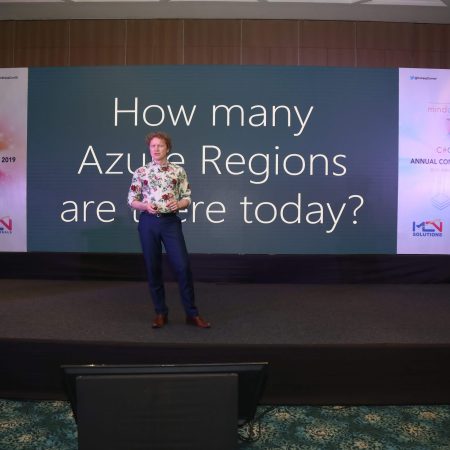
Azure
Magnus Mårtensson
Demystifying Open Distro for Elasticsearch
Suman Debnath
Future of Data
Shivam Ahuja
Tea Break
gRPC with C# and .Net Core
Mangesh Gaherwar
Panel 1
Essentials of Cloud security
Parveen Malik
Power platform and Dynamics 365
Deepesh Somani
Microservices - the gRPC Way
Viswanatha Swamy
Panel 2
Reserved
Reserved
Closing Note & Prize Distribution
Creating a custom model binder for encrypted query strings in MVC
Query strings are convenient for search filters, invitations, report parameters and deep links. They are also visible in browser history, server logs, analytics tools, proxy records and referrer headers. If a URL carries an internal customer identifier, pricing rule or workflow state, ordinary query-string binding exposes more information than the application may intend.
A custom model binder provides a clean boundary between that URL token and the strongly typed object used by an ASP.NET MVC action. The controller receives a validated request model instead of manually decoding, decrypting and deserialising values in every action.
This pattern fits well with the practical, cross-platform themes found in the C# Corner conference, particularly sessions covering Microsoft Azure, web development, DevOps and application security. The implementation below focuses on classic ASP.NET MVC, while noting the corresponding choices for ASP.NET Core.
Why protect values in a query string
Encoding is not encryption. URL encoding changes characters so that a value can travel safely in a URL, while Base64 changes its representation. Neither prevents someone from reading or modifying the content. A signed token can reveal its contents while proving that it has not been altered; an encrypted token provides confidentiality as well as integrity.
A useful Australian example is a customer portal serving users in Sydney, Melbourne and Perth. A report link may contain an account number, date range and permission context. Even when the portal uses HTTPS, those values can still appear in application diagnostics or a copied browser URL. Encryption reduces exposure, although it does not make a URL a suitable place for passwords, payment details or large documents.
The binder should therefore enforce a narrow contract. It should read one parameter, reject malformed or oversized input, decrypt with an authenticated protection mechanism, deserialise into a known type and leave business validation to the model or service layer. It should never silently fall back to an unprotected version of the same data.
Select authenticated protection and a safe token format
For ASP.NET MVC on .NET Framework, MachineKey.Protect is a practical option when the application is configured consistently across its servers. It provides encryption and tamper detection, and the application can isolate tokens by assigning a specific purpose string. In a web farm, every node must share the relevant machine-key configuration; otherwise, a link created on one node may fail when opened on another.
The protected bytes need a URL-safe representation. HttpServerUtility.UrlTokenEncode is suitable for classic MVC because it avoids characters such as +, / and = that can be awkward in query strings. A short lifetime, a version marker and an optional audience value can be included in the protected payload. Do not put the encryption key in web.config source control or in the URL itself.
using System.Text;
using System.Web;
using System.Web.Security;
using Newtonsoft.Json;

public static class QueryToken
{
    private const string Purpose = "Portal.EncryptedQuery.v1";

    public static string Create<T>(T value)
    {
        var json = JsonConvert.SerializeObject(value);
        var plainBytes = Encoding.UTF8.GetBytes(json);
        var protectedBytes = MachineKey.Protect(plainBytes, Purpose);

        return HttpServerUtility.UrlTokenEncode(protectedBytes);
    }

    public static T Read<T>(string token)
    {
        var protectedBytes = HttpServerUtility.UrlTokenDecode(token);
        if (protectedBytes == null)
            throw new InvalidOperationException("The token is not valid.");

        var plainBytes = MachineKey.Unprotect(protectedBytes, Purpose);
        if (plainBytes == null)
            throw new InvalidOperationException("The token cannot be authenticated.");

        var json = Encoding.UTF8.GetString(plainBytes);
        return JsonConvert.DeserializeObject<T>(json);
    }
}
MachineKey.Unprotect authenticates the ciphertext before returning plaintext, so an attacker cannot safely alter an account ID or permission flag. For Azure-hosted systems, keep key management aligned across instances and deployment slots. A production application may instead use an external key-management service, provided the protection library still offers authenticated encryption and reliable key rotation.
Define a small request model
The model should contain only values needed by the endpoint. A report link might use a customer reference, a date range and a display mode, rather than serialising an entire domain entity. Smaller payloads produce shorter URLs and reduce the effect of accidental disclosure.
public sealed class ReportQuery
{
    public string CustomerReference { get; set; }
    public DateTime From { get; set; }
    public DateTime To { get; set; }
    public string Format { get; set; }
}
Avoid accepting arbitrary .NET types or enabling Newtonsoft.Json TypeNameHandling for a token supplied by a browser. Deserialise into a fixed model and apply allow-lists to fields such as Format. A user might change a valid token only by breaking its authentication, but authorised users can still create links with values that are valid cryptographically and inappropriate for the business.
Expiry and replay controls belong in the payload or in server-side state. For example, include IssuedAt, ExpiresAt and a random token identifier, then reject expired values and optionally record used identifiers. Encryption does not automatically prevent a legitimate token from being copied and replayed.
Build the MVC model binder
The binder retrieves the encrypted value through MVC’s value provider, which means it works with the normal query-string pipeline. It should use the parameter name supplied by the action, impose a length limit and convert all expected failures into model-state errors. Returning a detailed cryptographic exception to the browser would disclose implementation information.
using System;
using System.Text;
using System.Web;
using System.Web.Mvc;
using Newtonsoft.Json;

public sealed class EncryptedQueryModelBinder : IModelBinder
{
    private const string Purpose = "Portal.EncryptedQuery.v1";
    private const int MaximumTokenLength = 4096;

    public object BindModel(
        ControllerContext controllerContext,
        ModelBindingContext bindingContext)
    {
        var value = bindingContext.ValueProvider
            .GetValue(bindingContext.ModelName);

        if (value == null || String.IsNullOrWhiteSpace(value.AttemptedValue))
        {
            bindingContext.ModelState.AddModelError(
                bindingContext.ModelName, "A query token is required.");
            return null;
        }

        var token = value.AttemptedValue;
        if (token.Length > MaximumTokenLength)
        {
            bindingContext.ModelState.AddModelError(
                bindingContext.ModelName, "The query token is too large.");
            return null;
        }

        try
        {
            var protectedBytes = HttpServerUtility.UrlTokenDecode(token);
            var plainBytes = MachineKey.Unprotect(protectedBytes, Purpose);

            if (plainBytes == null)
                throw new InvalidOperationException();

            var json = Encoding.UTF8.GetString(plainBytes);
            return JsonConvert.DeserializeObject(
                json, bindingContext.ModelType);
        }
        catch (Exception ex) when (
            ex is ArgumentException ||
            ex is InvalidOperationException ||
            ex is JsonException)
        {
            bindingContext.ModelState.AddModelError(
                bindingContext.ModelName, "The query token is invalid.");
            return null;
        }
    }
}
In a real application, catch only the exceptions expected from malformed input and log a safe event identifier rather than the token or decrypted JSON. A null protected byte array should be handled before calling the unprotect method if the selected framework version does not accept null input. Add data annotations or a separate validator after binding so that date ranges, customer access and permitted formats are checked consistently.
Register and consume the binder
The global registration option is straightforward:
public static class MvcConfig
{
    public static void RegisterBinders()
    {
        ModelBinders.Binders.Add(
            typeof(ReportQuery),
            new EncryptedQueryModelBinder());
    }
}
Call the registration method during application startup. An action can then receive a typed object:
public ActionResult Report(ReportQuery query)
{
    if (!ModelState.IsValid)
        return new HttpStatusCodeResult(400);

    // Authorise query.CustomerReference before loading report data.
    return View(query);
}
For a binder used by only one endpoint, an attribute can make the dependency explicit:
public ActionResult Report(
    [ModelBinder(typeof(EncryptedQueryModelBinder))]
    ReportQuery query)
{
    if (!ModelState.IsValid)
        return new HttpStatusCodeResult(400);

    return View(query);
}
The URL generator must use the same parameter name expected by the action. For example, ?query=... binds naturally to ReportQuery query, while ?token=... requires a matching parameter name or a binder that deliberately reads token. This small detail often causes confusion during testing, especially when a developer is switching between local IIS Express and a hosted environment in Brisbane or Canberra.
Test the boundary and operational behaviour
Tests should cover a valid token, a modified character, an expired payload, an empty value, invalid Base64-like input, oversized input and JSON with an unexpected property. Verify that each invalid case produces a model-state error and a controlled HTTP response. Test links generated by every deployment node when the application runs behind a load balancer.
Logging needs special care. Record the route, outcome, correlation ID and perhaps a hash of the token, but never the raw query string or decrypted object. Australian organisations handling personal information should consider the Privacy Act and the Australian Privacy Principles when deciding what appears in logs, support tickets and analytics platforms. This is especially important for health, education and financial services.
The following approaches solve different problems and should not be treated as interchangeable:
| Approach | Confidentiality | Tamper detection | Typical use | Main concern |
|---|---|---|---|---|
| Plain query parameters | No | No | Public filters and pagination | Values are visible and editable |
| URL encoding or Base64 | No | No | Transport formatting | Often mistaken for security |
| Signed query token | No | Yes | Integrity-sensitive public links | Contents remain readable |
| Encrypted query token | Yes | Yes, with authenticated encryption | Protected workflow and report links | Key management and expiry |
| Server-side opaque ID | Yes, if data stays server-side | Yes, through lookup rules | Sensitive or large state | Storage, lookup and revocation |
Keep tokens short enough for browsers, email clients and reverse proxies. An encrypted query string is still part of a URL, and URLs can be truncated or copied. Where a link becomes too large, store the state server-side and send an opaque, expiring identifier instead.
Adapt the pattern for ASP.NET Core
ASP.NET Core uses a different dependency-injection model and normally combines IModelBinder, IModelBinderProvider and IDataProtector. The conceptual flow remains the same: obtain the named value, unprotect it with a purpose, deserialise to a known request type, validate it and add a model-state error when the token fails.
IDataProtectionProvider.CreateProtector("Portal.EncryptedQuery.v1") is preferable to implementing cryptography directly. In Azure App Service or a container platform, persist and share the data-protection key ring across instances and deployment changes. Otherwise, a restart or slot swap can invalidate links unexpectedly. Key rotation should be planned so that old tokens remain readable only for their intended lifetime.
A custom binder is most useful when the encrypted value represents a coherent request object. It should not become a general-purpose bypass around authorisation. The controller or service must still check the current user’s permissions against the decrypted customer reference, enforce expiry, apply business rules and avoid placing secrets in URLs. With those boundaries in place, encrypted query binding gives MVC applications a predictable way to handle protected links across Australian networks, cloud regions and multi-server deployments.












1, CBD, Maharaj Surajmal Road, Near Yamuna Sports Complex, Delhi, 110032





GENERAL QUERIES
Manish Tewatia
manish@csharpcon.com
+91-9718-431-042
TICKET QUERIES
Atul Gupta
conference@csharpcon.com
+91-9910-125-804