
Presents


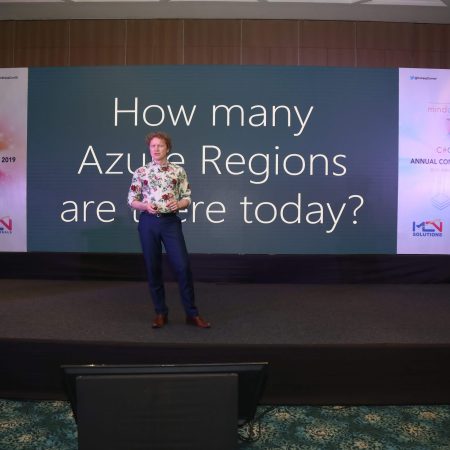
Magnus Mårtensson
Microsoft Regional Director, Azure MVP, CEO Loftysoft

Avirag Jain
Director & CTO R Systems

Mahesh Chand
Founder C# Corner, CEO Mindcracker

Chris Gali
CEO & Co-Founder Graphite

Subinder Khurana
Chief Architect StoryProcess, Founder NASSCOM DeepTech Club

Bryan Rishforth
Investor, Chairman Graphite

Bryn Everson
Director Biz Dev Graphite

Raj Tiwari
Digital Transformation Leader, Futurist and Visionary

Joseph Guadagno
Microsoft MVP, Lead Quicken Loans

Nikita Sachdev
Entrepreneur, Blockchain Enthusiast & Advisor, Social Media Influencer

Doug Wagner
COO & Founder Adapt Technical Group

Ritesh Modi
Architect, Senior Evangelist, Cloud Architect

Crystal Wenrick
Director Communications Mindcracker

Allen O’Neill
Microsoft MVP, Consulting Engineer/Architect

Praveen Kumar
CEO MCN Solutions

Chris Love
Founder Love2Dev, Microsoft MVP, Author

Sanjay Vyas
Microsoft Regional Director, Microsoft MVP, Founder & CEO SkillLabs Technologies

Veena Sarda
Deep Learning Consultant, Author

Sekhar Srinivasan
C# Corner MVP, Microsoft Certified Trainer, Pluralsight Author

Lalit Bansal
Founder & CEO - EIY SYS

Navdeep Garg
CEO Revinfotech

Prakash Tripathi
Tech Manager/Leader, Microsoft MVP, Blogger

Bhavna Jain
Breakthrough Consultant

Naveen Sharma
Enterprise Architect, Leadership Coach, Author

Vidya Vrat Agarwal
Principal Architect, Microsoft MVP, Author

Sheetal Agarwal
Founder Clownselors, Medical Clown, Trainer

Abhishek Kant
Founder GTM Catalyst

Vishnu Saran
Founder & CEO VoiceQube

Sandeep Soni
Founder & CEO Deccansoft, Microsoft Certified Trainer

Parveen Malik
AVP InfoSec & Vulnerability Management, Information Security Expert

Nitin Pandit
Microsoft MVP, Developer Evangelist, Author

Niloshima Srivastava
C# Corner MVP, Tech Architect, Trainer, Blogger

Bala Chirtsabesan
Senior Software Engineer at Microsoft, Author

Manoj Mittal
Sr. Technical Architect, C# Corner MVP, Author

Chandni Di
Co-Founder Voice of Slum

Vithal Wadje
Technical Lead, Microsoft MVP, Author

Shivam Ahuja
Founder SkillCircle, Business Mentor

Chervine Bhiwoo
Solution Architect, Microsoft MVP, Author

Saurabh Jain
Vice President Paytm, Founder Fun2Do Labs, Author

Vinay Solanki
Head IoT at Lenovo, Founder IoT-NCR

Anshu kumari
Founder Blockchainkids, Inventor, Trainer

Amit Singal
CEO Startup Buddy

Dev Pratap
Co-Founder & CEO Voice of Slum

Amey Vartak
Technology Consultant, Full Stack Developer, C# Corner MVP, Author

Viswanatha Swamy
Principal Software Engineer, C# Corner MVP, Author

Sanket Verma
Research Engineer @ Ballistics (Forensics) and Chair, PyData Delhi

Sourabh Somani
Lead Developer, Microsoft MVP, Author

Abhishek Mishra
Software Architect, C# Corner MVP, Author

Siddharth Vaghasia
Technical Consultant, C# Corner MVP, Blogger

Bassam Alugili
Senior Software Specialist, Database Expert

S Ravi Kumar
Solution Architect, C# Corner MVP, Author

Sundaram Subramanian
Full Stack Developer, C# Corner MVP, Speaker

Deepesh Somani
Solution Architect, Microsoft MVP, Author

Debasis Saha
Technical Project Manager, C# Corner MVP, Blogger, Author

Vipul Jain
Software Architect, C# Corner MVP, Author

Akshay Patel
Technical Architect, Microsoft Certified Trainer, C# Corner MVP, Author

Stephen Simon
RPA Developer, Evangelist, Author

Vivek Sharma
Founder Kingster636, AR/VR Specialist

Jeetendra Gund
Technical Lead, C# Corner MVP, Author

Sujal Beniwal
AI Enthusiast, Student

M Viknaraj
Microsoft MVP, Azure Architect, Author

Prasham Sabadra
Software Architect, C# Corner MVP, Trainer, Author

Aakash Maurya
Senior Developer, C# Corner MVP, Speaker

Ankit Sharma
Senior Software Engineer, C# Corner MVP, Author

Mangesh Gaherwar
Team Lead, C# Corner MVP, Author

Viral Jain
Technical Consultant, C# Corner MVP, Author

Bhasker Das
Solution Architect, Evangelist

Manish Dwivedi
Associate Project Manager

Ck Nitin
Programmer, Author

Rohit Gupta
Technical Trainer, Author

Manish Tewatia
Full-stack Marketer, UX Designer

Bhavya Gaur
Technical Illustrator

Rohit Tomar
SEO/SMO Expert
Web Track
Cloud & Data Track
Dev Track
Registration & Breakfast
Future of Desktop Apps with JS (ElectronJs)
Nitin Pandit
Building Serverless Microservices Using Microsoft Azure
Vithal Wadje
Innovating RPA: A Robot for Every Person
Stephen Simon
Managing Cloud Storage Accounts using Logic Apps
Viknaraj Manogararajah
Data visualization using Python
Sekhar Srinivasan
Going Cross platform with AR Foundation
Vivek Sharma
Keynote
Managing your Azure dependencies in ASP.NET Core apps using VS
Bala Chirtsabesan
Securing Applications on Intelligent Azure
Abhishek Mishra
Getting started with Blazor the Framework of Future
S Ravi Kumar
Lunch
Build Progressive Web Apps using Angular 9
Debasis Saha
Build and deploy to any platform using Azure DevOps
Chervine Bhiwoo
Deep Dive in Azure Service Bus
Akshay Patel
Build a Native Mobile Application using React Native and JavaScript
Joseph Guadagno
Making sense of Web Job, Web Job SDK and Functions in Azure
Prakash Tripathi
CloudFront Distribution in AWS
Viral Jain
Tea Break
Introduction to PowerBI
Aakash Maurya
Build Advanced SPFx solutions with React and Graph API
Siddharth Vaghasia
Build Business Intelligence Analyst (BIA) Skills
Sundaram Subramanian
Deep dive of Power Platform – AI BUILDER
Prasham Sabadra
Panel 1
What's new in SharePoint development
Vipul Jain
Build a SSO (Single Sign On) based Native JavaScript application with Microsoft Identity within 10 minutes
Manoj Mittal
Panel 2
Applications and working of AI
Veena Sarda
Deploying serverless API's with .Net core 3.0 on AWS & Azure
Amey Vartak
Panel 3
Blockchain with .NET Core (Ark)
Anshu Kumari
Closing Note & Prize Distribution
Dev Track
Cloud Track
Architecture Track
Emerging Tech Track
Registration & Breakfast
Creating Full-Stack Web Apps Using Server-Side Blazor
Ankit Sharma
Real time face recognition with MS Cognitive Services
Niloshima Srivastava
Building Scalable APIs with GraphQL
Jeetendra Gund
Future of development with AI and Blockchain
Navdeep Garg
Debugging Tips and Tricks with Visual Studio 2019
Joseph Guadagno
Azure Containers
Abhishek Kant
Enterprise Architecture
Naveen Sharma
Bot Framework - learn it fast and look like a boss!
Allen O’Neill
Keynote
.Net Core & C# 8 Performance
David McCarter
Working with Azure kubernetes services
Ritesh Modi
Becoming an Architect
Vidyavrat Agarwal
Why Techies Need to Learn Product Management
Saurabh Jain
Lunch
Build a rules engine in .Net Core
Sanjay Vyas
Building CI and CD Pipeline using Azure DevOps
Sandeep Soni
Entity Framework Core - Tips and Tricks, Performance Optimization, and Tuning
Bassam Alugili
Hacking your way into Data Science
Sanket Verma
Speed up your .Net Core Website
Sourabh Somani
Azure
Magnus Mårtensson
Demystifying Open Distro for Elasticsearch
Suman Debnath
Future of Data
Shivam Ahuja
Tea Break
gRPC with C# and .Net Core
Mangesh Gaherwar
Panel 1
Essentials of Cloud security
Parveen Malik
Power platform and Dynamics 365
Deepesh Somani
Microservices - the gRPC Way
Viswanatha Swamy
Panel 2
Reserved
Reserved
Closing Note & Prize Distribution
Building a cross-platform console app that bridges nopCommerce and .NET MAUI
Cross-platform tooling has reshaped how Australian software teams ship commerce systems. Small studios in Surry Hills and larger outfits in the Perth resources corridor now expect a single codebase to run on a developer's Windows rig, a MacBook belonging to the design lead, and a Linux box in a managed datacentre. The release of .NET MAUI pulled legacy WinForms and Xamarin approaches into a unified pipeline, while nopCommerce continues to anchor the back-office for many retailers from Brisbane to Ballarat. Marrying the two through a console application gives operators a way to push product data, sync stock, and fire off background jobs without dragging a UI along for the trip.
What follows is a practical walkthrough of how the pieces fit together. It covers the project skeleton, the data contracts, the interop choices, and the things you only learn when you ship to a fleet of mixed machines. The aim is to help anyone staring at a greenfield console window understand how the .NET MAUI and nopCommerce worlds can talk to each other without paying a heavy tax in dependency weight. There is no claim of a silver bullet, only patterns that have aged well on real customer projects.
The structure mirrors the order you would tackle the work in a real engagement. Set up the solution, model the data, decide how the interop will happen, wire up the console, and finish by automating the build. Australian realities such as ATO-compliant tax handling, GST-inclusive pricing, and the realities of deploying across the NBN at the edge also get a fair run, because those tend to be the things that bite first.
Project layout and shared libraries
A clean separation between domain, infrastructure, and entry point keeps the console app honest. Most teams start with three projects inside one solution: a class library that holds the nopCommerce entity mappings, a second class library for the .NET MAUI shell when a UI is genuinely required, and a netcoreapp entry project containing Program.cs. The console target keeps the runtime light, which matters when the same code is later deployed to a kennel of Raspberry Pis handling overnight sync jobs. The class libraries target netstandard2.1 so that both the console and the MAUI shell can reference them without ceremony.
A sensible convention is to keep Domain, Infrastructure, and Cli folders inside the shared library rather than scattering types through half a dozen projects. Each folder carries its own namespace prefix, which makes IntelliSense behave like a catalogue rather than a junk drawer. Australian teams that hold a regular arvo code review often find this naming discipline cuts down on PR noise, because diffs become self-describing. It also makes it harder for an eager junior to wire a console dependency into a MAUI view model by accident, which is a refactor nobody enjoys at five o'clock on a Friday.
A final touch worth adding early is a Directory.Build.props file in the repo root. This file lets every project pick up the same LangVersion, Nullable, and TreatWarningsAsErrors flags without anyone having to remember them. It is the kind of plumbing nobody notices when it works and everyone curses when it is absent. Add a shared EditorConfig for the same reason, and the team gets consistent formatting across Visual Studio, Rider, and the odd VS Code install that the Perth contractor prefers.
Talking to the nopCommerce data layer
nopCommerce exposes a layered repository pattern built around Entity Framework, plus a rich domain model that most teams only ever see the top of. The cleanest interop strategy is to reach the public Web API rather than talk to the database directly, because that surface is stable across the 4.5x and 4.6x branches that Australian hosts often run side by side. A small NopClient class wrapping HttpClient with named HttpClientFactory instances is usually the starting point. Configure it once with the shop URL, an API key, and a sensible timeout, then expose typed methods such as GetProductsAsync, UpdateStockAsync, and GetOrdersAsync.
Authentication is straightforward: a static API key sent as a custom header is enough for server-to-server traffic. For local debugging, store the key in appsettings.Development.json and add it to .gitignore so it does not slip into a public repo. Many Sydney studios use Azure App Configuration or a similar Key Vault-backed source so the same key rotates across staging and production without anyone editing config files. If you are running on a Linux VM in Sydney or Melbourne, environment variables are perfectly fine for the same purpose and avoid the need for a secrets manager on a tight budget.
Be careful around GST. Australian stores display GST-inclusive prices by law, but the database and API often store the tax-exclusive base price plus a separate tax record. The console app needs to apply the conversion if the output is destined for an end-customer touchpoint, but leave it alone if the consumer is another back-office system. A small helper method that takes a price and a tax category is enough to keep this honest. Soak tests that round-trip values to and from the API will catch regressions before customers do.
.NET MAUI essentials for a console-first workflow
.NET MAUI often shows up in cross-platform talks as a UI toolkit, but its core is a project system that can target multiple heads. A net8.0-maui project compiles down to whatever head you ask it to, including a net8.0 console head with the right OutputType switch. This is a useful trick when you want to reuse the same business logic on a desktop admin tool and a server-side worker, without duplicating the dependency injection setup. A minimal MauiApp.CreateBuilder call, then a ConfigureServices extension that registers INopClient, ILogger, and the workers, gives you the same composition root whether the host is MAUI or a console.
The console project just calls Host.CreateDefaultBuilder(args) and chains the same ConfigureServices extensions. The two entry points then share everything except the actual Run step. This pattern ages well because the dependency graph stays in one place. Newer wiring should be added to the shared extensions, not duplicated at each entry point. A useful habit is to keep Program.cs tiny in both projects, no more than a few lines that build and start the host, so the bulk of the wiring lives where it can be unit tested.
Where MAUI earns its keep is in any operator dashboard that later needs to ride along. An Australian retailer that wants a tablet view of stock for a busy Saturday in a Melbourne laneway store can host the same dashboard on iPad, Android, and Windows without touching the business layer. The console side keeps the lights on and the queues drained, while the MAUI app remains an opt-in operator tool. The two read from the same INopClient, so any contract change ripples through both at compile time.
Picking the right interop pattern
The choice between REST, gRPC, and a shared binary library depends on three variables: where the nopCommerce instance lives, what latency budget applies, and whether the team has the bandwidth to maintain a contract on both sides. Most teams start with REST because nopCommerce already exposes one. Some graduate to gRPC when the data set balloons past a few thousand records per sync. A few brave souls still reach for a side-by-side shared DLL, but that approach falls apart the moment the host and the worker run on different OS families.
| Approach | Best fit | Main upside | Watch out for |
|---|---|---|---|
| REST against the nopCommerce Web API | Small to medium shops, mixed-OS fleets, modest sync volumes | Stable contract, easy debugging with curl, no extra build pipeline | Rate limits, JSON parsing overhead, occasional payload surprises |
| gRPC service layer between console and MAUI | High-volume sync, strong typing, real-time updates | Strongly typed contracts, faster serialisation, bidirectional streams | Extra build step for protos, more setup, less obvious debugging |
| Shared class library referenced by both heads | Tight latency budget, single-team ownership | Zero serialisation, fastest path, simplest DI graph | Couples the two processes, fails across OS families, harder to evolve |
The REST route is usually where an Aussie dev settles first, because the tooling is universal and the logs are easy to read at 11pm after a long day. gRPC earns its keep once the team is comfortable with protobuf and wants the comfort of compile-time clients. The shared DLL approach is a last resort, and only sensible when the console and the MAUI app are guaranteed to run on the same machine, which is rarely true in a distributed retail network. Whatever the choice, the contract should live in a folder both projects reference, so the truth has one home.
CI pipelines that target Windows, macOS, and Linux
Cross-platform delivery lives or dies on the build pipeline. GitHub Actions and Azure Pipelines both handle multi-OS matrix builds cleanly, and either will publish artefacts that the team can ship to a NuGet feed. A matrix of windows-latest, ubuntu-latest, and macos-latest runs the test suite against every runtime, then publishes the console binary for each OS. MAUI workloads need an extra step that calls dotnet workload install maui, and macOS runners need the iOS simulator workload if any targets depend on it. Without those workloads the build will fail in ways that look mysterious to anyone who has not seen it before.
Caching the NuGet packages per OS is the single biggest time saver. A actions/cache step keyed on the hash of packages.lock.json will shave several minutes off every run. The same trick works in Azure Pipelines with the Cache@2 task. Australian builds often run from data centres in Sydney or Melbourne, so latency to NuGet.org is low, but the cache still helps when the same dependency tree is restored again and again across feature branches.
The deployment target should match the workload. Windows is the natural home for anything that talks to a SQL Server instance, while Linux containers are ideal for the always-on worker role. macOS runners only matter when the team builds iOS or macOS targets for the MAUI side. Splitting release into two pipelines, one for the console and one for the MAUI shell, keeps each pipeline honest and the failures easier to diagnose. A nightly smoke run against a staging nopCommerce instance is worth the spend.
Field-tested recommendations for Australian teams
Shipping a cross-platform console app that talks to nopCommerce and shares code with a .NET MAUI shell is well-trodden ground now, but a few habits keep the work tidy. The list below captures what works for teams that have pushed the pattern past prototype and into production. Each item is small enough to land in a single PR and large enough to matter when the next quarterly release rolls around.
- Reach the nopCommerce Web API first and only drop down to the database when the API genuinely cannot answer the question.
- Keep
Program.csin both entry projects tiny, and put every wiring decision behind a sharedIServiceCollectionextension. - Treat GST handling as a domain rule, not a presentation concern, and cover it with unit tests so price math stays correct.
- Set up the multi-OS build matrix early so Windows, macOS, and Linux binaries ship from the same commit.
- Budget an afternoon to wire Application Insights or an equivalent APM tool into the console host, because logs without context are a poor substitute.
- Reserve a weekly slot, often called the Friday arvo cleanup, to retire dead branches and refresh dependencies before they pile up.
That last point is not as trivial as it sounds. Australian teams frequently take over codebases that have drifted through two or three waves of .NET upgrades, and the technical debt compounds quietly. A scheduled, low-pressure cleanup window keeps the codebase honest without grinding feature work to a halt. It also gives the Sydney or Melbourne contingent a chance to pair with remote teammates across time zones, which strengthens the team more than any single feature ever will.








1, CBD, Maharaj Surajmal Road, Near Yamuna Sports Complex, Delhi, 110032




GENERAL QUERIES
Manish Tewatia
manish@csharpcon.com
+91-9718-431-042
TICKET QUERIES
Atul Gupta
conference@csharpcon.com
+91-9910-125-804