

Presents


Magnus Mårtensson
Microsoft Regional Director, Azure MVP, CEO Loftysoft

Avirag Jain
Director & CTO R Systems

Mahesh Chand
Founder C# Corner, CEO Mindcracker

Chris Gali
CEO & Co-Founder Graphite

Subinder Khurana
Chief Architect StoryProcess, Founder NASSCOM DeepTech Club

Bryan Rishforth
Investor, Chairman Graphite

Bryn Everson
Director Biz Dev Graphite

Raj Tiwari
Digital Transformation Leader, Futurist and Visionary

Joseph Guadagno
Microsoft MVP, Lead Quicken Loans

Nikita Sachdev
Entrepreneur, Blockchain Enthusiast & Advisor, Social Media Influencer

Doug Wagner
COO & Founder Adapt Technical Group

Ritesh Modi
Architect, Senior Evangelist, Cloud Architect

Crystal Wenrick
Director Communications Mindcracker

Allen O’Neill
Microsoft MVP, Consulting Engineer/Architect

Praveen Kumar
CEO MCN Solutions

Chris Love
Founder Love2Dev, Microsoft MVP, Author

Sanjay Vyas
Microsoft Regional Director, Microsoft MVP, Founder & CEO SkillLabs Technologies

Veena Sarda
Deep Learning Consultant, Author

Sekhar Srinivasan
C# Corner MVP, Microsoft Certified Trainer, Pluralsight Author

Lalit Bansal
Founder & CEO - EIY SYS

Navdeep Garg
CEO Revinfotech

Prakash Tripathi
Tech Manager/Leader, Microsoft MVP, Blogger

Bhavna Jain
Breakthrough Consultant

Naveen Sharma
Enterprise Architect, Leadership Coach, Author

Vidya Vrat Agarwal
Principal Architect, Microsoft MVP, Author

Sheetal Agarwal
Founder Clownselors, Medical Clown, Trainer

Abhishek Kant
Founder GTM Catalyst

Vishnu Saran
Founder & CEO VoiceQube

Sandeep Soni
Founder & CEO Deccansoft, Microsoft Certified Trainer

Parveen Malik
AVP InfoSec & Vulnerability Management, Information Security Expert

Nitin Pandit
Microsoft MVP, Developer Evangelist, Author

Niloshima Srivastava
C# Corner MVP, Tech Architect, Trainer, Blogger

Bala Chirtsabesan
Senior Software Engineer at Microsoft, Author

Manoj Mittal
Sr. Technical Architect, C# Corner MVP, Author

Chandni Di
Co-Founder Voice of Slum

Vithal Wadje
Technical Lead, Microsoft MVP, Author

Shivam Ahuja
Founder SkillCircle, Business Mentor

Chervine Bhiwoo
Solution Architect, Microsoft MVP, Author

Saurabh Jain
Vice President Paytm, Founder Fun2Do Labs, Author

Vinay Solanki
Head IoT at Lenovo, Founder IoT-NCR

Anshu kumari
Founder Blockchainkids, Inventor, Trainer

Amit Singal
CEO Startup Buddy

Dev Pratap
Co-Founder & CEO Voice of Slum

Amey Vartak
Technology Consultant, Full Stack Developer, C# Corner MVP, Author

Viswanatha Swamy
Principal Software Engineer, C# Corner MVP, Author

Sanket Verma
Research Engineer @ Ballistics (Forensics) and Chair, PyData Delhi

Sourabh Somani
Lead Developer, Microsoft MVP, Author

Abhishek Mishra
Software Architect, C# Corner MVP, Author

Siddharth Vaghasia
Technical Consultant, C# Corner MVP, Blogger

Bassam Alugili
Senior Software Specialist, Database Expert

S Ravi Kumar
Solution Architect, C# Corner MVP, Author

Sundaram Subramanian
Full Stack Developer, C# Corner MVP, Speaker

Deepesh Somani
Solution Architect, Microsoft MVP, Author

Debasis Saha
Technical Project Manager, C# Corner MVP, Blogger, Author

Vipul Jain
Software Architect, C# Corner MVP, Author

Akshay Patel
Technical Architect, Microsoft Certified Trainer, C# Corner MVP, Author

Stephen Simon
RPA Developer, Evangelist, Author

Vivek Sharma
Founder Kingster636, AR/VR Specialist

Jeetendra Gund
Technical Lead, C# Corner MVP, Author

Sujal Beniwal
AI Enthusiast, Student

M Viknaraj
Microsoft MVP, Azure Architect, Author

Prasham Sabadra
Software Architect, C# Corner MVP, Trainer, Author

Aakash Maurya
Senior Developer, C# Corner MVP, Speaker

Ankit Sharma
Senior Software Engineer, C# Corner MVP, Author

Mangesh Gaherwar
Team Lead, C# Corner MVP, Author

Viral Jain
Technical Consultant, C# Corner MVP, Author

Bhasker Das
Solution Architect, Evangelist

Manish Dwivedi
Associate Project Manager

Ck Nitin
Programmer, Author

Rohit Gupta
Technical Trainer, Author

Manish Tewatia
Full-stack Marketer, UX Designer

Bhavya Gaur
Technical Illustrator

Rohit Tomar
SEO/SMO Expert
Web Track
Cloud & Data Track
Dev Track
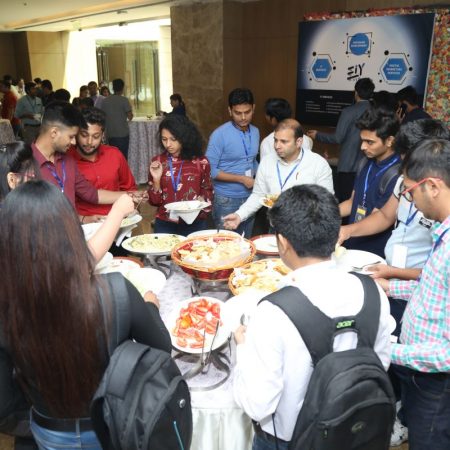
Registration & Breakfast
Future of Desktop Apps with JS (ElectronJs)
Nitin Pandit
Building Serverless Microservices Using Microsoft Azure
Vithal Wadje
Innovating RPA: A Robot for Every Person
Stephen Simon
Managing Cloud Storage Accounts using Logic Apps
Viknaraj Manogararajah
Data visualization using Python
Sekhar Srinivasan
Going Cross platform with AR Foundation
Vivek Sharma
Keynote
Managing your Azure dependencies in ASP.NET Core apps using VS
Bala Chirtsabesan
Securing Applications on Intelligent Azure
Abhishek Mishra
Getting started with Blazor the Framework of Future
S Ravi Kumar
Lunch
Build Progressive Web Apps using Angular 9
Debasis Saha
Build and deploy to any platform using Azure DevOps
Chervine Bhiwoo
Deep Dive in Azure Service Bus
Akshay Patel
Build a Native Mobile Application using React Native and JavaScript
Joseph Guadagno
Making sense of Web Job, Web Job SDK and Functions in Azure
Prakash Tripathi
CloudFront Distribution in AWS
Viral Jain
Tea Break
Introduction to PowerBI
Aakash Maurya
Build Advanced SPFx solutions with React and Graph API
Siddharth Vaghasia
Build Business Intelligence Analyst (BIA) Skills
Sundaram Subramanian
Deep dive of Power Platform – AI BUILDER
Prasham Sabadra
Panel 1
What's new in SharePoint development
Vipul Jain
Build a SSO (Single Sign On) based Native JavaScript application with Microsoft Identity within 10 minutes
Manoj Mittal
Panel 2
Applications and working of AI
Veena Sarda
Deploying serverless API's with .Net core 3.0 on AWS & Azure
Amey Vartak
Panel 3
Blockchain with .NET Core (Ark)
Anshu Kumari
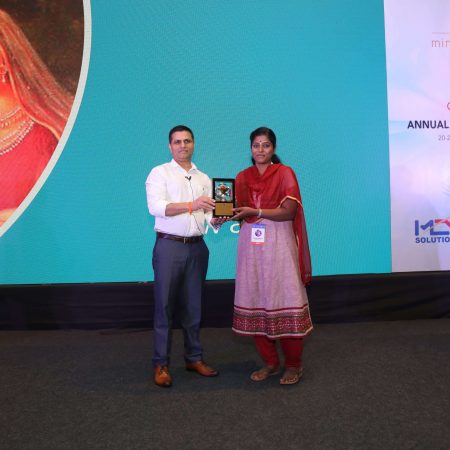
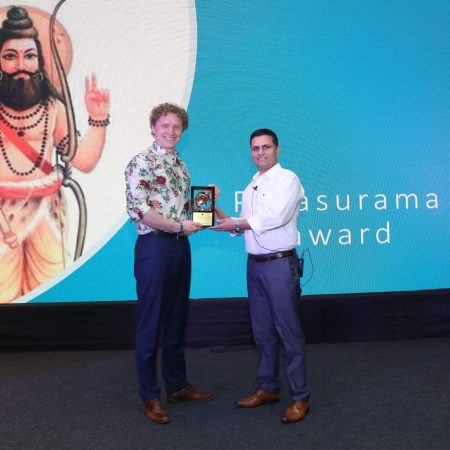
Closing Note & Prize Distribution
Dev Track
Cloud Track
Architecture Track
Emerging Tech Track
Registration & Breakfast
Creating Full-Stack Web Apps Using Server-Side Blazor
Ankit Sharma
Real time face recognition with MS Cognitive Services
Niloshima Srivastava
Building Scalable APIs with GraphQL
Jeetendra Gund
Future of development with AI and Blockchain
Navdeep Garg
Debugging Tips and Tricks with Visual Studio 2019
Joseph Guadagno
Azure Containers
Abhishek Kant
Enterprise Architecture
Naveen Sharma
Bot Framework - learn it fast and look like a boss!
Allen O’Neill
Keynote
.Net Core & C# 8 Performance
David McCarter
Working with Azure kubernetes services
Ritesh Modi
Becoming an Architect
Vidyavrat Agarwal
Why Techies Need to Learn Product Management
Saurabh Jain
Lunch
Build a rules engine in .Net Core
Sanjay Vyas
Building CI and CD Pipeline using Azure DevOps
Sandeep Soni
Entity Framework Core - Tips and Tricks, Performance Optimization, and Tuning
Bassam Alugili
Hacking your way into Data Science
Sanket Verma
Speed up your .Net Core Website
Sourabh Somani
Azure
Magnus Mårtensson
Demystifying Open Distro for Elasticsearch
Suman Debnath
Future of Data
Shivam Ahuja
Tea Break
gRPC with C# and .Net Core
Mangesh Gaherwar
Panel 1
Essentials of Cloud security
Parveen Malik
Power platform and Dynamics 365
Deepesh Somani
Microservices - the gRPC Way
Viswanatha Swamy
Panel 2
Reserved
Reserved
Closing Note & Prize Distribution
Using Azure Data Lake for big data processing in .NET
Modern .NET applications generate information at a scale that traditional relational databases can struggle to absorb. Web requests, connected devices, customer transactions, application logs and machine-learning features all produce data with different formats and retention requirements. Azure Data Lake Storage Gen2 provides a central, economical foundation for collecting that information before it is transformed and analysed.
For development teams, the value of a data lake is greater than simply having a large storage account. It supports a workflow in which raw files remain available, curated datasets are prepared for reporting, and specialised services process data according to business needs. .NET developers can connect these services through Azure SDKs, REST APIs, event-processing libraries and familiar application patterns.
A well-designed lake is especially useful when data volumes are unpredictable. An Australian retailer might receive steady online orders throughout the week, then experience substantial traffic during a major sale. A transport operator in Sydney or Melbourne may need to combine vehicle telemetry, timetables and maintenance records, while keeping historical data available for planning and compliance.
The strongest implementations treat storage, processing, security and monitoring as one platform. Azure Data Lake is therefore best approached as an architectural capability rather than a single product. The choices made around file formats, partitioning, identity and orchestration will determine whether a .NET solution remains manageable as its data estate expands.
Designing the storage foundation
Azure Data Lake Storage Gen2 builds on Azure Blob Storage and adds a hierarchical namespace. This allows directories and files to behave more like a conventional file system, while retaining cloud-scale durability and access tiers. The namespace is useful for organising datasets by domain, source, date and processing stage.
A common structure uses three logical zones. The raw or bronze zone preserves source records with minimal alteration. The silver zone contains validated and standardised data, while the gold zone holds business-ready aggregates for dashboards, APIs and machine-learning workloads. These names are not mandatory, but separating responsibilities makes data lineage easier to understand.
File organisation should reflect how data will be queried. Partitioning by event date is usually practical for time-series information, although a second key such as region, business unit or device type may be appropriate. Excessive partitioning creates thousands of small files, which increase metadata operations and slow processing. Larger Parquet files with sensible compression usually provide better performance than many small JSON documents.
.NET services can use the Azure.Storage.Files.DataLake package to create file systems, directories and files. A worker service might stream a payload into a staging directory, attach source metadata, and then move the completed file into a raw partition. Atomic naming conventions and temporary upload paths help prevent downstream jobs from reading partially written files.
Connecting .NET applications to the lake
Authentication should use Microsoft Entra ID and managed identities wherever possible. A hosted API, Azure Function or containerised worker can receive a narrowly scoped identity without storing account keys in configuration. Local development can use the Azure CLI credential or Visual Studio credentials, while production workloads use managed identity with role-based access control.
The .NET Azure SDK exposes asynchronous clients that fit naturally into background processing. Applications can upload streams, enumerate paths, read metadata and set access conditions without implementing the storage protocol themselves. For high-throughput ingestion, developers should control concurrency, reuse clients and avoid loading large files entirely into memory.
Data ingestion can be batch-oriented or event-driven. Azure Data Factory is suited to scheduled movement and transformation between systems, while Event Hubs can accept high-volume streams from applications and devices. Azure Functions can react to a new file or event, validate its schema and submit a processing job. A .NET application can also publish domain events after a transaction, keeping the operational database separate from analytical storage.
Schema management becomes essential once several teams write to the same lake. Contracts should define required fields, data types, time zones and versioning rules. A consumer expecting a decimal value can fail unexpectedly when a producer begins sending a formatted currency string. Compatibility checks and dead-letter storage provide a safer response than silently discarding invalid records.
Selecting processing and query services
Azure Data Lake is a storage layer, so it needs compute services to turn files into useful information. Azure Databricks is effective for large-scale Spark transformations, complex joins and machine-learning preparation. Azure Synapse Analytics provides SQL-based exploration, data warehousing and integrated pipelines. Azure Stream Analytics is more suitable for continuous, low-latency queries over event streams.
The processing engine should match the workload rather than the team’s preferred brand. A short daily aggregation may run efficiently in a serverless SQL environment. A large historical rebuild might benefit from distributed Spark processing. A fraud-detection scenario may need streaming rules that respond within seconds rather than a nightly batch.
.NET developers can participate at several levels. They may build orchestration APIs, write custom activity code, invoke notebooks and SQL scripts, or use libraries such as Microsoft.Spark for .NET when Spark transformations are required in C#. Data scientists may work in Python or SQL, while the surrounding platform remains governed and automated by .NET services.
| Requirement | Suitable Azure capability | Practical .NET role |
|---|---|---|
| Scheduled file movement | Azure Data Factory | Start pipelines, pass parameters and handle status callbacks |
| High-volume event ingestion | Azure Event Hubs | Publish events and manage consumer applications |
| Distributed transformation | Azure Databricks | Submit jobs, manage configuration and consume outputs |
| SQL exploration | Synapse serverless SQL | Expose query APIs and automate metadata workflows |
| Near-real-time rules | Azure Stream Analytics | Send events, manage jobs and process alerts |
| Operational visibility | Azure Monitor and Application Insights | Correlate requests, dependencies and processing failures |
A useful pattern is to keep transformation logic idempotent. If a pipeline retries after a network failure, it should produce the same result rather than duplicate rows. Processing manifests, source file hashes and batch identifiers can help detect repeated input. This matters when a service spans several Azure regions or when an overnight job must be restarted after a transient failure.
Securing Australian data workloads
Security begins with clear separation between identities, networks and data permissions. Role-based access control can govern access to the storage account, while directory-level access control lists provide finer permissions within the hierarchical namespace. A reporting service may read curated data without being able to access raw personal information.
Private endpoints and virtual network integration reduce exposure to the public internet. Encryption at rest is enabled by default, and customer-managed keys may be required by an organisation’s internal policy. Secrets, certificates and connection details should be kept in Azure Key Vault rather than source code or deployment variables visible to a broad team.
Australian organisations also need to consider the Privacy Act 1988 and the Australian Privacy Principles when a lake contains personal information. Data minimisation, retention schedules, access records and controlled deletion should be designed before ingestion begins. A healthcare provider in Melbourne or a financial services firm in Sydney may need additional sector controls, contractual safeguards and documented decisions about where data is stored and processed.
Azure regions in Australia can support residency requirements and reduce latency for local users, although regional availability varies by service. Teams should confirm that every processing component, backup policy and support arrangement meets the organisation’s obligations. A data lake spread casually across regions may create governance issues even when the storage account itself is located in Australia.
Improving reliability and observability
Large-scale processing fails in ordinary ways: an upstream API changes its schema, an event arrives late, a permission expires or a file upload stops halfway through. Reliable systems record the source, ingestion time, processing version and validation outcome for each dataset. Invalid records should be isolated in a quarantine area with enough context to support correction.
Azure Monitor and Application Insights can connect application telemetry with pipeline and storage activity. Monitoring .NET workloads becomes more useful when logs include a correlation ID, dataset name, partition and batch identifier. Operators can then trace a failed customer export from an HTTP request through a queue, a transformation job and the final lake file.
Metrics should describe business and technical health. Useful examples include ingestion lag, files processed per hour, invalid-record percentage, processing duration, storage growth and cost by workload. Alerts based only on CPU usage will miss a delayed pipeline that is technically running but no longer delivering current data.
Recovery planning should cover accidental deletion, corrupted transformations and regional service issues. Versioning, soft delete and immutable storage can protect selected datasets, while reproducible pipelines allow curated outputs to be rebuilt from retained raw data. Recovery objectives should be agreed with business owners rather than inferred from the capabilities of a chosen Azure service.
Managing cost and long-term value
Cloud storage is inexpensive compared with many compute options, but an uncontrolled data lake can still become costly. Retention policies can move old files to cool or archive tiers, while lifecycle rules remove temporary extracts and obsolete intermediate files. Teams should distinguish legally required records from convenient copies that have no analytical value.
Parquet, compression and sensible file sizes reduce both storage and query costs. Repeatedly scanning raw JSON for routine reports is inefficient, so frequently used data should be normalised into curated formats. Query engines should be configured to read only required columns and partitions. Cost reports tagged by application, department or environment make ownership visible.
Australian businesses also need to account for local operating patterns. A retailer may schedule intensive transformations after evening trading, when customer-facing demand falls, while a mining operation in Western Australia may process intermittent sensor data from remote sites with limited connectivity. Local support coverage, cross-region transfer charges and connectivity to Sydney or Melbourne facilities can influence architecture decisions.
The most sustainable approach is incremental. Begin with a defined business use case, a small number of governed datasets and measurable processing outcomes. Add streaming, machine learning or additional domains when the existing ingestion and quality controls are dependable. With disciplined .NET integration and clear governance, Azure Data Lake can become a durable analytical foundation rather than an unmanaged collection of cloud files.















1, CBD, Maharaj Surajmal Road, Near Yamuna Sports Complex, Delhi, 110032





GENERAL QUERIES
Manish Tewatia
manish@csharpcon.com
+91-9718-431-042
TICKET QUERIES
Atul Gupta
conference@csharpcon.com
+91-9910-125-804