

Presents


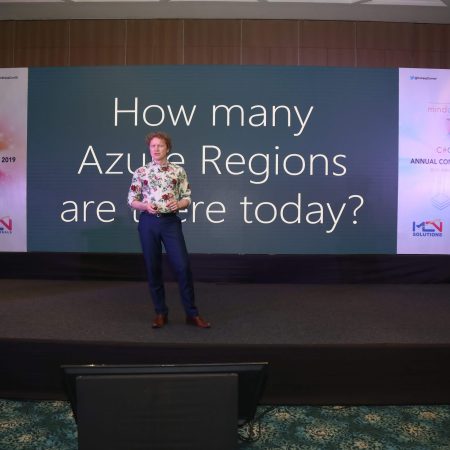
Magnus Mårtensson
Microsoft Regional Director, Azure MVP, CEO Loftysoft
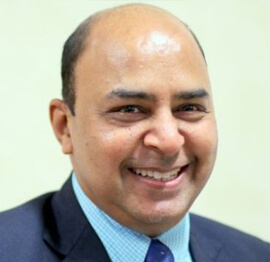
Avirag Jain
Director & CTO R Systems
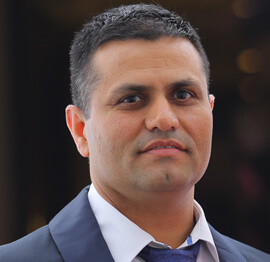
Mahesh Chand
Founder C# Corner, CEO Mindcracker

Chris Gali
CEO & Co-Founder Graphite

Subinder Khurana
Chief Architect StoryProcess, Founder NASSCOM DeepTech Club

Bryan Rishforth
Investor, Chairman Graphite

Bryn Everson
Director Biz Dev Graphite
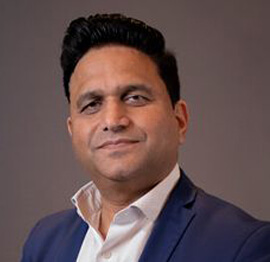
Raj Tiwari
Digital Transformation Leader, Futurist and Visionary

Joseph Guadagno
Microsoft MVP, Lead Quicken Loans

Nikita Sachdev
Entrepreneur, Blockchain Enthusiast & Advisor, Social Media Influencer

Doug Wagner
COO & Founder Adapt Technical Group

Ritesh Modi
Architect, Senior Evangelist, Cloud Architect

Crystal Wenrick
Director Communications Mindcracker

Allen O’Neill
Microsoft MVP, Consulting Engineer/Architect
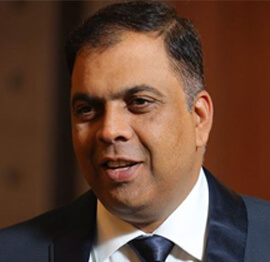
Praveen Kumar
CEO MCN Solutions

Chris Love
Founder Love2Dev, Microsoft MVP, Author

Sanjay Vyas
Microsoft Regional Director, Microsoft MVP, Founder & CEO SkillLabs Technologies

Veena Sarda
Deep Learning Consultant, Author

Sekhar Srinivasan
C# Corner MVP, Microsoft Certified Trainer, Pluralsight Author
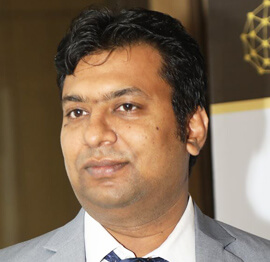
Lalit Bansal
Founder & CEO - EIY SYS
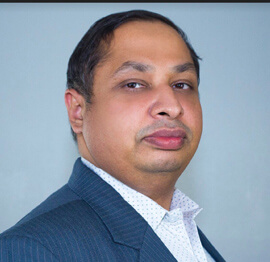
Navdeep Garg
CEO Revinfotech

Prakash Tripathi
Tech Manager/Leader, Microsoft MVP, Blogger
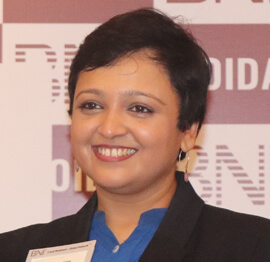
Bhavna Jain
Breakthrough Consultant

Naveen Sharma
Enterprise Architect, Leadership Coach, Author
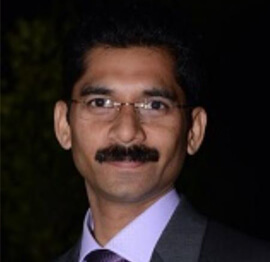
Vidya Vrat Agarwal
Principal Architect, Microsoft MVP, Author

Sheetal Agarwal
Founder Clownselors, Medical Clown, Trainer

Abhishek Kant
Founder GTM Catalyst

Vishnu Saran
Founder & CEO VoiceQube

Sandeep Soni
Founder & CEO Deccansoft, Microsoft Certified Trainer

Parveen Malik
AVP InfoSec & Vulnerability Management, Information Security Expert

Nitin Pandit
Microsoft MVP, Developer Evangelist, Author

Niloshima Srivastava
C# Corner MVP, Tech Architect, Trainer, Blogger

Bala Chirtsabesan
Senior Software Engineer at Microsoft, Author

Manoj Mittal
Sr. Technical Architect, C# Corner MVP, Author

Chandni Di
Co-Founder Voice of Slum

Vithal Wadje
Technical Lead, Microsoft MVP, Author

Shivam Ahuja
Founder SkillCircle, Business Mentor

Chervine Bhiwoo
Solution Architect, Microsoft MVP, Author

Saurabh Jain
Vice President Paytm, Founder Fun2Do Labs, Author

Vinay Solanki
Head IoT at Lenovo, Founder IoT-NCR

Anshu kumari
Founder Blockchainkids, Inventor, Trainer

Amit Singal
CEO Startup Buddy

Dev Pratap
Co-Founder & CEO Voice of Slum

Amey Vartak
Technology Consultant, Full Stack Developer, C# Corner MVP, Author

Viswanatha Swamy
Principal Software Engineer, C# Corner MVP, Author

Sanket Verma
Research Engineer @ Ballistics (Forensics) and Chair, PyData Delhi

Sourabh Somani
Lead Developer, Microsoft MVP, Author

Abhishek Mishra
Software Architect, C# Corner MVP, Author

Siddharth Vaghasia
Technical Consultant, C# Corner MVP, Blogger
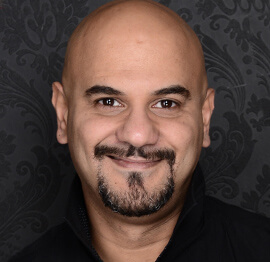
Bassam Alugili
Senior Software Specialist, Database Expert

S Ravi Kumar
Solution Architect, C# Corner MVP, Author

Sundaram Subramanian
Full Stack Developer, C# Corner MVP, Speaker

Deepesh Somani
Solution Architect, Microsoft MVP, Author

Debasis Saha
Technical Project Manager, C# Corner MVP, Blogger, Author

Vipul Jain
Software Architect, C# Corner MVP, Author

Akshay Patel
Technical Architect, Microsoft Certified Trainer, C# Corner MVP, Author

Stephen Simon
RPA Developer, Evangelist, Author

Vivek Sharma
Founder Kingster636, AR/VR Specialist

Jeetendra Gund
Technical Lead, C# Corner MVP, Author

Sujal Beniwal
AI Enthusiast, Student

M Viknaraj
Microsoft MVP, Azure Architect, Author

Prasham Sabadra
Software Architect, C# Corner MVP, Trainer, Author

Aakash Maurya
Senior Developer, C# Corner MVP, Speaker

Ankit Sharma
Senior Software Engineer, C# Corner MVP, Author

Mangesh Gaherwar
Team Lead, C# Corner MVP, Author

Viral Jain
Technical Consultant, C# Corner MVP, Author

Bhasker Das
Solution Architect, Evangelist

Manish Dwivedi
Associate Project Manager

Ck Nitin
Programmer, Author

Rohit Gupta
Technical Trainer, Author

Manish Tewatia
Full-stack Marketer, UX Designer

Bhavya Gaur
Technical Illustrator

Rohit Tomar
SEO/SMO Expert
Web Track
Cloud & Data Track
Dev Track
Registration & Breakfast
Future of Desktop Apps with JS (ElectronJs)
Nitin Pandit
Building Serverless Microservices Using Microsoft Azure
Vithal Wadje
Innovating RPA: A Robot for Every Person
Stephen Simon
Managing Cloud Storage Accounts using Logic Apps
Viknaraj Manogararajah
Data visualization using Python
Sekhar Srinivasan
Going Cross platform with AR Foundation
Vivek Sharma
Keynote
Managing your Azure dependencies in ASP.NET Core apps using VS
Bala Chirtsabesan
Securing Applications on Intelligent Azure
Abhishek Mishra
Getting started with Blazor the Framework of Future
S Ravi Kumar
Lunch
Build Progressive Web Apps using Angular 9
Debasis Saha
Build and deploy to any platform using Azure DevOps
Chervine Bhiwoo
Deep Dive in Azure Service Bus
Akshay Patel
Build a Native Mobile Application using React Native and JavaScript
Joseph Guadagno
Making sense of Web Job, Web Job SDK and Functions in Azure
Prakash Tripathi
CloudFront Distribution in AWS
Viral Jain
Tea Break
Introduction to PowerBI
Aakash Maurya
Build Advanced SPFx solutions with React and Graph API
Siddharth Vaghasia
Build Business Intelligence Analyst (BIA) Skills
Sundaram Subramanian
Deep dive of Power Platform – AI BUILDER
Prasham Sabadra
Panel 1
What's new in SharePoint development
Vipul Jain
Build a SSO (Single Sign On) based Native JavaScript application with Microsoft Identity within 10 minutes
Manoj Mittal
Panel 2
Applications and working of AI
Veena Sarda
Deploying serverless API's with .Net core 3.0 on AWS & Azure
Amey Vartak
Panel 3
Blockchain with .NET Core (Ark)
Anshu Kumari
Closing Note & Prize Distribution
Dev Track
Cloud Track
Architecture Track
Emerging Tech Track
Registration & Breakfast
Creating Full-Stack Web Apps Using Server-Side Blazor
Ankit Sharma
Real time face recognition with MS Cognitive Services
Niloshima Srivastava
Building Scalable APIs with GraphQL
Jeetendra Gund
Future of development with AI and Blockchain
Navdeep Garg
Debugging Tips and Tricks with Visual Studio 2019
Joseph Guadagno
Azure Containers
Abhishek Kant
Enterprise Architecture
Naveen Sharma
Bot Framework - learn it fast and look like a boss!
Allen O’Neill
Keynote
.Net Core & C# 8 Performance
David McCarter
Working with Azure kubernetes services
Ritesh Modi
Becoming an Architect
Vidyavrat Agarwal
Why Techies Need to Learn Product Management
Saurabh Jain
Lunch
Build a rules engine in .Net Core
Sanjay Vyas
Building CI and CD Pipeline using Azure DevOps
Sandeep Soni
Entity Framework Core - Tips and Tricks, Performance Optimization, and Tuning
Bassam Alugili
Hacking your way into Data Science
Sanket Verma
Speed up your .Net Core Website
Sourabh Somani
Azure
Magnus Mårtensson
Demystifying Open Distro for Elasticsearch
Suman Debnath
Future of Data
Shivam Ahuja
Tea Break
gRPC with C# and .Net Core
Mangesh Gaherwar
Panel 1
Essentials of Cloud security
Parveen Malik
Power platform and Dynamics 365
Deepesh Somani
Microservices - the gRPC Way
Viswanatha Swamy
Panel 2
Reserved
Reserved
Closing Note & Prize Distribution
Migrating Legacy ASP.NET Web Forms Applications to Blazor Server
For more than two decades, ASP.NET Web Forms has powered critical line-of-business applications across Australian government departments, banks, and mid-sized enterprises. Many teams in Sydney, Melbourne, and Brisbane still maintain sprawling ViewState-driven pages that were first written during the .NET 1.0 era, and a growing number of those teams are now looking at Blazor Server as a credible modernisation path. The technology shares enough DNA with Web Forms to feel familiar, yet it offers a component model, a real-time SignalR channel, and a clean pathway to .NET 8+ long-term support.
Blazor Server runs Razor components on the server and streams UI updates over a persistent WebSocket connection, which means the developer experience stays close to the original Web Forms page lifecycle. Event handlers, data binding, and even the postback metaphor can be replicated using EventCallback, StateHasChanged, and @bind. For Australian organisations balancing tight budgets against the Notifiable Data Breaches scheme and the Security of Critical Infrastructure Act, this server-side rendering model also keeps sensitive data inside the data centre rather than shipping it to the browser as JavaScript.
Why Australian Enterprises Still Run on Web Forms
The longevity of Web Forms in Australia is not an accident. The Department of Human Services famously operates one of the largest .NET estates in the Southern Hemisphere, and several state government portals in Victoria and Queensland were built on the framework between 2005 and 2012. Financial institutions such as the Big Four banks also retain significant Web Forms footprints in their internal lending platforms, where rewriting from scratch would be cost-prohibitive.
Web Forms offered two things Australian IT leaders valued highly at the time: a fast visual designer in Visual Studio, and a familiar event-driven abstraction that shielded developers from the complexities of raw HTTP. When .NET 1.1 landed, Canberra-based defence contractors and the Australian Bureau of Statistics adopted it enthusiastically, and the framework became embedded in procurements that specified "ASP.NET" without distinguishing the flavour. Two decades later, those procurements still shape what gets maintained.
Another local factor is skills availability. Web Forms developers form a substantial share of the .NET talent pool in Adelaide and Perth, where defence, mining, and agribusiness sectors rely on stable platforms. Migrating away from Web Forms therefore needs to respect the existing team's strengths rather than force wholesale retraining onto every developer.
Understanding the Architectural Shift to Blazor Server
Blazor Server replaces the ViewState bag and the page lifecycle with a circuit-scoped state container managed by SignalR. Instead of Page_Load firing before a postback, a Razor component's OnInitializedAsync runs once when the circuit is established, and subsequent UI updates are pushed through RenderHandle.Render. This subtle shift removes the magic of ViewState and forces developers to think about explicit state management.
Data binding in Blazor uses a unidirectional flow by default, similar to React, rather than the two-way Bind controls common in Web Forms. Developers moving from TextBox controls will recognise the @bind syntax, but they need to understand that the value flows from the component to the DOM on render and from the DOM back to the component only when an event occurs. Learning this rhythm is the single biggest adjustment for anyone coming from a Web Forms background.
Hosting matters too. Blazor Server requires a sticky ASP.NET Core process and exposes a SignalR hub endpoint. Australian teams running on the National Broadband Network from regional offices need to weigh latency carefully, because every user interaction now round-trips to the nearest data centre. Sydney and Melbourne tenants of Azure Australia East typically see sub-30-millisecond latency, but a Darwin office routed to the same region may see noticeably different responsiveness during peak hours.
Assessing the Legacy Codebase Before Migration
Before writing a single Razor component, an Australian team needs a realistic inventory of what the existing application actually does. This means more than a grep for System.Web.UI. It means mapping every page lifecycle hook, every third-party control suite (Telerik, Infragistics, DevExpress), and every direct dependency on HttpContext, Session, and ViewState. Many Brisbane-based integrators use SonarQube or NDepend to produce an objective baseline, and the same reports become evidence when justifying the migration budget to a CFO who answers to ASIC reporting cycles.
Authentication deserves special attention. Web Forms applications often mix forms authentication with Windows authentication, relying on MembershipProvider and RoleProvider classes that have no direct equivalent in ASP.NET Core. Mapping these to ASP.NET Core Identity, Azure AD B2C, or an existing ADFS farm used by Australian government tenants is a prerequisite. Skipping this step is the single most common reason migration projects blow out their timelines.
State management is another inventory item. Web Forms applications routinely store shopping carts, wizard progress, and grid filter state in Session, hidden fields, or even the database. Blazor Server's scoped service container can replace Session for most uses, but the team needs to decide whether to keep using IDistributedCache with Redis or to embrace component-scoped state. For organisations operating under the Australian Privacy Principles, this is also the moment to audit what personal information actually needs to leave the server memory.
Step-by-Step Migration Strategies for Web Forms Developers
The cleanest path for most Australian teams is the strangler-fig pattern championed by Martin Fowler. A new ASP.NET Core application hosts the Blazor Server endpoints while a Rewrite middleware proxies legacy URLs to the old Web Forms site during the transition. This approach lets a Sydney bank retire one subsystem at a time, ship value continuously, and avoid the dreaded four-month blackout window where nothing is deployable.
Component translation follows a predictable rhythm. An aspx page with a CodeBehind becomes a .razor component with an @code block. Server controls such as GridView, Repeater, and DataList map to either a third-party Blazor grid or a hand-rolled foreach over a typed collection. UpdatePanel partial postbacks translate naturally to Blazor's granular rendering, and ScriptManager registrations can be replaced with scoped JavaScript interop calls.
For complex pages with heavy client-side script, an interop wrapper around the existing JavaScript is often faster than rewriting. Australian teams maintaining legacy jQuery plugins for things like interactive maps of electoral boundaries or custom charting for APRA submissions can wrap them in IJSRuntime calls and migrate the surrounding C# at a comfortable pace. The same technique works for embedding existing Kendo or Syncfusion widgets while the team gradually replaces them with native Blazor components.
Deployment also needs attention. Web Forms apps typically rely on IIS app pools, machine keys, and web.config transforms. Blazor Server runs in-process with Kestrel or behind IIS as a reverse proxy, and configuration moves to appsettings.json with environment-specific overrides. Australian teams bound by the Australian Government Information Security Manual need to update their System Security Plan and change management artefacts to reflect the new hosting topology, and any Commonwealth procurement panels that list "ASP.NET 4.x" should be re-engaged to confirm that ASP.NET Core 8 is acceptable under existing contracts.
Tooling, Hosting and Compliance Considerations for the Local Market
Tooling is no longer the blocker it once was. Visual Studio 2022, the C# Dev Kit for Visual Studio Code, and the JetBrains Rider IDE all ship with first-class Razor and Blazor support. Australian developers attending NDC Sydney or DDD Melbourne regularly report that the tooling gap is essentially closed for new projects, and that the remaining friction lives in migrating business logic rather than markup.
Hosting decisions hinge on data sovereignty. Many Australian regulated workloads must remain onshore under the Privacy Act 1988, which narrows the choice to Azure Australia East and Australia Central, AWS Sydney and Melbourne regions, or an on-premises deployment in a Canberra IRAP-assessed facility. Blazor Server's persistent WebSocket connection is compatible with all three, but on-premises teams should benchmark the per-circuit memory cost, which sits between 150 KB and 300 KB depending on the component tree.
Compliance also shapes the migration timeline. Organisations subject to the Notifiable Data Breaches scheme, APRA CPS 234, or the Security of Critical Infrastructure Act need to treat the migration as a material change to their threat surface. A staged rollout that retires a single subsystem at a time produces a cleaner audit trail than a big-bang cutover, and gives the security team time to update runbooks for incident response.
| Capability | ASP.NET Web Forms | Blazor Server |
|---|---|---|
| Rendering model | Server-side controls with ViewState | Server-side Razor components over SignalR |
| State container | ViewState, Session, Control state | Circuit-scoped DI services, PersistentComponentState |
| Data binding | Two-way via Bind controls |
One-way with explicit @bind events |
| Client interactivity | UpdatePanel partial postbacks | Granular component rendering, no full page refresh |
| Hosting | IIS app pool with web.config |
Kestrel in-process or behind IIS reverse proxy |
| Authentication providers | MembershipProvider, RoleProvider | ASP.NET Core Identity, Azure AD, ADFS |
| Tooling support | Maintenance mode since 2022 | Active development in .NET 8 LTS |
Practical Recommendations for a Successful Migration
- Start by inventorying every page, control, and dependency in the existing Web Forms site, then rank them by business value and migration cost before writing any new code.
- Adopt the strangler-fig pattern so legacy URLs proxy to the new Blazor Server app, allowing continuous delivery and reducing the risk of a single catastrophic cutover.
- Map authentication and authorisation early, paying particular attention to Windows authentication flows used by Australian government tenants and to any custom MembershipProvider implementations.
- Replace ViewState-heavy pages with Blazor components incrementally, using
IJSRuntimeinterop to keep proven jQuery widgets functional while the surrounding C# is rewritten. - Benchmark Blazor Server latency from regional offices before committing, because the persistent circuit model is more sensitive to round-trip time than classic Web Forms postbacks.
- Update System Security Plans, IRAP documentation, and APRA CPS 234 artefacts to reflect the new hosting topology and the changed threat surface introduced by SignalR.
- Invest in team upskilling through local user groups such as the Sydney .NET Meetup, the Melbourne Azure Community, or the Brisbane C# Developers group, where Blazor Server experience is now widely shared.








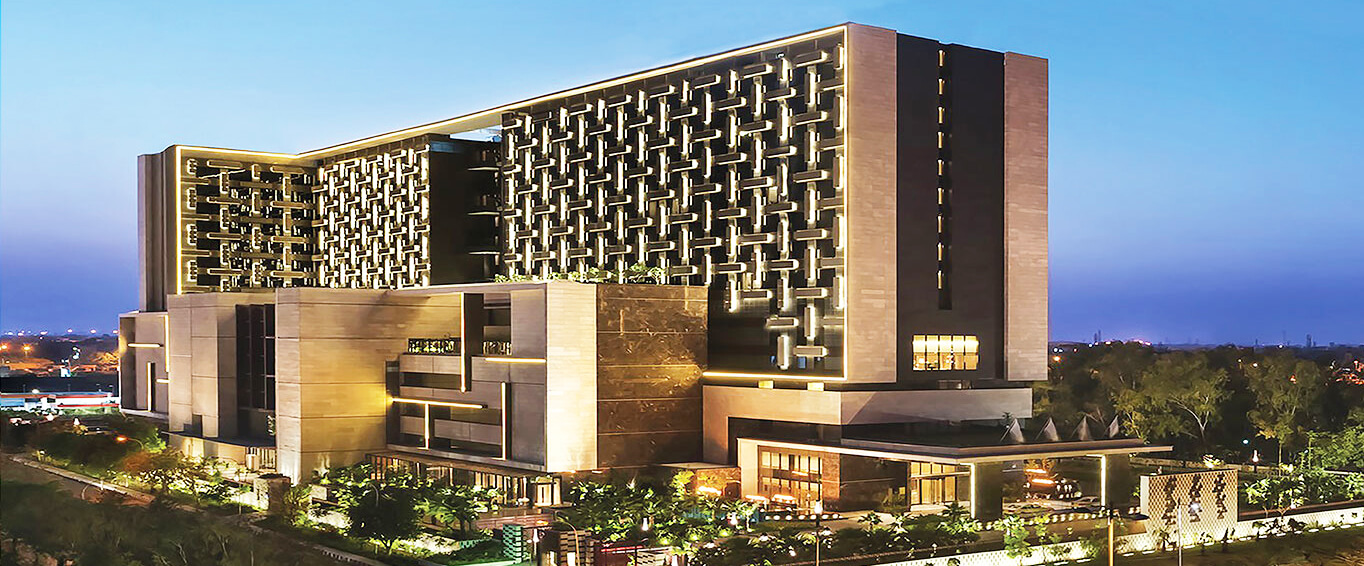
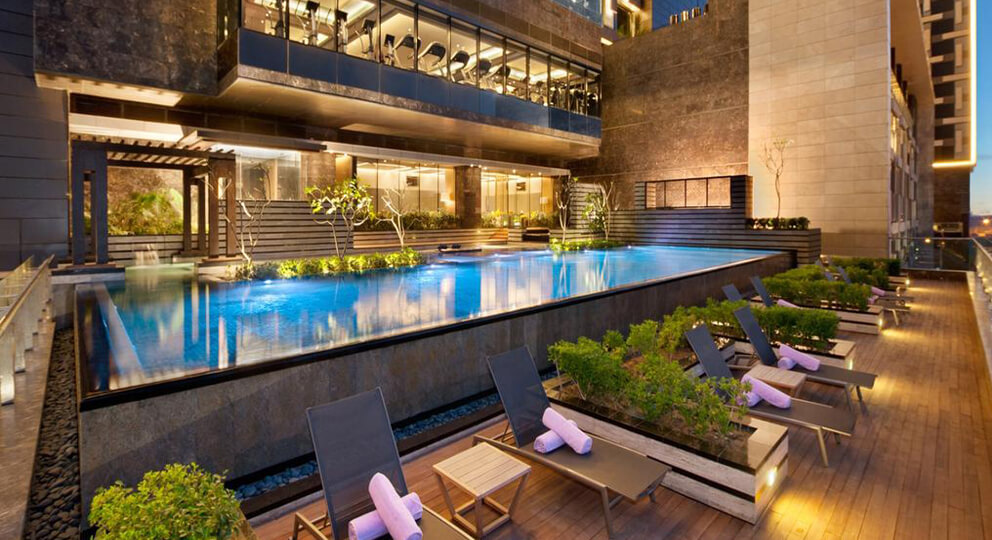
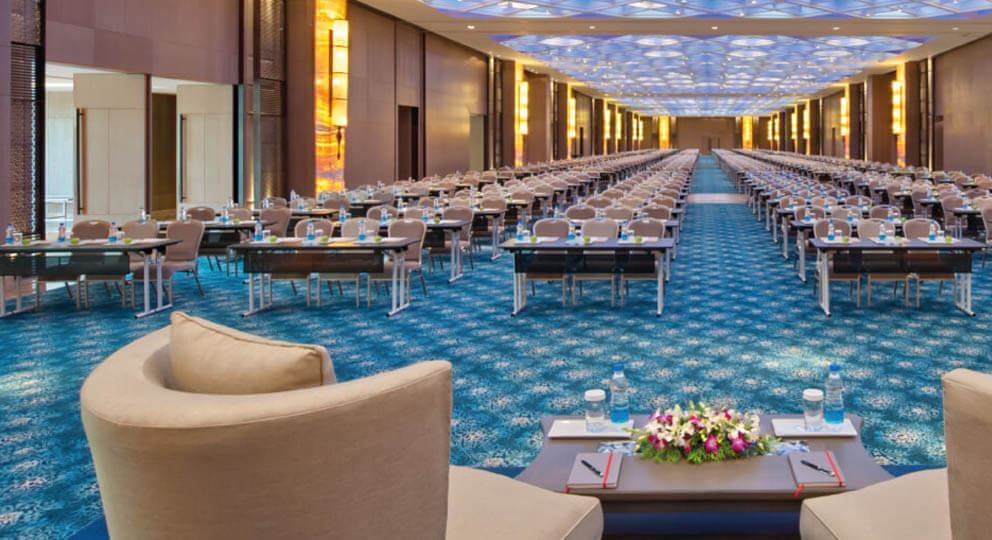
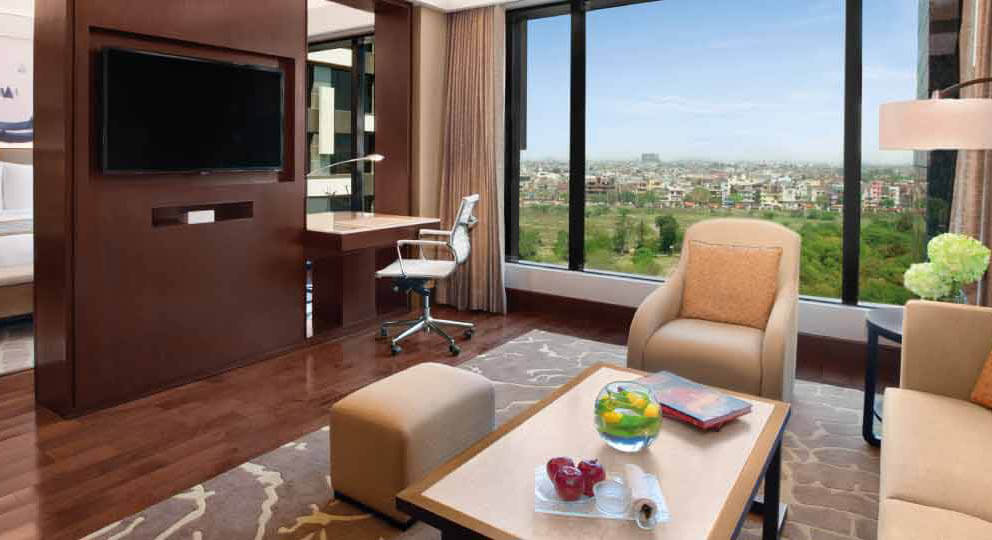
1, CBD, Maharaj Surajmal Road, Near Yamuna Sports Complex, Delhi, 110032
GENERAL QUERIES
Manish Tewatia
manish@csharpcon.com
+91-9718-431-042
TICKET QUERIES
Atul Gupta
conference@csharpcon.com
+91-9910-125-804