
Presents


Magnus Mårtensson
Microsoft Regional Director, Azure MVP, CEO Loftysoft

Avirag Jain
Director & CTO R Systems
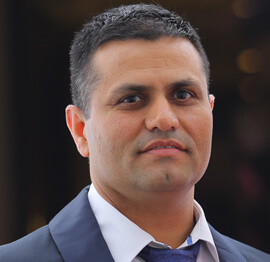
Mahesh Chand
Founder C# Corner, CEO Mindcracker

Chris Gali
CEO & Co-Founder Graphite

Subinder Khurana
Chief Architect StoryProcess, Founder NASSCOM DeepTech Club

Bryan Rishforth
Investor, Chairman Graphite

Bryn Everson
Director Biz Dev Graphite
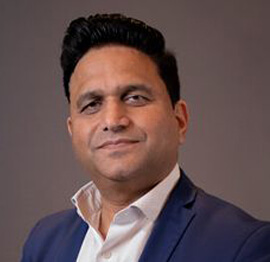
Raj Tiwari
Digital Transformation Leader, Futurist and Visionary

Joseph Guadagno
Microsoft MVP, Lead Quicken Loans

Nikita Sachdev
Entrepreneur, Blockchain Enthusiast & Advisor, Social Media Influencer

Doug Wagner
COO & Founder Adapt Technical Group

Ritesh Modi
Architect, Senior Evangelist, Cloud Architect

Crystal Wenrick
Director Communications Mindcracker

Allen O’Neill
Microsoft MVP, Consulting Engineer/Architect
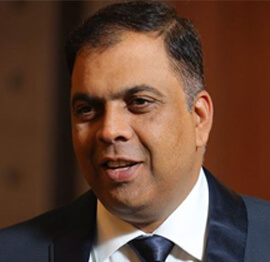
Praveen Kumar
CEO MCN Solutions

Chris Love
Founder Love2Dev, Microsoft MVP, Author

Sanjay Vyas
Microsoft Regional Director, Microsoft MVP, Founder & CEO SkillLabs Technologies

Veena Sarda
Deep Learning Consultant, Author

Sekhar Srinivasan
C# Corner MVP, Microsoft Certified Trainer, Pluralsight Author
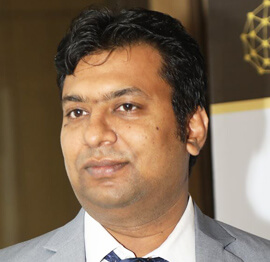
Lalit Bansal
Founder & CEO - EIY SYS

Navdeep Garg
CEO Revinfotech

Prakash Tripathi
Tech Manager/Leader, Microsoft MVP, Blogger
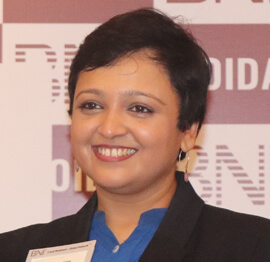
Bhavna Jain
Breakthrough Consultant

Naveen Sharma
Enterprise Architect, Leadership Coach, Author

Vidya Vrat Agarwal
Principal Architect, Microsoft MVP, Author

Sheetal Agarwal
Founder Clownselors, Medical Clown, Trainer

Abhishek Kant
Founder GTM Catalyst

Vishnu Saran
Founder & CEO VoiceQube

Sandeep Soni
Founder & CEO Deccansoft, Microsoft Certified Trainer

Parveen Malik
AVP InfoSec & Vulnerability Management, Information Security Expert

Nitin Pandit
Microsoft MVP, Developer Evangelist, Author

Niloshima Srivastava
C# Corner MVP, Tech Architect, Trainer, Blogger

Bala Chirtsabesan
Senior Software Engineer at Microsoft, Author

Manoj Mittal
Sr. Technical Architect, C# Corner MVP, Author

Chandni Di
Co-Founder Voice of Slum

Vithal Wadje
Technical Lead, Microsoft MVP, Author

Shivam Ahuja
Founder SkillCircle, Business Mentor

Chervine Bhiwoo
Solution Architect, Microsoft MVP, Author

Saurabh Jain
Vice President Paytm, Founder Fun2Do Labs, Author

Vinay Solanki
Head IoT at Lenovo, Founder IoT-NCR

Anshu kumari
Founder Blockchainkids, Inventor, Trainer

Amit Singal
CEO Startup Buddy

Dev Pratap
Co-Founder & CEO Voice of Slum

Amey Vartak
Technology Consultant, Full Stack Developer, C# Corner MVP, Author

Viswanatha Swamy
Principal Software Engineer, C# Corner MVP, Author

Sanket Verma
Research Engineer @ Ballistics (Forensics) and Chair, PyData Delhi

Sourabh Somani
Lead Developer, Microsoft MVP, Author
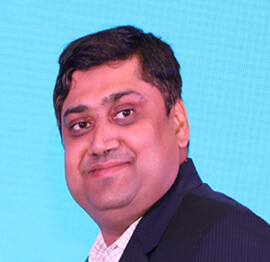
Abhishek Mishra
Software Architect, C# Corner MVP, Author

Siddharth Vaghasia
Technical Consultant, C# Corner MVP, Blogger
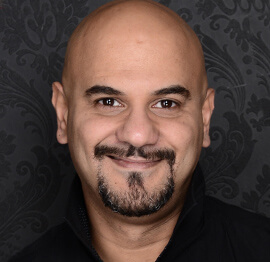
Bassam Alugili
Senior Software Specialist, Database Expert

S Ravi Kumar
Solution Architect, C# Corner MVP, Author

Sundaram Subramanian
Full Stack Developer, C# Corner MVP, Speaker

Deepesh Somani
Solution Architect, Microsoft MVP, Author

Debasis Saha
Technical Project Manager, C# Corner MVP, Blogger, Author
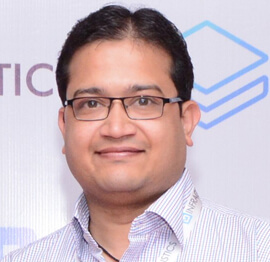
Vipul Jain
Software Architect, C# Corner MVP, Author

Akshay Patel
Technical Architect, Microsoft Certified Trainer, C# Corner MVP, Author

Stephen Simon
RPA Developer, Evangelist, Author

Vivek Sharma
Founder Kingster636, AR/VR Specialist

Jeetendra Gund
Technical Lead, C# Corner MVP, Author

Sujal Beniwal
AI Enthusiast, Student

M Viknaraj
Microsoft MVP, Azure Architect, Author

Prasham Sabadra
Software Architect, C# Corner MVP, Trainer, Author

Aakash Maurya
Senior Developer, C# Corner MVP, Speaker

Ankit Sharma
Senior Software Engineer, C# Corner MVP, Author

Mangesh Gaherwar
Team Lead, C# Corner MVP, Author

Viral Jain
Technical Consultant, C# Corner MVP, Author

Bhasker Das
Solution Architect, Evangelist

Manish Dwivedi
Associate Project Manager

Ck Nitin
Programmer, Author

Rohit Gupta
Technical Trainer, Author

Manish Tewatia
Full-stack Marketer, UX Designer

Bhavya Gaur
Technical Illustrator

Rohit Tomar
SEO/SMO Expert
Web Track
Cloud & Data Track
Dev Track
Registration & Breakfast
Future of Desktop Apps with JS (ElectronJs)
Nitin Pandit
Building Serverless Microservices Using Microsoft Azure
Vithal Wadje
Innovating RPA: A Robot for Every Person
Stephen Simon
Managing Cloud Storage Accounts using Logic Apps
Viknaraj Manogararajah
Data visualization using Python
Sekhar Srinivasan
Going Cross platform with AR Foundation
Vivek Sharma
Keynote
Managing your Azure dependencies in ASP.NET Core apps using VS
Bala Chirtsabesan
Securing Applications on Intelligent Azure
Abhishek Mishra
Getting started with Blazor the Framework of Future
S Ravi Kumar
Lunch
Build Progressive Web Apps using Angular 9
Debasis Saha
Build and deploy to any platform using Azure DevOps
Chervine Bhiwoo
Deep Dive in Azure Service Bus
Akshay Patel
Build a Native Mobile Application using React Native and JavaScript
Joseph Guadagno
Making sense of Web Job, Web Job SDK and Functions in Azure
Prakash Tripathi
CloudFront Distribution in AWS
Viral Jain
Tea Break
Introduction to PowerBI
Aakash Maurya
Build Advanced SPFx solutions with React and Graph API
Siddharth Vaghasia
Build Business Intelligence Analyst (BIA) Skills
Sundaram Subramanian
Deep dive of Power Platform – AI BUILDER
Prasham Sabadra
Panel 1
What's new in SharePoint development
Vipul Jain
Build a SSO (Single Sign On) based Native JavaScript application with Microsoft Identity within 10 minutes
Manoj Mittal
Panel 2
Applications and working of AI
Veena Sarda
Deploying serverless API's with .Net core 3.0 on AWS & Azure
Amey Vartak
Panel 3
Blockchain with .NET Core (Ark)
Anshu Kumari
Closing Note & Prize Distribution
Dev Track
Cloud Track
Architecture Track
Emerging Tech Track
Registration & Breakfast
Creating Full-Stack Web Apps Using Server-Side Blazor
Ankit Sharma
Real time face recognition with MS Cognitive Services
Niloshima Srivastava
Building Scalable APIs with GraphQL
Jeetendra Gund
Future of development with AI and Blockchain
Navdeep Garg
Debugging Tips and Tricks with Visual Studio 2019
Joseph Guadagno
Azure Containers
Abhishek Kant
Enterprise Architecture
Naveen Sharma
Bot Framework - learn it fast and look like a boss!
Allen O’Neill
Keynote
.Net Core & C# 8 Performance
David McCarter
Working with Azure kubernetes services
Ritesh Modi
Becoming an Architect
Vidyavrat Agarwal
Why Techies Need to Learn Product Management
Saurabh Jain
Lunch
Build a rules engine in .Net Core
Sanjay Vyas
Building CI and CD Pipeline using Azure DevOps
Sandeep Soni
Entity Framework Core - Tips and Tricks, Performance Optimization, and Tuning
Bassam Alugili
Hacking your way into Data Science
Sanket Verma
Speed up your .Net Core Website
Sourabh Somani
Azure
Magnus Mårtensson
Demystifying Open Distro for Elasticsearch
Suman Debnath
Future of Data
Shivam Ahuja
Tea Break
gRPC with C# and .Net Core
Mangesh Gaherwar
Panel 1
Essentials of Cloud security
Parveen Malik
Power platform and Dynamics 365
Deepesh Somani
Microservices - the gRPC Way
Viswanatha Swamy
Panel 2
Reserved
Reserved
Closing Note & Prize Distribution
Leveraging ValueTask in Asynchronous Resource Pools
Modern .NET services often spend more time waiting for scarce resources than performing application logic. Database connections, HTTP clients, browser sessions, file handles and cloud SDK objects may all sit behind an asynchronous pool. When demand rises, the pool must control concurrency without adding unnecessary allocations or making callers wait longer than required.
ValueTask can help when a resource is frequently available immediately, while still supporting genuinely asynchronous acquisition. Used carefully, it provides a practical path to lower allocation rates in high-throughput C# systems. Used casually, it can introduce tricky lifetime bugs, unsafe reuse and performance regressions that are difficult to diagnose in production.
Why Pool Acquisition Needs Careful Design
A resource pool usually has two paths. The fast path returns an idle resource straight away, while the slow path waits until another operation releases one. A method returning Task<T> works for both cases, but a completed Task can add allocation and scheduling overhead when the fast path is extremely common.
ValueTask<T> is a value type that can represent an already available result without allocating a new task object. It can also wrap a pending operation. This makes it attractive for pools where a healthy percentage of requests find an available connection, socket or session immediately.
The benefit is workload-dependent. A service in Sydney handling predictable daytime traffic may see a different result from a Melbourne API serving sharp bursts around business opening hours. Benchmarking should therefore include realistic concurrency, pool saturation and release timing rather than measuring a single successful call in isolation.
A pool should also define ownership clearly. The caller receives a lease, uses the underlying resource, and returns the lease through DisposeAsync or an equivalent operation. Returning the resource itself can make accidental double-release and use-after-release errors much more likely.
Choosing ValueTask Over Task
The strongest case for ValueTask<T> appears when synchronous completion is common and the method is on a hot path. For example, an in-memory queue of idle resources may usually contain an item. In that situation, returning new ValueTask<Resource>(resource) avoids creating a task for every successful checkout.
A pending acquisition can be represented by a reusable operation implementing IValueTaskSource<T>. This approach can reduce allocations further, especially when the pool controls operation lifetimes tightly. It requires discipline because a ValueTask backed by an IValueTaskSource<T> generally must be awaited once and then discarded.
Callers should not assume a ValueTask behaves exactly like a Task. Code must avoid awaiting the same instance multiple times, storing it for later use without a clear lifetime model, or converting every result with .AsTask(). Conversion is valid when an API requires a task, yet doing it on every fast-path operation removes much of the original advantage.
A useful rule is to expose ValueTask<T> at a low-level boundary only when measurements support it. Application code that needs broad task composition, repeated awaiting or integration with older libraries may be clearer and safer with Task<T>. Performance is valuable, but a simpler contract often wins when acquisition is not a dominant cost.
Building A Safe Asynchronous Pool
A robust pool separates resource availability from waiter management. An idle-resource structure can serve immediate requests, while a queue of pending waiters records callers that must pause. Synchronisation around these structures must be carefully designed so a release wakes exactly one valid waiter or returns the resource to the idle collection.
A custom pooled source can carry the waiter’s result, cancellation registration and completion state. When a resource is released, the pool completes the oldest eligible waiter. The source may then be reset and reused only after the previous consumer has fully completed its single await and the result has been consumed.
Cancellation is a core part of the design. A request waiting behind a saturated pool may be cancelled because an HTTP request timed out, a user abandoned a page, or a background job was shut down. Cancellation must remove or invalidate the waiter without allowing a later release to hand the same resource to both the cancelled caller and another waiter.
The lease should guard release operations as well. An idempotent DisposeAsync prevents duplicate returns when a finally block and an error handler both attempt cleanup. The pool should reject a lease that has already been returned, and it should retire resources that are broken, expired or associated with a failed operation.
Managing Lifetime, Errors And Backpressure
Resource pools are useful only when they apply backpressure. An unlimited number of pending operations can move the bottleneck into memory, sockets or downstream services. Set a maximum pool size, a waiting limit and an acquisition timeout that reflects the surrounding request budget.
The release path should be short and predictable. If disposal performs network I/O, do not assume it is equivalent to placing an object back into an idle queue. Some resources need asynchronous reset, health checks or protocol cleanup. A lease can return the object to a quarantine stage first, then make it available only after that work succeeds.
Failure handling deserves separate treatment from cancellation. A cancelled waiter generally should not poison the pool, while a connection that reports a protocol error may need removal. If an operation fails halfway through using a resource, the lease can mark it unhealthy so the next caller does not inherit a corrupted state.
This matters in Australian deployments where an application may span Azure regions and serve customers across Perth, Adelaide, Brisbane and the eastern capitals. Network latency and regional failover can change the ratio of immediate to pending acquisitions. A pool sized for a local developer laptop may behave poorly when traffic crosses regions or when an Azure dependency experiences a brief slowdown.
Observability And Practical Review
Allocation counters are a useful starting point, but they do not tell the whole story. Track acquisition latency, queue depth, timeout counts, pool utilisation, resource destruction and the percentage of synchronous completions. These measures show whether ValueTask is improving the real service rather than merely changing a benchmark.
Distributed tracing should distinguish waiting for a resource from using the resource. In an Australian payment or commerce service, a slow checkout might reflect pool starvation, an external gateway or a database query. Separating those spans helps engineers avoid increasing the pool when the actual problem is a downstream dependency.
Load tests should include steady traffic, sudden bursts and prolonged saturation. Test cancellation storms, application shutdown, resource failures and repeated disposal. Run the same scenarios with Task<T> and ValueTask<T> so the team can compare throughput, allocations, tail latency and code complexity.
Practical checks for a production review:
- Confirm every acquired lease is released through a reliable
finallypath. - Verify a pending waiter is completed at most once.
- Test cancellation before, during and after resource assignment.
- Measure synchronous completion rates under realistic load.
Runtime signals worth alerting on:
- A rising acquisition timeout rate.
- Queue depth that stays high after traffic falls.
- Unexpected growth in discarded or unhealthy resources.
- Increased allocation or garbage-collection time after a code change.
For teams working around end-of-financial-year demand, Australian public holidays and region-specific campaigns, capacity tests should use the actual traffic calendar. A payment-heavy workload can also include gaming payment flows when evaluating connection pools, browser automation or API clients that experience short, intense bursts.
Comparing Pooling Approaches
There is no universal winner between a task-based pool, a value-task pool and a framework-provided channel design. The correct choice depends on how often acquisition completes synchronously, how much control the team has over callers, and whether the resource has complicated reset requirements.
A Channel<T> can provide a clean bounded queue and excellent maintainability. It may be the right choice for a background worker that processes jobs at a controlled rate. A semaphore can limit concurrency, although it does not itself manage resource ownership or validate returned objects.
A custom ValueTask pool becomes more compelling when allocation pressure is measurable and acquisition sits on a very hot path. It should be isolated behind a narrow API, supported by stress tests and documented with its await and disposal rules. Developers should not be forced to understand pooled value-task sources merely to open a database session.
| Approach | Fast-path allocation profile | Implementation complexity | Best fit | Main risk |
|---|---|---|---|---|
Task<T> pool |
Usually higher | Low | General application services | Extra allocations under heavy throughput |
ValueTask<T> pool |
Potentially very low | High | Hot paths with frequent immediate acquisition | Misuse through repeated await or unsafe reuse |
Bounded Channel<T> |
Low to moderate | Medium | Queued workers and pipelines | Less direct control over lease semantics |
| Semaphore plus resource store | Varies | Low to medium | Simple concurrency limits | Ownership, reset and fairness need extra code |
| Framework-managed client pool | Usually optimised by provider | Low for consumers | Standard HTTP or database access | Limited control over specialised lifecycle rules |
The most sustainable architecture often uses Task<T> at an application boundary and reserves ValueTask<T> for a carefully tested internal component. That arrangement contains the specialised behaviour while preserving easy composition for controllers, hosted services and domain code.
For example, a pool can expose ValueTask<Lease> internally, while a higher-level repository converts only when it must integrate with a task-oriented abstraction. The conversion should be deliberate and measured, not scattered throughout the codebase.
Resource pooling also needs governance. Record why the pool exists, what its limits mean, and which metrics justify its complexity. Review those assumptions when moving from a single Australian region to a multi-region Azure deployment, or when a service changes from predictable batch work to public, bursty traffic.








1, CBD, Maharaj Surajmal Road, Near Yamuna Sports Complex, Delhi, 110032





GENERAL QUERIES
Manish Tewatia
manish@csharpcon.com
+91-9718-431-042
TICKET QUERIES
Atul Gupta
conference@csharpcon.com
+91-9910-125-804