
Presents


Magnus Mårtensson
Microsoft Regional Director, Azure MVP, CEO Loftysoft
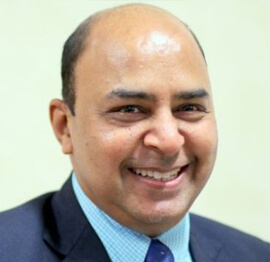
Avirag Jain
Director & CTO R Systems

Mahesh Chand
Founder C# Corner, CEO Mindcracker

Chris Gali
CEO & Co-Founder Graphite

Subinder Khurana
Chief Architect StoryProcess, Founder NASSCOM DeepTech Club

Bryan Rishforth
Investor, Chairman Graphite

Bryn Everson
Director Biz Dev Graphite

Raj Tiwari
Digital Transformation Leader, Futurist and Visionary
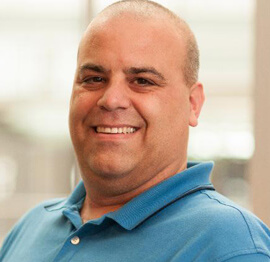
Joseph Guadagno
Microsoft MVP, Lead Quicken Loans

Nikita Sachdev
Entrepreneur, Blockchain Enthusiast & Advisor, Social Media Influencer

Doug Wagner
COO & Founder Adapt Technical Group

Ritesh Modi
Architect, Senior Evangelist, Cloud Architect

Crystal Wenrick
Director Communications Mindcracker

Allen O’Neill
Microsoft MVP, Consulting Engineer/Architect
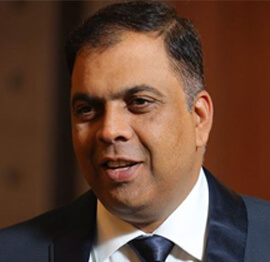
Praveen Kumar
CEO MCN Solutions

Chris Love
Founder Love2Dev, Microsoft MVP, Author

Sanjay Vyas
Microsoft Regional Director, Microsoft MVP, Founder & CEO SkillLabs Technologies

Veena Sarda
Deep Learning Consultant, Author

Sekhar Srinivasan
C# Corner MVP, Microsoft Certified Trainer, Pluralsight Author
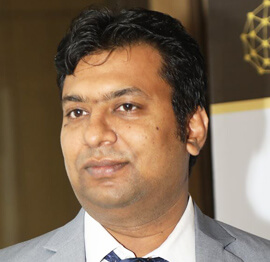
Lalit Bansal
Founder & CEO - EIY SYS

Navdeep Garg
CEO Revinfotech

Prakash Tripathi
Tech Manager/Leader, Microsoft MVP, Blogger
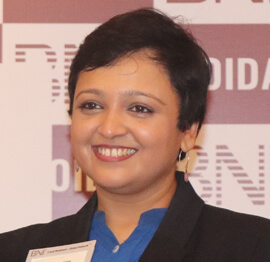
Bhavna Jain
Breakthrough Consultant

Naveen Sharma
Enterprise Architect, Leadership Coach, Author

Vidya Vrat Agarwal
Principal Architect, Microsoft MVP, Author

Sheetal Agarwal
Founder Clownselors, Medical Clown, Trainer

Abhishek Kant
Founder GTM Catalyst

Vishnu Saran
Founder & CEO VoiceQube

Sandeep Soni
Founder & CEO Deccansoft, Microsoft Certified Trainer

Parveen Malik
AVP InfoSec & Vulnerability Management, Information Security Expert

Nitin Pandit
Microsoft MVP, Developer Evangelist, Author

Niloshima Srivastava
C# Corner MVP, Tech Architect, Trainer, Blogger

Bala Chirtsabesan
Senior Software Engineer at Microsoft, Author

Manoj Mittal
Sr. Technical Architect, C# Corner MVP, Author

Chandni Di
Co-Founder Voice of Slum

Vithal Wadje
Technical Lead, Microsoft MVP, Author

Shivam Ahuja
Founder SkillCircle, Business Mentor

Chervine Bhiwoo
Solution Architect, Microsoft MVP, Author

Saurabh Jain
Vice President Paytm, Founder Fun2Do Labs, Author

Vinay Solanki
Head IoT at Lenovo, Founder IoT-NCR

Anshu kumari
Founder Blockchainkids, Inventor, Trainer

Amit Singal
CEO Startup Buddy

Dev Pratap
Co-Founder & CEO Voice of Slum

Amey Vartak
Technology Consultant, Full Stack Developer, C# Corner MVP, Author

Viswanatha Swamy
Principal Software Engineer, C# Corner MVP, Author

Sanket Verma
Research Engineer @ Ballistics (Forensics) and Chair, PyData Delhi

Sourabh Somani
Lead Developer, Microsoft MVP, Author

Abhishek Mishra
Software Architect, C# Corner MVP, Author

Siddharth Vaghasia
Technical Consultant, C# Corner MVP, Blogger

Bassam Alugili
Senior Software Specialist, Database Expert

S Ravi Kumar
Solution Architect, C# Corner MVP, Author

Sundaram Subramanian
Full Stack Developer, C# Corner MVP, Speaker

Deepesh Somani
Solution Architect, Microsoft MVP, Author

Debasis Saha
Technical Project Manager, C# Corner MVP, Blogger, Author

Vipul Jain
Software Architect, C# Corner MVP, Author

Akshay Patel
Technical Architect, Microsoft Certified Trainer, C# Corner MVP, Author

Stephen Simon
RPA Developer, Evangelist, Author

Vivek Sharma
Founder Kingster636, AR/VR Specialist

Jeetendra Gund
Technical Lead, C# Corner MVP, Author

Sujal Beniwal
AI Enthusiast, Student

M Viknaraj
Microsoft MVP, Azure Architect, Author

Prasham Sabadra
Software Architect, C# Corner MVP, Trainer, Author

Aakash Maurya
Senior Developer, C# Corner MVP, Speaker

Ankit Sharma
Senior Software Engineer, C# Corner MVP, Author

Mangesh Gaherwar
Team Lead, C# Corner MVP, Author

Viral Jain
Technical Consultant, C# Corner MVP, Author

Bhasker Das
Solution Architect, Evangelist

Manish Dwivedi
Associate Project Manager

Ck Nitin
Programmer, Author

Rohit Gupta
Technical Trainer, Author

Manish Tewatia
Full-stack Marketer, UX Designer

Bhavya Gaur
Technical Illustrator

Rohit Tomar
SEO/SMO Expert
Web Track
Cloud & Data Track
Dev Track
Registration & Breakfast
Future of Desktop Apps with JS (ElectronJs)
Nitin Pandit
Building Serverless Microservices Using Microsoft Azure
Vithal Wadje
Innovating RPA: A Robot for Every Person
Stephen Simon
Managing Cloud Storage Accounts using Logic Apps
Viknaraj Manogararajah
Data visualization using Python
Sekhar Srinivasan
Going Cross platform with AR Foundation
Vivek Sharma
Keynote
Managing your Azure dependencies in ASP.NET Core apps using VS
Bala Chirtsabesan
Securing Applications on Intelligent Azure
Abhishek Mishra
Getting started with Blazor the Framework of Future
S Ravi Kumar
Lunch
Build Progressive Web Apps using Angular 9
Debasis Saha
Build and deploy to any platform using Azure DevOps
Chervine Bhiwoo
Deep Dive in Azure Service Bus
Akshay Patel
Build a Native Mobile Application using React Native and JavaScript
Joseph Guadagno
Making sense of Web Job, Web Job SDK and Functions in Azure
Prakash Tripathi
CloudFront Distribution in AWS
Viral Jain
Tea Break
Introduction to PowerBI
Aakash Maurya
Build Advanced SPFx solutions with React and Graph API
Siddharth Vaghasia
Build Business Intelligence Analyst (BIA) Skills
Sundaram Subramanian
Deep dive of Power Platform – AI BUILDER
Prasham Sabadra
Panel 1
What's new in SharePoint development
Vipul Jain
Build a SSO (Single Sign On) based Native JavaScript application with Microsoft Identity within 10 minutes
Manoj Mittal
Panel 2
Applications and working of AI
Veena Sarda
Deploying serverless API's with .Net core 3.0 on AWS & Azure
Amey Vartak
Panel 3
Blockchain with .NET Core (Ark)
Anshu Kumari
Closing Note & Prize Distribution
Dev Track
Cloud Track
Architecture Track
Emerging Tech Track
Registration & Breakfast
Creating Full-Stack Web Apps Using Server-Side Blazor
Ankit Sharma
Real time face recognition with MS Cognitive Services
Niloshima Srivastava
Building Scalable APIs with GraphQL
Jeetendra Gund
Future of development with AI and Blockchain
Navdeep Garg
Debugging Tips and Tricks with Visual Studio 2019
Joseph Guadagno
Azure Containers
Abhishek Kant
Enterprise Architecture
Naveen Sharma
Bot Framework - learn it fast and look like a boss!
Allen O’Neill
Keynote
.Net Core & C# 8 Performance
David McCarter
Working with Azure kubernetes services
Ritesh Modi
Becoming an Architect
Vidyavrat Agarwal
Why Techies Need to Learn Product Management
Saurabh Jain
Lunch
Build a rules engine in .Net Core
Sanjay Vyas
Building CI and CD Pipeline using Azure DevOps
Sandeep Soni
Entity Framework Core - Tips and Tricks, Performance Optimization, and Tuning
Bassam Alugili
Hacking your way into Data Science
Sanket Verma
Speed up your .Net Core Website
Sourabh Somani
Azure
Magnus Mårtensson
Demystifying Open Distro for Elasticsearch
Suman Debnath
Future of Data
Shivam Ahuja
Tea Break
gRPC with C# and .Net Core
Mangesh Gaherwar
Panel 1
Essentials of Cloud security
Parveen Malik
Power platform and Dynamics 365
Deepesh Somani
Microservices - the gRPC Way
Viswanatha Swamy
Panel 2
Reserved
Reserved
Closing Note & Prize Distribution
Debugging async code in C# with Visual Studio 2022
Asynchronous programming is central to modern .NET applications. It keeps web requests responsive, allows background work to run without blocking a user interface, and helps cloud services handle many operations at once. The same flexibility can make failures difficult to follow because execution moves between methods, threads, tasks, and continuation points.
Visual Studio 2022 provides several features for investigating these problems, including breakpoints, exception settings, the Call Stack window, Parallel Stacks, Parallel Watch, Tasks, and async-aware debugging information. Used together, they can reveal whether code is genuinely concurrent, waiting on I/O, deadlocked, or simply hiding an exception inside an unobserved task.
This matters to Australian development teams working across Melbourne, Sydney, Brisbane, Perth and regional offices. A slow API call can affect customers using the NBN during evening peaks, while an unhandled exception in an Azure-hosted service can create operational issues across time zones. Good async diagnostics also support secure handling of personal information under the Privacy Act 1988 and reduce costly production troubleshooting.
Understand what the debugger is showing
An async method usually returns a Task or Task<T>. When execution reaches an incomplete await, the method yields control to its caller. The remainder of the method is stored as a continuation and may resume later on a different thread. This means the source code may look linear even though the runtime is scheduling separate pieces of work.
Start by identifying the task boundary. In this example, the HTTP operation is asynchronous, but the caller must still await it:
public async Task<Customer?> LoadCustomerAsync(
    HttpClient client,
    int customerId,
    CancellationToken cancellationToken)
{
    using HttpResponseMessage response =
        await client.GetAsync(
            $"customers/{customerId}",
            cancellationToken);

    response.EnsureSuccessStatusCode();

    return await response.Content.ReadFromJsonAsync<Customer>(
        cancellationToken: cancellationToken);
}
Place a breakpoint before the first await, after it, and at the caller. Watch the Call Stack as each breakpoint is hit. If the debugger appears to leave the method, that is usually normal: the method has returned an incomplete task and will resume when the I/O operation finishes.
The most useful question is not “which thread am I on?” but “what is this task waiting for?” The Threads window shows physical threads, whereas the Tasks window shows logical asynchronous work. In server applications, several requests may share a small number of thread-pool threads, so a thread-focused view can give an incomplete picture.
Expose exceptions and missing awaits
A common async defect is an exception that occurs inside a task which nobody awaits. Calling an asynchronous method without awaiting it can allow the caller to continue before the operation finishes. Exceptions may then surface later through logging, a task inspection, or an unobserved-exception event.
public async Task ProcessOrderAsync(Order order)
{
    await SaveOrderAsync(order);
    await SendReceiptAsync(order);
}
A call such as ProcessOrderAsync(order); is a warning sign unless fire-and-forget behaviour is deliberate and has a controlled error-handling strategy. Prefer await ProcessOrderAsync(order);. In Visual Studio, enable compiler warnings for ignored tasks and treat relevant warnings as errors in CI where practical.
Open Debug > Windows > Exception Settings and select Common Language Runtime Exceptions when investigating a failure that appears to be swallowed. Breaking when an exception is thrown, rather than only when it is unhandled, shows the original line and the variables that caused the problem. This is especially valuable when an ASP.NET Core middleware later converts the exception into a generic HTTP 500 response.
Use try and catch around an awaited operation, not around the creation of a task that has not yet completed:
try
{
    await paymentClient.AuthoriseAsync(payment, cancellationToken);
}
catch (HttpRequestException ex)
{
    logger.LogError(ex, "Payment service request failed");
    throw;
}
Preserve the original stack trace by using throw; rather than throw ex;. Also avoid logging sensitive payloads while debugging. Australian organisations often need to limit exposure of customer names, addresses, health data, or payment details under privacy and sector-specific obligations.
Compare tasks, threads and synchronisation
Async failures often resemble one another. A deadlock, a long-running operation, and a race condition can all look like “the application is stuck”. Visual Studio 2022 helps separate them when the right window is used.
| Symptom | Likely cause | Visual Studio view | Useful response |
|---|---|---|---|
| Request never completes | Blocking on async work | Tasks, Parallel Stacks | Replace .Result or .Wait() with await |
| Exception appears late | Unobserved or discarded task | Exception Settings, Call Stack | Await the task and break on thrown exceptions |
| Values change unexpectedly | Shared mutable state | Parallel Watch, breakpoints | Add synchronisation or redesign state ownership |
| Many tasks remain active | Slow I/O or a task leak | Tasks, Diagnostic Tools | Check cancellation, timeouts and disposal |
| Continuation resumes unexpectedly | Context or scheduling assumption | Call Stack, Threads | Avoid relying on a specific thread or context |
The classic blocking pattern is:
public Customer GetCustomer()
{
    return LoadCustomerAsync().Result;
}
This can deadlock in environments with a synchronisation context, and it consumes a thread while waiting. Convert the call chain to asynchronous methods instead:
public async Task<Customer> GetCustomerAsync()
{
    return await LoadCustomerAsync();
}
In ASP.NET Core, there is generally no request synchronisation context in the same way as older UI frameworks, but blocking is still harmful because it ties up thread-pool resources. Under load, a service may suffer thread-pool starvation even though each individual request seems simple. That can become noticeable for an Australian e-commerce site during a major sale or for a public service portal during a deadline period.
Use the Tasks window to inspect task status, ID, location, and whether a task is waiting. Parallel Stacks can display relationships between tasks and threads, while Parallel Watch is useful for comparing values across concurrent operations. Add task IDs and correlation IDs to structured logs so debugger observations can be connected with Azure Application Insights or another production monitoring system.
Trace cancellation, timing and concurrency
A task that remains in WaitingForActivation or Running is not automatically faulty. It may be waiting for DNS, a database connection, an HTTP response, a lock, or a timer. Add explicit cancellation and time limits so the debugger can distinguish a valid long operation from an operation with no escape path.
using CancellationTokenSource timeout =
    CancellationTokenSource.CreateLinkedTokenSource(
        requestAborted);

timeout.CancelAfter(TimeSpan.FromSeconds(15));

await client.GetAsync(
    endpoint,
    timeout.Token);
Set a breakpoint where cancellation is requested and another where OperationCanceledException is handled. Cancellation is a normal control flow outcome, so it should usually be logged at an appropriate level rather than treated as an unexpected server error. Check that downstream APIs actually accept and honour the token; passing a token that no operation observes provides little protection.
Use the Diagnostic Tools window to examine CPU, memory, and exception activity while reproducing the issue. For timing-sensitive defects, add timestamps and operation names to logs instead of relying only on breakpoints. A breakpoint changes scheduling and can make a race condition disappear. Conditional breakpoints, tracepoints, and debugger actions are safer for observing high-frequency code.
Useful checks during a live debugging session include:
- Confirm every created task has an owner and an awaited completion path.
- Check whether a lock, semaphore, or connection pool is delaying continuation.
- Verify timeout and cancellation tokens reach database and HTTP calls.
- Compare timestamps before and after each asynchronous boundary.
When several tasks update shared collections or counters, inspect the design rather than simply adding delays. Task.WhenAll is appropriate when operations are independent, but it can amplify load against a database or an external service. For Australian teams operating in Azure Australia East or Australia Southeast, regional latency may be low while a dependency in another region remains slow. Record dependency duration and endpoint location before changing concurrency limits.
Build reliable async diagnostics
A repeatable debugging process begins with a small reproduction. Reduce the operation to one request, one dependency, and one cancellation path. Then run it under the same target framework and configuration used by the application. Differences between Debug and Release builds, local secrets, feature flags, and environment variables can change scheduling and exception behaviour.
Use nullable reference types, analyzers, and compiler warnings to identify defects before runtime. Naming methods with an Async suffix communicates intent, while returning Task rather than async void makes failures observable. Reserve async void for event handlers that require it. For library code, consider ConfigureAwait(false) where avoiding a captured context is intentional, but do not use it as a generic fix for unclear execution flow.
A practical diagnostic workflow is:
- Reproduce with exception breaking enabled.
- Inspect the first thrown exception and its inner exception.
- Follow the task from its creation to its awaiter.
- Check cancellation, timeout, and dependency timing.
- Confirm the fix with a test that exercises failure and cancellation.
Production diagnostics should be designed before an incident occurs. Include a request or operation correlation ID, dependency name, elapsed time, retry count, and cancellation reason in structured logs. Avoid putting full customer records into logs, particularly when systems process information covered by Australian privacy requirements. Retain enough technical context to investigate without creating a second data-protection problem.
Testing should cover successful completion, dependency failure, cancellation, timeout, and concurrent calls. A fake HTTP handler or test server can simulate delayed and malformed responses. For race conditions, run the test repeatedly and vary delays rather than assuming one successful run proves correctness. These practices make Visual Studio 2022 a powerful investigation tool while keeping the application observable when the defect reaches a hosted environment.










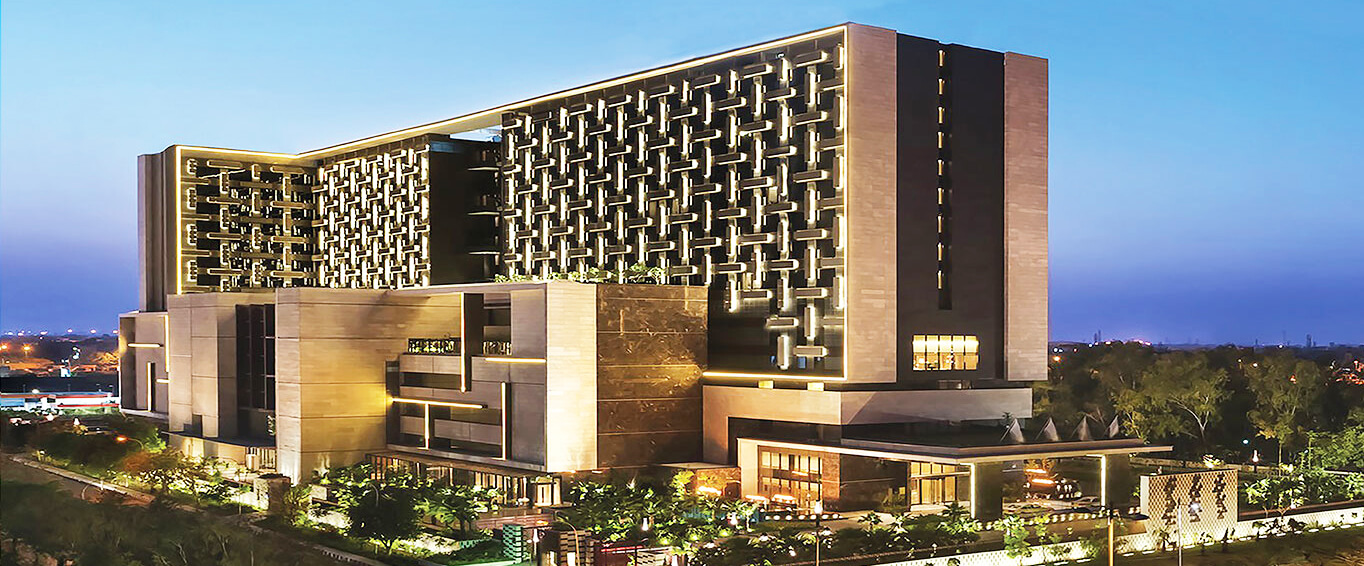
1, CBD, Maharaj Surajmal Road, Near Yamuna Sports Complex, Delhi, 110032




GENERAL QUERIES
Manish Tewatia
manish@csharpcon.com
+91-9718-431-042
TICKET QUERIES
Atul Gupta
conference@csharpcon.com
+91-9910-125-804