

Presents


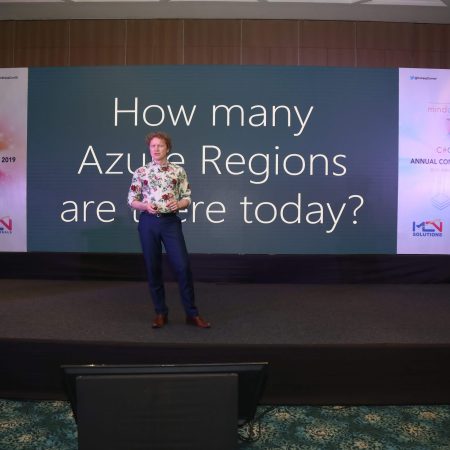
Magnus Mårtensson
Microsoft Regional Director, Azure MVP, CEO Loftysoft

Avirag Jain
Director & CTO R Systems

Mahesh Chand
Founder C# Corner, CEO Mindcracker

Chris Gali
CEO & Co-Founder Graphite

Subinder Khurana
Chief Architect StoryProcess, Founder NASSCOM DeepTech Club

Bryan Rishforth
Investor, Chairman Graphite

Bryn Everson
Director Biz Dev Graphite

Raj Tiwari
Digital Transformation Leader, Futurist and Visionary

Joseph Guadagno
Microsoft MVP, Lead Quicken Loans

Nikita Sachdev
Entrepreneur, Blockchain Enthusiast & Advisor, Social Media Influencer

Doug Wagner
COO & Founder Adapt Technical Group

Ritesh Modi
Architect, Senior Evangelist, Cloud Architect

Crystal Wenrick
Director Communications Mindcracker

Allen O’Neill
Microsoft MVP, Consulting Engineer/Architect

Praveen Kumar
CEO MCN Solutions

Chris Love
Founder Love2Dev, Microsoft MVP, Author

Sanjay Vyas
Microsoft Regional Director, Microsoft MVP, Founder & CEO SkillLabs Technologies

Veena Sarda
Deep Learning Consultant, Author

Sekhar Srinivasan
C# Corner MVP, Microsoft Certified Trainer, Pluralsight Author

Lalit Bansal
Founder & CEO - EIY SYS

Navdeep Garg
CEO Revinfotech

Prakash Tripathi
Tech Manager/Leader, Microsoft MVP, Blogger

Bhavna Jain
Breakthrough Consultant

Naveen Sharma
Enterprise Architect, Leadership Coach, Author

Vidya Vrat Agarwal
Principal Architect, Microsoft MVP, Author

Sheetal Agarwal
Founder Clownselors, Medical Clown, Trainer

Abhishek Kant
Founder GTM Catalyst

Vishnu Saran
Founder & CEO VoiceQube

Sandeep Soni
Founder & CEO Deccansoft, Microsoft Certified Trainer

Parveen Malik
AVP InfoSec & Vulnerability Management, Information Security Expert

Nitin Pandit
Microsoft MVP, Developer Evangelist, Author

Niloshima Srivastava
C# Corner MVP, Tech Architect, Trainer, Blogger

Bala Chirtsabesan
Senior Software Engineer at Microsoft, Author

Manoj Mittal
Sr. Technical Architect, C# Corner MVP, Author

Chandni Di
Co-Founder Voice of Slum

Vithal Wadje
Technical Lead, Microsoft MVP, Author

Shivam Ahuja
Founder SkillCircle, Business Mentor

Chervine Bhiwoo
Solution Architect, Microsoft MVP, Author

Saurabh Jain
Vice President Paytm, Founder Fun2Do Labs, Author

Vinay Solanki
Head IoT at Lenovo, Founder IoT-NCR

Anshu kumari
Founder Blockchainkids, Inventor, Trainer

Amit Singal
CEO Startup Buddy

Dev Pratap
Co-Founder & CEO Voice of Slum

Amey Vartak
Technology Consultant, Full Stack Developer, C# Corner MVP, Author

Viswanatha Swamy
Principal Software Engineer, C# Corner MVP, Author

Sanket Verma
Research Engineer @ Ballistics (Forensics) and Chair, PyData Delhi

Sourabh Somani
Lead Developer, Microsoft MVP, Author

Abhishek Mishra
Software Architect, C# Corner MVP, Author

Siddharth Vaghasia
Technical Consultant, C# Corner MVP, Blogger

Bassam Alugili
Senior Software Specialist, Database Expert

S Ravi Kumar
Solution Architect, C# Corner MVP, Author

Sundaram Subramanian
Full Stack Developer, C# Corner MVP, Speaker

Deepesh Somani
Solution Architect, Microsoft MVP, Author

Debasis Saha
Technical Project Manager, C# Corner MVP, Blogger, Author

Vipul Jain
Software Architect, C# Corner MVP, Author

Akshay Patel
Technical Architect, Microsoft Certified Trainer, C# Corner MVP, Author

Stephen Simon
RPA Developer, Evangelist, Author

Vivek Sharma
Founder Kingster636, AR/VR Specialist

Jeetendra Gund
Technical Lead, C# Corner MVP, Author

Sujal Beniwal
AI Enthusiast, Student

M Viknaraj
Microsoft MVP, Azure Architect, Author

Prasham Sabadra
Software Architect, C# Corner MVP, Trainer, Author

Aakash Maurya
Senior Developer, C# Corner MVP, Speaker

Ankit Sharma
Senior Software Engineer, C# Corner MVP, Author

Mangesh Gaherwar
Team Lead, C# Corner MVP, Author

Viral Jain
Technical Consultant, C# Corner MVP, Author

Bhasker Das
Solution Architect, Evangelist

Manish Dwivedi
Associate Project Manager

Ck Nitin
Programmer, Author

Rohit Gupta
Technical Trainer, Author

Manish Tewatia
Full-stack Marketer, UX Designer

Bhavya Gaur
Technical Illustrator

Rohit Tomar
SEO/SMO Expert
Web Track
Cloud & Data Track
Dev Track
Registration & Breakfast
Future of Desktop Apps with JS (ElectronJs)
Nitin Pandit
Building Serverless Microservices Using Microsoft Azure
Vithal Wadje
Innovating RPA: A Robot for Every Person
Stephen Simon
Managing Cloud Storage Accounts using Logic Apps
Viknaraj Manogararajah
Data visualization using Python
Sekhar Srinivasan
Going Cross platform with AR Foundation
Vivek Sharma
Keynote
Managing your Azure dependencies in ASP.NET Core apps using VS
Bala Chirtsabesan
Securing Applications on Intelligent Azure
Abhishek Mishra
Getting started with Blazor the Framework of Future
S Ravi Kumar
Lunch
Build Progressive Web Apps using Angular 9
Debasis Saha
Build and deploy to any platform using Azure DevOps
Chervine Bhiwoo
Deep Dive in Azure Service Bus
Akshay Patel
Build a Native Mobile Application using React Native and JavaScript
Joseph Guadagno
Making sense of Web Job, Web Job SDK and Functions in Azure
Prakash Tripathi
CloudFront Distribution in AWS
Viral Jain
Tea Break
Introduction to PowerBI
Aakash Maurya
Build Advanced SPFx solutions with React and Graph API
Siddharth Vaghasia
Build Business Intelligence Analyst (BIA) Skills
Sundaram Subramanian
Deep dive of Power Platform – AI BUILDER
Prasham Sabadra
Panel 1
What's new in SharePoint development
Vipul Jain
Build a SSO (Single Sign On) based Native JavaScript application with Microsoft Identity within 10 minutes
Manoj Mittal
Panel 2
Applications and working of AI
Veena Sarda
Deploying serverless API's with .Net core 3.0 on AWS & Azure
Amey Vartak
Panel 3
Blockchain with .NET Core (Ark)
Anshu Kumari
Closing Note & Prize Distribution
Dev Track
Cloud Track
Architecture Track
Emerging Tech Track
Registration & Breakfast
Creating Full-Stack Web Apps Using Server-Side Blazor
Ankit Sharma
Real time face recognition with MS Cognitive Services
Niloshima Srivastava
Building Scalable APIs with GraphQL
Jeetendra Gund
Future of development with AI and Blockchain
Navdeep Garg
Debugging Tips and Tricks with Visual Studio 2019
Joseph Guadagno
Azure Containers
Abhishek Kant
Enterprise Architecture
Naveen Sharma
Bot Framework - learn it fast and look like a boss!
Allen O’Neill
Keynote
.Net Core & C# 8 Performance
David McCarter
Working with Azure kubernetes services
Ritesh Modi
Becoming an Architect
Vidyavrat Agarwal
Why Techies Need to Learn Product Management
Saurabh Jain
Lunch
Build a rules engine in .Net Core
Sanjay Vyas
Building CI and CD Pipeline using Azure DevOps
Sandeep Soni
Entity Framework Core - Tips and Tricks, Performance Optimization, and Tuning
Bassam Alugili
Hacking your way into Data Science
Sanket Verma
Speed up your .Net Core Website
Sourabh Somani
Azure
Magnus Mårtensson
Demystifying Open Distro for Elasticsearch
Suman Debnath
Future of Data
Shivam Ahuja
Tea Break
gRPC with C# and .Net Core
Mangesh Gaherwar
Panel 1
Essentials of Cloud security
Parveen Malik
Power platform and Dynamics 365
Deepesh Somani
Microservices - the gRPC Way
Viswanatha Swamy
Panel 2
Reserved
Reserved
Closing Note & Prize Distribution
Creating Custom Data Annotations in ASP.NET Core
ASP.NET Core includes a practical set of validation attributes for common rules such as [Required], [StringLength], [Range], and [EmailAddress]. Those attributes cover many forms, yet production applications often need rules that reflect a particular business process. A customer reference may need a specific prefix, an Australian Business Number may need a checksum, or two dates may need to remain within an approved booking window.
A custom data annotation packages that rule into a reusable validation component. The result is a model that describes both its data shape and its basic business constraints, while controllers and Razor Pages can rely on ModelState to receive consistent validation results. The same approach works for MVC views, Web API endpoints, and many service-layer workflows.
For teams working across Sydney, Melbourne, Brisbane, or regional offices, consistent validation is especially useful when web portals, mobile clients, and internal systems share the same API. A rule implemented once can prevent different interpretations between a customer-facing form and a back-office workflow, whether the application is used during a busy arvo or by staff working across Australian time zones.
Why built-in validation may not be enough
Built-in attributes are ideal when the rule maps directly to a general-purpose constraint. [Required] can ensure a value exists, [Range] can restrict a number, and [RegularExpression] can check a simple pattern. Problems arise when the requirement carries domain meaning. For example, a claim may be valid only when its settlement date follows its incident date, or a supplier code may have a prefix determined by the supplier category.
Putting these checks directly inside a controller tends to produce duplication. One endpoint might reject invalid data while another accepts it, and a Razor view may display a different message from an API client. Keeping the rule in a validation attribute gives the model a single, discoverable source of truth. It also makes the constraint easier to test without running the entire HTTP pipeline.
Validation should still be placed at the right level. A format check belongs comfortably in an attribute, but a rule requiring a database lookup, a remote service, or a transaction usually belongs in an application service. Attributes are excellent for deterministic model validation; they should not become a hidden replacement for business workflows.
Designing a reusable validation attribute
A custom validator normally derives from ValidationAttribute and overrides IsValid. The method receives the property value and can return ValidationResult.Success when the value passes. When it fails, return a ValidationResult with a clear message and, where appropriate, the member name associated with the error.
The following attribute validates an Australian-style business identifier by checking that it contains exactly 11 digits and satisfies the ABN weighted checksum. It accepts spaces because users commonly enter identifiers in grouped form on Australian forms.
using System.ComponentModel.DataAnnotations;

public sealed class AustralianBusinessNumberAttribute
    : ValidationAttribute
{
    private static readonly int[] Weights =
        { 10, 1, 3, 5, 7, 9, 11, 13, 15, 17, 19 };

    protected override ValidationResult? IsValid(
        object? value,
        ValidationContext validationContext)
    {
        if (value is null || string.IsNullOrWhiteSpace(value.ToString()))
            return ValidationResult.Success;

        var digits = value.ToString()!
            .Replace(" ", string.Empty)
            .Replace("-", string.Empty);

        if (digits.Length != 11 || !digits.All(char.IsDigit))
            return new ValidationResult(
                "Enter an 11-digit Australian Business Number.");

        var numbers = digits.Select(c => c - '0').ToArray();
        numbers[0]--;

        var remainder = numbers
            .Zip(Weights, (number, weight) => number * weight)
            .Sum() % 89;

        return remainder == 0
            ? ValidationResult.Success
            : new ValidationResult("Enter a valid Australian Business Number.");
    }
}
Returning success for a missing value is intentional. The [Required] attribute should decide whether the field is compulsory, while this attribute decides whether a supplied value has the correct structure and checksum. Separating those responsibilities prevents confusing error messages and lets the same validator work for optional supplier records.
Applying the attribute to a model
Once the attribute exists, apply it to a view model or request contract. A view model is often preferable to placing presentation-specific rules on an entity that is shared with persistence. This keeps validation aligned with the input being accepted by a particular endpoint.
public sealed class SupplierRegistrationModel
{
    [Required]
    [Display(Name = "Business name")]
    public string BusinessName { get; set; } = string.Empty;

    [Required]
    [AustralianBusinessNumber]
    [Display(Name = "ABN")]
    public string Abn { get; set; } = string.Empty;
}
An MVC action can then rely on automatic model binding and inspect ModelState.IsValid.
[HttpPost]
public IActionResult Register(SupplierRegistrationModel model)
{
    if (!ModelState.IsValid)
        return View(model);

    // Continue with the registration workflow.
    return RedirectToAction(nameof(Complete));
}
In an API using [ApiController], invalid model state normally produces an automatic HTTP 400 response. The response includes validation details that frontend developers can map to form fields. This behaviour is useful for teams building a Vue, React, or mobile client for an Australian customer portal because the server remains the final authority, even if client-side checks are also present.
Producing useful validation messages
A validation message should explain the correction without exposing implementation details. “The checksum returned remainder 17” is technically accurate but unhelpful to a person entering a supplier identifier. Messages should also use the vocabulary familiar to the application’s users, such as “ABN” rather than a generic phrase like “business number” when that distinction matters.
For reusable libraries, support a custom error message through the base class. ValidationAttribute provides an ErrorMessage property, so consumers can write [AustralianBusinessNumber(ErrorMessage = "Please check the supplier ABN.")]. A resource-based error message is a better option when an application supports multiple languages or must align messages with an established content system.
The attribute should be defensive around null values, unexpected types, and whitespace. It should not throw an exception simply because a client sent malformed input. Exceptions indicate a programming or infrastructure problem; ordinary invalid input should become a normal validation error. This distinction matters for public APIs, where malformed requests are routine rather than exceptional.
Handling dependent properties and services
Some rules involve more than one property. For example, an end date must follow a start date, or a discount code may be available only for a selected membership level. A property-level attribute is awkward when it needs to compare sibling values. In that situation, implement IValidatableObject on the model or use a class-level validation attribute.
public sealed class BookingModel : IValidatableObject
{
    [Required]
    public DateTime? StartDate { get; set; }

    [Required]
    public DateTime? EndDate { get; set; }

    public IEnumerable<ValidationResult> Validate(
        ValidationContext validationContext)
    {
        if (StartDate.HasValue && EndDate.HasValue &&
            EndDate.Value.Date < StartDate.Value.Date)
        {
            yield return new ValidationResult(
                "The end date must be on or after the start date.",
                new[] { nameof(StartDate), nameof(EndDate) });
        }
    }
}
ValidationContext can expose services through dependency injection, but service-dependent validation deserves caution. A validator that queries a database for every property can create slow, surprising behaviour and make unit tests harder to isolate. For a rule such as checking whether a supplier is already registered, validate the shape with an attribute and perform the uniqueness check in an application service.
That split is valuable in Australian enterprise systems, where an API may integrate with accounting platforms, state-based workflows, or government-facing records. Local business rules can change independently of a form’s basic data constraints, so keeping external decisions in a service makes the application easier to maintain and audit.
Connecting server and browser validation
Server-side validation is mandatory because requests can bypass browser scripts. Client-side validation is still valuable because it gives immediate feedback. ASP.NET Core’s unobtrusive validation system can render client rules for built-in attributes, but a custom ValidationAttribute does not automatically generate JavaScript that reproduces every custom algorithm.
For simple rules, implement an IClientModelValidator or register an adapter so the attribute emits a data-val-* rule. The browser script can then perform the lightweight check, while the server runs the authoritative implementation. Avoid duplicating complicated logic in JavaScript if it is likely to drift from the C# version.
The response format also matters. MVC applications typically redisplay the form with field-level messages, while APIs return a structured validation problem response. Consistent property names and messages make it easier for clients to render errors. This is particularly helpful when a Sydney-based frontend team and a Perth-based backend team release on different schedules and need a stable contract between them.
Teams preparing for a technical event or reviewing modern .NET practices can compare patterns with material from the conference programme, where cloud, web development, data, and Microsoft technologies are common areas of discussion. The same design principles apply whether an application runs on a local development machine or in Azure.
Choosing an approach and testing it
The right technique depends on the scope of the rule. A property attribute is concise and reusable for one value. IValidatableObject is clearer when several fields participate in a constraint. A service is the safer home for checks involving persistence, external systems, authorisation, or a changing business policy.
Unit tests should cover valid values, invalid values, nulls, whitespace, formatting variations, and boundary cases. For the ABN example, test grouped and ungrouped input, an incorrect first digit, a wrong checksum, and an 11-character value containing letters. Integration tests should then confirm that MVC or API model binding turns failures into the expected ModelState entries or HTTP response.
| Validation approach | Best suited to | Strength | Watch for |
|---|---|---|---|
| Built-in data annotation | Required fields, lengths, ranges, formats | Fast to implement and widely supported | Limited domain knowledge |
Custom ValidationAttribute |
A reusable, deterministic property rule | Encapsulates domain-specific checks | Avoid database calls and hidden dependencies |
IValidatableObject |
Rules involving multiple model properties | Keeps cross-field logic with the model | Can become crowded on large models |
| FluentValidation or similar library | Large validation sets and advanced composition | Strong reuse and expressive rules | Adds a dependency and integration decisions |
| Application service | Uniqueness, external lookups, workflows | Handles business context and infrastructure cleanly | Requires explicit orchestration outside model binding |
A well-structured validation strategy uses these options together rather than forcing every rule into an annotation. Keep simple input constraints close to the model, keep cross-field comparisons explicit, and reserve services for decisions that require context. That approach produces predictable ASP.NET Core applications for Australian businesses, from small local suppliers to large cloud-hosted platforms serving customers nationwide.































1, CBD, Maharaj Surajmal Road, Near Yamuna Sports Complex, Delhi, 110032





GENERAL QUERIES
Manish Tewatia
manish@csharpcon.com
+91-9718-431-042
TICKET QUERIES
Atul Gupta
conference@csharpcon.com
+91-9910-125-804