

Presents


Magnus Mårtensson
Microsoft Regional Director, Azure MVP, CEO Loftysoft
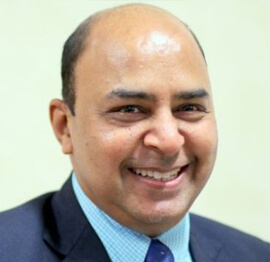
Avirag Jain
Director & CTO R Systems
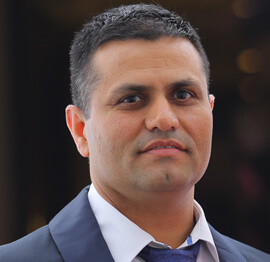
Mahesh Chand
Founder C# Corner, CEO Mindcracker

Chris Gali
CEO & Co-Founder Graphite

Subinder Khurana
Chief Architect StoryProcess, Founder NASSCOM DeepTech Club

Bryan Rishforth
Investor, Chairman Graphite

Bryn Everson
Director Biz Dev Graphite
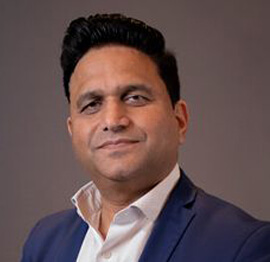
Raj Tiwari
Digital Transformation Leader, Futurist and Visionary

Joseph Guadagno
Microsoft MVP, Lead Quicken Loans

Nikita Sachdev
Entrepreneur, Blockchain Enthusiast & Advisor, Social Media Influencer

Doug Wagner
COO & Founder Adapt Technical Group

Ritesh Modi
Architect, Senior Evangelist, Cloud Architect

Crystal Wenrick
Director Communications Mindcracker

Allen O’Neill
Microsoft MVP, Consulting Engineer/Architect
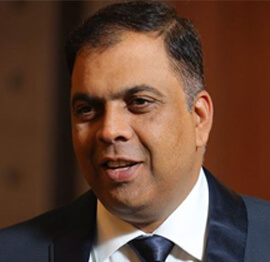
Praveen Kumar
CEO MCN Solutions

Chris Love
Founder Love2Dev, Microsoft MVP, Author

Sanjay Vyas
Microsoft Regional Director, Microsoft MVP, Founder & CEO SkillLabs Technologies

Veena Sarda
Deep Learning Consultant, Author

Sekhar Srinivasan
C# Corner MVP, Microsoft Certified Trainer, Pluralsight Author
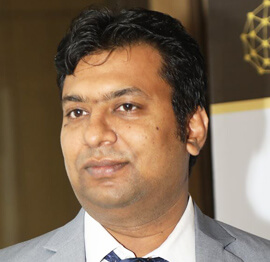
Lalit Bansal
Founder & CEO - EIY SYS

Navdeep Garg
CEO Revinfotech

Prakash Tripathi
Tech Manager/Leader, Microsoft MVP, Blogger
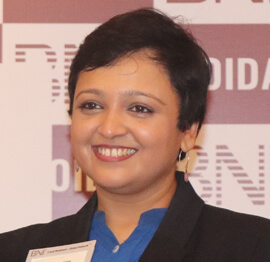
Bhavna Jain
Breakthrough Consultant

Naveen Sharma
Enterprise Architect, Leadership Coach, Author

Vidya Vrat Agarwal
Principal Architect, Microsoft MVP, Author

Sheetal Agarwal
Founder Clownselors, Medical Clown, Trainer

Abhishek Kant
Founder GTM Catalyst

Vishnu Saran
Founder & CEO VoiceQube

Sandeep Soni
Founder & CEO Deccansoft, Microsoft Certified Trainer

Parveen Malik
AVP InfoSec & Vulnerability Management, Information Security Expert

Nitin Pandit
Microsoft MVP, Developer Evangelist, Author

Niloshima Srivastava
C# Corner MVP, Tech Architect, Trainer, Blogger

Bala Chirtsabesan
Senior Software Engineer at Microsoft, Author

Manoj Mittal
Sr. Technical Architect, C# Corner MVP, Author

Chandni Di
Co-Founder Voice of Slum

Vithal Wadje
Technical Lead, Microsoft MVP, Author

Shivam Ahuja
Founder SkillCircle, Business Mentor

Chervine Bhiwoo
Solution Architect, Microsoft MVP, Author

Saurabh Jain
Vice President Paytm, Founder Fun2Do Labs, Author

Vinay Solanki
Head IoT at Lenovo, Founder IoT-NCR
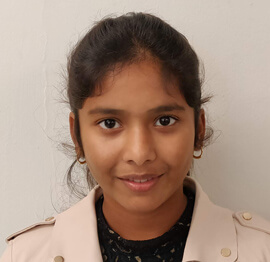
Anshu kumari
Founder Blockchainkids, Inventor, Trainer

Amit Singal
CEO Startup Buddy

Dev Pratap
Co-Founder & CEO Voice of Slum

Amey Vartak
Technology Consultant, Full Stack Developer, C# Corner MVP, Author

Viswanatha Swamy
Principal Software Engineer, C# Corner MVP, Author

Sanket Verma
Research Engineer @ Ballistics (Forensics) and Chair, PyData Delhi

Sourabh Somani
Lead Developer, Microsoft MVP, Author

Abhishek Mishra
Software Architect, C# Corner MVP, Author

Siddharth Vaghasia
Technical Consultant, C# Corner MVP, Blogger
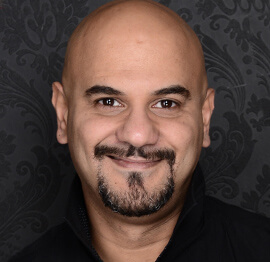
Bassam Alugili
Senior Software Specialist, Database Expert

S Ravi Kumar
Solution Architect, C# Corner MVP, Author

Sundaram Subramanian
Full Stack Developer, C# Corner MVP, Speaker

Deepesh Somani
Solution Architect, Microsoft MVP, Author

Debasis Saha
Technical Project Manager, C# Corner MVP, Blogger, Author

Vipul Jain
Software Architect, C# Corner MVP, Author

Akshay Patel
Technical Architect, Microsoft Certified Trainer, C# Corner MVP, Author

Stephen Simon
RPA Developer, Evangelist, Author
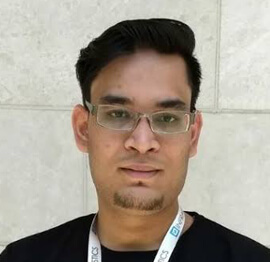
Vivek Sharma
Founder Kingster636, AR/VR Specialist

Jeetendra Gund
Technical Lead, C# Corner MVP, Author
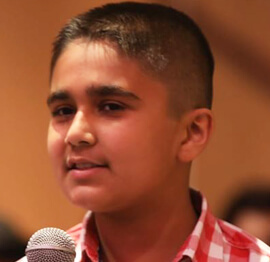
Sujal Beniwal
AI Enthusiast, Student

M Viknaraj
Microsoft MVP, Azure Architect, Author

Prasham Sabadra
Software Architect, C# Corner MVP, Trainer, Author
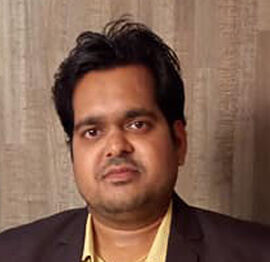
Aakash Maurya
Senior Developer, C# Corner MVP, Speaker

Ankit Sharma
Senior Software Engineer, C# Corner MVP, Author

Mangesh Gaherwar
Team Lead, C# Corner MVP, Author

Viral Jain
Technical Consultant, C# Corner MVP, Author
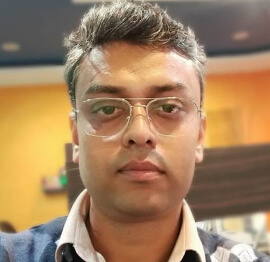
Bhasker Das
Solution Architect, Evangelist

Manish Dwivedi
Associate Project Manager

Ck Nitin
Programmer, Author

Rohit Gupta
Technical Trainer, Author

Manish Tewatia
Full-stack Marketer, UX Designer

Bhavya Gaur
Technical Illustrator

Rohit Tomar
SEO/SMO Expert
Web Track
Cloud & Data Track
Dev Track
Registration & Breakfast
Future of Desktop Apps with JS (ElectronJs)
Nitin Pandit
Building Serverless Microservices Using Microsoft Azure
Vithal Wadje
Innovating RPA: A Robot for Every Person
Stephen Simon
Managing Cloud Storage Accounts using Logic Apps
Viknaraj Manogararajah
Data visualization using Python
Sekhar Srinivasan
Going Cross platform with AR Foundation
Vivek Sharma
Keynote
Managing your Azure dependencies in ASP.NET Core apps using VS
Bala Chirtsabesan
Securing Applications on Intelligent Azure
Abhishek Mishra
Getting started with Blazor the Framework of Future
S Ravi Kumar
Lunch
Build Progressive Web Apps using Angular 9
Debasis Saha
Build and deploy to any platform using Azure DevOps
Chervine Bhiwoo
Deep Dive in Azure Service Bus
Akshay Patel
Build a Native Mobile Application using React Native and JavaScript
Joseph Guadagno
Making sense of Web Job, Web Job SDK and Functions in Azure
Prakash Tripathi
CloudFront Distribution in AWS
Viral Jain
Tea Break
Introduction to PowerBI
Aakash Maurya
Build Advanced SPFx solutions with React and Graph API
Siddharth Vaghasia
Build Business Intelligence Analyst (BIA) Skills
Sundaram Subramanian
Deep dive of Power Platform – AI BUILDER
Prasham Sabadra
Panel 1
What's new in SharePoint development
Vipul Jain
Build a SSO (Single Sign On) based Native JavaScript application with Microsoft Identity within 10 minutes
Manoj Mittal
Panel 2
Applications and working of AI
Veena Sarda
Deploying serverless API's with .Net core 3.0 on AWS & Azure
Amey Vartak
Panel 3
Blockchain with .NET Core (Ark)
Anshu Kumari
Closing Note & Prize Distribution
Dev Track
Cloud Track
Architecture Track
Emerging Tech Track
Registration & Breakfast
Creating Full-Stack Web Apps Using Server-Side Blazor
Ankit Sharma
Real time face recognition with MS Cognitive Services
Niloshima Srivastava
Building Scalable APIs with GraphQL
Jeetendra Gund
Future of development with AI and Blockchain
Navdeep Garg
Debugging Tips and Tricks with Visual Studio 2019
Joseph Guadagno
Azure Containers
Abhishek Kant
Enterprise Architecture
Naveen Sharma
Bot Framework - learn it fast and look like a boss!
Allen O’Neill
Keynote
.Net Core & C# 8 Performance
David McCarter
Working with Azure kubernetes services
Ritesh Modi
Becoming an Architect
Vidyavrat Agarwal
Why Techies Need to Learn Product Management
Saurabh Jain
Lunch
Build a rules engine in .Net Core
Sanjay Vyas
Building CI and CD Pipeline using Azure DevOps
Sandeep Soni
Entity Framework Core - Tips and Tricks, Performance Optimization, and Tuning
Bassam Alugili
Hacking your way into Data Science
Sanket Verma
Speed up your .Net Core Website
Sourabh Somani
Azure
Magnus Mårtensson
Demystifying Open Distro for Elasticsearch
Suman Debnath
Future of Data
Shivam Ahuja
Tea Break
gRPC with C# and .Net Core
Mangesh Gaherwar
Panel 1
Essentials of Cloud security
Parveen Malik
Power platform and Dynamics 365
Deepesh Somani
Microservices - the gRPC Way
Viswanatha Swamy
Panel 2
Reserved
Reserved
Closing Note & Prize Distribution
Building a Graph-Based Recommendation Engine with .NET and Neo4j
For software engineers working on personalisation, recommendation engines often live or die by how well they model relationships. A user likes a product, a viewer watches a film, a buyer browses a suburb, and suddenly a sprawling web of context emerges that is painful to flatten into rows and columns. Graph databases were designed for exactly this kind of multi-hop traversal, which is why pairing Neo4j with .NET gives C# developers a remarkably expressive toolkit for next-generation suggestion systems.
Whether you are building a streaming service in Sydney, a fintech super-app in Melbourne, or a retail platform serving Brisbane buyers, the same architectural challenge shows up: surface the right item to the right person at the right moment without scanning a relational warehouse every time. The combination of .NET's mature concurrency story and Neo4j's pattern-matching engine offers a clean path through that problem, and the rest of this article walks through the moving parts.
Why Graphs Excel at Recommendation Logic
Relational databases store relationships implicitly, through foreign keys that have to be joined on demand. Each join multiplies the cost of a query, and once you go beyond three or four hops, performance collapses. Neo4j stores relationships as first-class citizens, attached directly to the nodes they connect. When you traverse from a user node to an item node through a chain of behaviours, the engine follows physical pointers rather than recomputing joins. For recommendation workloads that frequently ask questions such as "what have similar users bought in the past 30 days?", this difference is dramatic.
Another strength is flexibility. A recommendation graph does not need a fixed schema. You can add a new edge type, such as ListenedTo or RecentlyViewed, without altering tables or migrating data. For Australian teams racing to ship features ahead of competitive launches, this agility means product experiments can run without database change tickets clogging the backlog. The graph simply absorbs the new vocabulary and indexes it on the fly.
Graphs also excel at explainability. A recommendation can be returned alongside the path that produced it: user A purchased item B, which is similar to item C, which user A's peer user D also purchased. Showing this trail to the customer, or to a compliance officer reviewing algorithmic decisions under the Australian Privacy Principles, becomes straightforward. Auditable machine learning is increasingly important across regulated sectors in Australia, and a graph-native store makes those audit trails much easier to produce.
Modelling Users, Items, and Interactions in Neo4j
A useful starting point is to model three primary node labels: User, Item, and Category. Each user node carries properties such as a stable identifier, sign-up date, and optionally a hashed loyalty tier. Each item node carries product details, pricing in Australian dollars, and a category reference. Between them, edges like PURCHASED, VIEWED, LIKED, and ADDED_TO_CART capture behaviour. Time stamps on those edges let you weight recent activity more heavily than older activity, which mirrors how recommendations feel in practice.
Beyond explicit behaviour, Neo4j shines when you layer in semantic relationships. A property graph can encode "Item X is similar to Item Y" using a SIMILAR_TO edge with a cosine similarity score as a property. You can also attach geographic context, such as the state or postcode where a delivery was completed, which becomes powerful for region-specific merchandising. A retailer serving both Perth's isolated suburbs and the dense Melbourne CBD, for instance, may want different weighting for shipping speed versus product depth, and the graph can express that natively.
When modelling, it pays to think in terms of traversals rather than tables. Decide which patterns your application will ask about most often, such as "users who purchased items similar to my last three purchases", and ensure those paths are short and well-indexed. Neo4j will not enforce this discipline for you, but the rewards for designing around traversals are substantial.
Connecting .NET to Neo4j with the Official Driver
The official Neo4j.Driver package on NuGet is the canonical bridge between C# code and a Neo4j server. Adding it to a .NET 6 or .NET 8 project takes a single dotnet add package command, after which you can construct an IDriver instance configured with the bolt URI, credentials, and optional encryption settings. The driver is asynchronous by design, which means it integrates cleanly with ASP.NET Core's request pipeline and with background services hosted in IHostedService implementations.
A typical pattern in a .NET service is to register the driver as a singleton through dependency injection. That keeps the connection pool warm and avoids the cost of re-handshaking on every request. Sessions are short-lived and should be wrapped in using blocks, while transactions can be opened at a finer granularity for read or write operations. For a recommendation engine, most traffic will be read-heavy, so configuring routing drivers against a Neo4j cluster lets reads fan out to followers while writes stay on the leader.
When deploying to Australian infrastructure, latency matters. Hosting your application tier in ap-southeast-2 (Sydney) and your Neo4j Aura instance in the same region can shave milliseconds off every recommendation call. Teams operating from Brisbane or Adelaide should still target Sydney for the canonical deployment, given the region's stronger availability zone coverage and the broader set of managed services available there. Minimising network distance is one of the cheapest performance gains in any graph-backed application.
Writing Cypher Queries for Personalised Suggestions
Cypher is Neo4j's declarative query language, and its ASCII-art style makes relationship patterns almost literal to read. A simple co-purchase query, for instance, asks for items bought by people who also bought a given product, ranked by frequency. Because Cypher natively understands paths, you can express a two-hop pattern in a single statement that would translate into several self-joins in SQL.
For collaborative filtering, a typical query returns the top items that share a strong affinity with a user's recent interactions. The MATCH clause walks from the user to their recent purchases, then to other users who purchased those items, then to those users' additional purchases, excluding anything the original user already owns. Adding LIMIT 10 and an ORDER BY on a derived score keeps responses bounded and predictable for the UI layer. These patterns can be parameterised and executed through session.ExecuteReadAsync, returning strongly typed records that map neatly into C# record types.
Content-based filtering benefits from a similar shape. If each item carries weighted tags, a query can aggregate a user's tag affinity and surface the closest matching items using a similarity score computed in Cypher. For richer ranking signals, many teams call out to an ML service from .NET, then write the resulting scores back to the graph as properties on the SIMILAR_TO edges. This hybrid style lets the graph remain the single source of truth for both raw signals and derived insights, which simplifies downstream analytics for marketing teams who want to understand why a campaign converted.
Operationalising and Comparing Approaches
Once the engine is working in development, the production checklist is familiar: secure the bolt port, rotate credentials, monitor query latency, and plan for backups. Neo4j Aura handles much of this automatically, which appeals to lean Australian engineering teams that prefer managed services over running their own clusters. On the .NET side, structured logging, OpenTelemetry tracing, and circuit breakers around the driver help you observe and contain failures before they cascade.
Choosing between a graph approach, a traditional relational warehouse, or a pure matrix-factorisation library depends on the problem. The table below sketches a practical comparison for a small-to-mid-sized Australian e-commerce team.
| Aspect | Graph (Neo4j) | Relational (SQL) | Matrix Factorisation |
|---|---|---|---|
| Multi-hop queries | Native, fast | Costly joins | Limited |
| Schema flexibility | High | Low | Medium |
| Explainability | Built-in via paths | Manual | Difficult |
| Cold-start handling | Strong via content edges | Strong | Weak |
| Operational complexity | Moderate | Low | High |
| Best fit | Connected data, real-time paths | Tabular reporting | Pure rating prediction |
For most C# teams starting out, a graph-first design combined with targeted use of .NET ML.NET models for embeddings strikes a pragmatic balance. You get the traversal speed of Neo4j, the productivity of C#, and the option to enhance the graph with learned representations whenever the data set justifies it. The result is a recommendation engine that scales with the complexity of your customer relationships rather than against it.








1, CBD, Maharaj Surajmal Road, Near Yamuna Sports Complex, Delhi, 110032





GENERAL QUERIES
Manish Tewatia
manish@csharpcon.com
+91-9718-431-042
TICKET QUERIES
Atul Gupta
conference@csharpcon.com
+91-9910-125-804