
Presents


Magnus Mårtensson
Microsoft Regional Director, Azure MVP, CEO Loftysoft

Avirag Jain
Director & CTO R Systems

Mahesh Chand
Founder C# Corner, CEO Mindcracker

Chris Gali
CEO & Co-Founder Graphite

Subinder Khurana
Chief Architect StoryProcess, Founder NASSCOM DeepTech Club

Bryan Rishforth
Investor, Chairman Graphite

Bryn Everson
Director Biz Dev Graphite
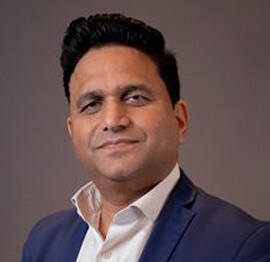
Raj Tiwari
Digital Transformation Leader, Futurist and Visionary

Joseph Guadagno
Microsoft MVP, Lead Quicken Loans

Nikita Sachdev
Entrepreneur, Blockchain Enthusiast & Advisor, Social Media Influencer

Doug Wagner
COO & Founder Adapt Technical Group

Ritesh Modi
Architect, Senior Evangelist, Cloud Architect

Crystal Wenrick
Director Communications Mindcracker

Allen O’Neill
Microsoft MVP, Consulting Engineer/Architect
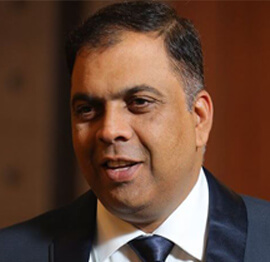
Praveen Kumar
CEO MCN Solutions

Chris Love
Founder Love2Dev, Microsoft MVP, Author

Sanjay Vyas
Microsoft Regional Director, Microsoft MVP, Founder & CEO SkillLabs Technologies

Veena Sarda
Deep Learning Consultant, Author

Sekhar Srinivasan
C# Corner MVP, Microsoft Certified Trainer, Pluralsight Author
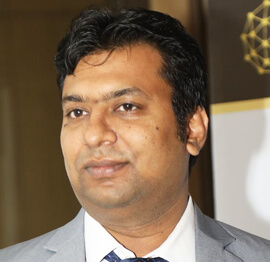
Lalit Bansal
Founder & CEO - EIY SYS

Navdeep Garg
CEO Revinfotech

Prakash Tripathi
Tech Manager/Leader, Microsoft MVP, Blogger
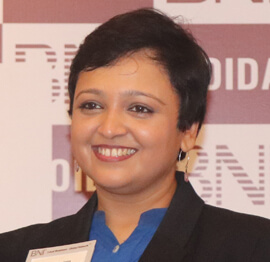
Bhavna Jain
Breakthrough Consultant

Naveen Sharma
Enterprise Architect, Leadership Coach, Author

Vidya Vrat Agarwal
Principal Architect, Microsoft MVP, Author

Sheetal Agarwal
Founder Clownselors, Medical Clown, Trainer

Abhishek Kant
Founder GTM Catalyst

Vishnu Saran
Founder & CEO VoiceQube

Sandeep Soni
Founder & CEO Deccansoft, Microsoft Certified Trainer

Parveen Malik
AVP InfoSec & Vulnerability Management, Information Security Expert

Nitin Pandit
Microsoft MVP, Developer Evangelist, Author

Niloshima Srivastava
C# Corner MVP, Tech Architect, Trainer, Blogger

Bala Chirtsabesan
Senior Software Engineer at Microsoft, Author
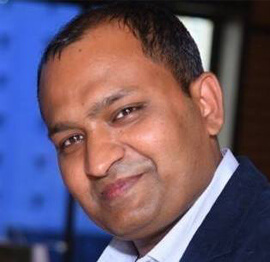
Manoj Mittal
Sr. Technical Architect, C# Corner MVP, Author

Chandni Di
Co-Founder Voice of Slum

Vithal Wadje
Technical Lead, Microsoft MVP, Author

Shivam Ahuja
Founder SkillCircle, Business Mentor

Chervine Bhiwoo
Solution Architect, Microsoft MVP, Author

Saurabh Jain
Vice President Paytm, Founder Fun2Do Labs, Author

Vinay Solanki
Head IoT at Lenovo, Founder IoT-NCR

Anshu kumari
Founder Blockchainkids, Inventor, Trainer

Amit Singal
CEO Startup Buddy

Dev Pratap
Co-Founder & CEO Voice of Slum

Amey Vartak
Technology Consultant, Full Stack Developer, C# Corner MVP, Author

Viswanatha Swamy
Principal Software Engineer, C# Corner MVP, Author

Sanket Verma
Research Engineer @ Ballistics (Forensics) and Chair, PyData Delhi

Sourabh Somani
Lead Developer, Microsoft MVP, Author
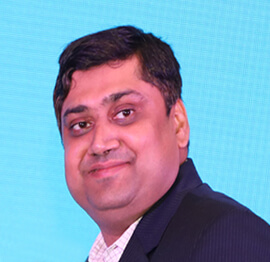
Abhishek Mishra
Software Architect, C# Corner MVP, Author

Siddharth Vaghasia
Technical Consultant, C# Corner MVP, Blogger

Bassam Alugili
Senior Software Specialist, Database Expert

S Ravi Kumar
Solution Architect, C# Corner MVP, Author

Sundaram Subramanian
Full Stack Developer, C# Corner MVP, Speaker

Deepesh Somani
Solution Architect, Microsoft MVP, Author

Debasis Saha
Technical Project Manager, C# Corner MVP, Blogger, Author
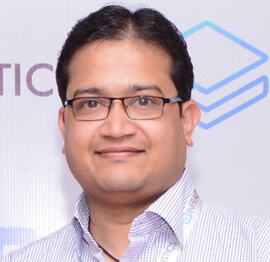
Vipul Jain
Software Architect, C# Corner MVP, Author

Akshay Patel
Technical Architect, Microsoft Certified Trainer, C# Corner MVP, Author

Stephen Simon
RPA Developer, Evangelist, Author

Vivek Sharma
Founder Kingster636, AR/VR Specialist

Jeetendra Gund
Technical Lead, C# Corner MVP, Author

Sujal Beniwal
AI Enthusiast, Student

M Viknaraj
Microsoft MVP, Azure Architect, Author

Prasham Sabadra
Software Architect, C# Corner MVP, Trainer, Author

Aakash Maurya
Senior Developer, C# Corner MVP, Speaker

Ankit Sharma
Senior Software Engineer, C# Corner MVP, Author

Mangesh Gaherwar
Team Lead, C# Corner MVP, Author

Viral Jain
Technical Consultant, C# Corner MVP, Author

Bhasker Das
Solution Architect, Evangelist

Manish Dwivedi
Associate Project Manager

Ck Nitin
Programmer, Author

Rohit Gupta
Technical Trainer, Author

Manish Tewatia
Full-stack Marketer, UX Designer

Bhavya Gaur
Technical Illustrator

Rohit Tomar
SEO/SMO Expert
Web Track
Cloud & Data Track
Dev Track
Registration & Breakfast
Future of Desktop Apps with JS (ElectronJs)
Nitin Pandit
Building Serverless Microservices Using Microsoft Azure
Vithal Wadje
Innovating RPA: A Robot for Every Person
Stephen Simon
Managing Cloud Storage Accounts using Logic Apps
Viknaraj Manogararajah
Data visualization using Python
Sekhar Srinivasan
Going Cross platform with AR Foundation
Vivek Sharma
Keynote
Managing your Azure dependencies in ASP.NET Core apps using VS
Bala Chirtsabesan
Securing Applications on Intelligent Azure
Abhishek Mishra
Getting started with Blazor the Framework of Future
S Ravi Kumar
Lunch
Build Progressive Web Apps using Angular 9
Debasis Saha
Build and deploy to any platform using Azure DevOps
Chervine Bhiwoo
Deep Dive in Azure Service Bus
Akshay Patel
Build a Native Mobile Application using React Native and JavaScript
Joseph Guadagno
Making sense of Web Job, Web Job SDK and Functions in Azure
Prakash Tripathi
CloudFront Distribution in AWS
Viral Jain
Tea Break
Introduction to PowerBI
Aakash Maurya
Build Advanced SPFx solutions with React and Graph API
Siddharth Vaghasia
Build Business Intelligence Analyst (BIA) Skills
Sundaram Subramanian
Deep dive of Power Platform – AI BUILDER
Prasham Sabadra
Panel 1
What's new in SharePoint development
Vipul Jain
Build a SSO (Single Sign On) based Native JavaScript application with Microsoft Identity within 10 minutes
Manoj Mittal
Panel 2
Applications and working of AI
Veena Sarda
Deploying serverless API's with .Net core 3.0 on AWS & Azure
Amey Vartak
Panel 3
Blockchain with .NET Core (Ark)
Anshu Kumari
Closing Note & Prize Distribution
Dev Track
Cloud Track
Architecture Track
Emerging Tech Track
Registration & Breakfast
Creating Full-Stack Web Apps Using Server-Side Blazor
Ankit Sharma
Real time face recognition with MS Cognitive Services
Niloshima Srivastava
Building Scalable APIs with GraphQL
Jeetendra Gund
Future of development with AI and Blockchain
Navdeep Garg
Debugging Tips and Tricks with Visual Studio 2019
Joseph Guadagno
Azure Containers
Abhishek Kant
Enterprise Architecture
Naveen Sharma
Bot Framework - learn it fast and look like a boss!
Allen O’Neill
Keynote
.Net Core & C# 8 Performance
David McCarter
Working with Azure kubernetes services
Ritesh Modi
Becoming an Architect
Vidyavrat Agarwal
Why Techies Need to Learn Product Management
Saurabh Jain
Lunch
Build a rules engine in .Net Core
Sanjay Vyas
Building CI and CD Pipeline using Azure DevOps
Sandeep Soni
Entity Framework Core - Tips and Tricks, Performance Optimization, and Tuning
Bassam Alugili
Hacking your way into Data Science
Sanket Verma
Speed up your .Net Core Website
Sourabh Somani
Azure
Magnus Mårtensson
Demystifying Open Distro for Elasticsearch
Suman Debnath
Future of Data
Shivam Ahuja
Tea Break
gRPC with C# and .Net Core
Mangesh Gaherwar
Panel 1
Essentials of Cloud security
Parveen Malik
Power platform and Dynamics 365
Deepesh Somani
Microservices - the gRPC Way
Viswanatha Swamy
Panel 2
Reserved
Reserved
Closing Note & Prize Distribution
Using Azure SQL Database Hyperscale for Large-Scale Workloads
Large-scale applications place unusual demands on a relational database. Transaction volume can rise sharply, data files can grow into terabytes, and reporting workloads may compete with customer-facing operations. Traditional database scaling approaches often require larger machines, complex sharding, or disruptive maintenance windows.
Azure SQL Database Hyperscale addresses these pressures through a cloud-native architecture designed for rapid data growth and elastic compute. It separates compute, storage, and transaction log services so each part can evolve more independently. This design makes the service especially relevant for high-volume SaaS platforms, financial systems, analytics applications, and data-intensive web solutions.
For software professionals attending a technology conference such as C# Corner Annual Conference 2020, Hyperscale connects several important themes: Microsoft Azure, cloud databases, application modernization, DevOps, performance engineering, and operational automation. Understanding its architecture helps development teams decide where the service fits and how to adopt it responsibly.
Why Hyperscale Changes Database Scaling
Azure SQL Database Hyperscale is a service tier within Azure SQL Database. Its defining characteristic is the ability to support databases that grow far beyond the practical limits of many general-purpose configurations. Storage can scale to as much as 128 TB, while compute resources can be adjusted separately to match application demand.
In a conventional database architecture, compute and storage are closely tied to a single database engine or virtual machine. Increasing storage may require increasing compute, and scaling the machine can involve planning, migration, or downtime. Hyperscale uses a distributed design that reduces this dependency and allows storage expansion without treating the entire database as one tightly coupled server.
The model is particularly useful when a workload has a large data footprint but variable processing requirements. An application might need substantial storage throughout the year but require additional CPU only during seasonal demand, batch processing, or a product launch. Hyperscale provides more flexibility for that pattern than a fixed database appliance.
How The Hyperscale Architecture Works
A Hyperscale database uses a primary compute replica, optional high-availability replicas, page servers, and a dedicated log service. The compute replica runs the SQL engine and handles connections, queries, transactions, and database logic. Page servers maintain portions of the data files and provide data pages to compute replicas when needed.
The log service creates a durable transaction log stream that is consumed by the storage layer and replicas. This approach reduces the amount of work required from the primary compute node during data changes. It also supports fast recovery and replica creation because the system does not need to copy the complete database in the same way as a traditional full database clone.
Read scale-out is another important capability. Additional named replicas can serve read-only queries, allowing reporting, search, dashboards, or analytical features to use separate compute resources. Applications must route suitable read operations to those replicas, and teams should account for replication lag when users expect immediately consistent results.
| Capability | Hyperscale Benefit | Planning Consideration |
|---|---|---|
| Storage capacity | Supports databases up to 128 TB | Large capacity does not remove the need for data lifecycle policies |
| Compute scaling | Compute can be resized independently of storage | Scaling still requires workload testing and cost review |
| Read scale-out | Named replicas can handle read-intensive operations | Read routing and consistency expectations must be designed |
| Backup and restore | Backups and point-in-time restore are designed for large databases | Retention, restore targets, and compliance settings need validation |
| High availability | Additional replicas can improve resilience | Availability architecture should match the application’s recovery objectives |
| Data growth | Page servers support distributed storage expansion | Indexing, partitioning, and archiving remain important |
Finding The Right Workload Fit
Hyperscale is a strong candidate for transactional applications with rapidly expanding databases, unpredictable demand, or demanding read workloads. Examples include global commerce platforms, customer relationship systems, online gaming services, telemetry platforms, and multi-tenant software products. These systems benefit when storage growth, compute demand, and availability requirements change at different rates.
The service also suits organizations moving from large SQL Server estates into Azure. A database that has outgrown a single server can often be modernized without redesigning every relational feature. Existing T-SQL skills, tools, schemas, and development practices remain valuable, although compatibility testing is still essential.
Hyperscale should not be selected simply because a database is large. A smaller database with modest transaction volume may cost less and operate more simply in a General Purpose or Business Critical tier. Teams should assess CPU, memory, storage throughput, latency, concurrency, backup requirements, and read/write patterns before choosing a service tier.
Workload behavior matters as much as database size. A system with frequent cross-database transactions, specialized SQL Server features, or strict synchronous read requirements may need additional design work. Some platform capabilities differ across Azure SQL Database service tiers, so application dependencies should be documented before migration.
Planning A Safe Migration
Migration begins with an inventory of the existing database environment. Record database size, largest tables, index usage, data growth, peak connections, transaction log behavior, long-running queries, and scheduled jobs. Capture production performance during busy periods instead of relying only on average metrics.
Compatibility assessment tools can identify unsupported features, syntax differences, deprecated behavior, and changes in agent jobs or server-level configuration. Azure Database Migration Service, native backup and restore methods, transactional replication, and other approaches may be suitable depending on the source platform, downtime tolerance, and migration direction.
A phased process reduces risk. Teams can first migrate a development copy, then run integration and performance tests, and finally perform a controlled production cutover. Data validation should compare row counts, checksums, key business totals, and application behavior. The migration plan should include rollback conditions, communication responsibilities, and a tested recovery procedure.
Schema design still matters in Hyperscale. Large tables may benefit from partitioning, carefully chosen clustered indexes, compression, and archive policies. Developers should review ORM-generated queries, pagination patterns, implicit conversions, and unbounded result sets. Hyperscale provides a powerful foundation, but inefficient queries can still consume excessive compute and create user-facing latency.
Managing Performance And Cost
Performance tuning starts with query visibility. Azure Monitor, Query Store, dynamic management views, execution plans, and workload dashboards can reveal CPU pressure, memory demands, blocking, deadlocks, storage latency, and query regressions. Establish baseline measurements before scaling so that a larger compute size can be evaluated against meaningful business and technical outcomes.
Read scale-out can reduce contention when reporting and transactional activity share the same data. The application should identify read-only operations and direct them to a named replica through an appropriate connection configuration. This method works best for queries that tolerate replication delay and do not immediately depend on a preceding write.
Cost management requires attention to compute hours, replica count, storage consumption, backup retention, data transfer, and monitoring. A large database that is lightly used may accumulate storage costs without delivering equivalent business value. Automated alerts for storage growth, high compute utilization, unusual query duration, and replica activity help teams respond before usage becomes expensive.
Connection pooling and retry logic are important in cloud database applications. Transient faults can occur during maintenance, scaling, or network events, so clients should use bounded retries with backoff rather than repeatedly submitting requests without control. Connection limits, command timeouts, and transaction scope should be tested under realistic concurrency.
Building A Practical Adoption Plan
A successful Hyperscale implementation combines architecture, application engineering, security, and operations. Development teams should work with database specialists early, particularly when the migration involves large objects, complex reporting, legacy features, or multi-tenant data isolation.
Use the following practices to create a disciplined adoption path:
- Measure production workload patterns before selecting compute size, replica configuration, or service tier.
- Test migration, failover, restore, read scale-out, and rollback procedures with production-like data volumes.
- Separate transactional queries from reporting and batch workloads through indexing, scheduling, or named replicas.
- Track storage growth, query performance, compute utilization, backup retention, and monthly cost with clear ownership.
- Review security controls, private connectivity, identity management, auditing, encryption, and regulatory requirements before launch.
DevOps teams can place database deployment scripts, schema changes, and configuration checks in source control. Automated pipelines should validate migrations against disposable environments and block changes that create unacceptable performance or compatibility risks. Infrastructure as code can also make environments easier to reproduce across development, testing, and production.
Turning Scale Into Application Value
Hyperscale delivers the most value when database architecture supports the broader application design. APIs should return focused result sets, background jobs should handle expensive work asynchronously, and services should avoid holding transactions open while performing network calls. These practices reduce contention regardless of the underlying database tier.
Large-scale workloads also benefit from clear ownership. Developers can optimize query shape and data access, database engineers can manage indexing and capacity, and platform teams can oversee security, monitoring, and resilience. Shared dashboards and agreed service-level objectives turn database operations into an observable engineering discipline rather than a reactive support task.
The technology topics represented by the C# Corner Annual Conference 2020—Azure, cloud computing, web development, data, DevOps, and automation—come together in this type of implementation. A Hyperscale database is not an isolated infrastructure choice. It is part of a complete platform strategy for delivering reliable applications as data and demand expand.
Explore Azure SQL Database Hyperscale through conference sessions, technical demonstrations, and hands-on experiments. Build a representative workload, test its scaling and recovery behavior, and use the results to shape a migration plan that your development and operations teams can execute with confidence.










1, CBD, Maharaj Surajmal Road, Near Yamuna Sports Complex, Delhi, 110032





GENERAL QUERIES
Manish Tewatia
manish@csharpcon.com
+91-9718-431-042
TICKET QUERIES
Atul Gupta
conference@csharpcon.com
+91-9910-125-804