

Presents


Magnus Mårtensson
Microsoft Regional Director, Azure MVP, CEO Loftysoft

Avirag Jain
Director & CTO R Systems

Mahesh Chand
Founder C# Corner, CEO Mindcracker

Chris Gali
CEO & Co-Founder Graphite

Subinder Khurana
Chief Architect StoryProcess, Founder NASSCOM DeepTech Club

Bryan Rishforth
Investor, Chairman Graphite

Bryn Everson
Director Biz Dev Graphite

Raj Tiwari
Digital Transformation Leader, Futurist and Visionary

Joseph Guadagno
Microsoft MVP, Lead Quicken Loans

Nikita Sachdev
Entrepreneur, Blockchain Enthusiast & Advisor, Social Media Influencer

Doug Wagner
COO & Founder Adapt Technical Group

Ritesh Modi
Architect, Senior Evangelist, Cloud Architect

Crystal Wenrick
Director Communications Mindcracker

Allen O’Neill
Microsoft MVP, Consulting Engineer/Architect
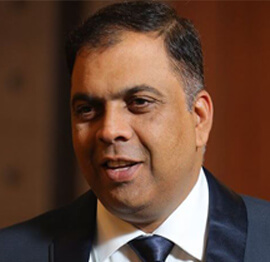
Praveen Kumar
CEO MCN Solutions

Chris Love
Founder Love2Dev, Microsoft MVP, Author

Sanjay Vyas
Microsoft Regional Director, Microsoft MVP, Founder & CEO SkillLabs Technologies

Veena Sarda
Deep Learning Consultant, Author

Sekhar Srinivasan
C# Corner MVP, Microsoft Certified Trainer, Pluralsight Author

Lalit Bansal
Founder & CEO - EIY SYS

Navdeep Garg
CEO Revinfotech

Prakash Tripathi
Tech Manager/Leader, Microsoft MVP, Blogger

Bhavna Jain
Breakthrough Consultant

Naveen Sharma
Enterprise Architect, Leadership Coach, Author

Vidya Vrat Agarwal
Principal Architect, Microsoft MVP, Author

Sheetal Agarwal
Founder Clownselors, Medical Clown, Trainer

Abhishek Kant
Founder GTM Catalyst

Vishnu Saran
Founder & CEO VoiceQube

Sandeep Soni
Founder & CEO Deccansoft, Microsoft Certified Trainer

Parveen Malik
AVP InfoSec & Vulnerability Management, Information Security Expert

Nitin Pandit
Microsoft MVP, Developer Evangelist, Author

Niloshima Srivastava
C# Corner MVP, Tech Architect, Trainer, Blogger

Bala Chirtsabesan
Senior Software Engineer at Microsoft, Author

Manoj Mittal
Sr. Technical Architect, C# Corner MVP, Author

Chandni Di
Co-Founder Voice of Slum

Vithal Wadje
Technical Lead, Microsoft MVP, Author

Shivam Ahuja
Founder SkillCircle, Business Mentor

Chervine Bhiwoo
Solution Architect, Microsoft MVP, Author

Saurabh Jain
Vice President Paytm, Founder Fun2Do Labs, Author

Vinay Solanki
Head IoT at Lenovo, Founder IoT-NCR

Anshu kumari
Founder Blockchainkids, Inventor, Trainer

Amit Singal
CEO Startup Buddy

Dev Pratap
Co-Founder & CEO Voice of Slum

Amey Vartak
Technology Consultant, Full Stack Developer, C# Corner MVP, Author

Viswanatha Swamy
Principal Software Engineer, C# Corner MVP, Author

Sanket Verma
Research Engineer @ Ballistics (Forensics) and Chair, PyData Delhi

Sourabh Somani
Lead Developer, Microsoft MVP, Author

Abhishek Mishra
Software Architect, C# Corner MVP, Author

Siddharth Vaghasia
Technical Consultant, C# Corner MVP, Blogger

Bassam Alugili
Senior Software Specialist, Database Expert

S Ravi Kumar
Solution Architect, C# Corner MVP, Author

Sundaram Subramanian
Full Stack Developer, C# Corner MVP, Speaker

Deepesh Somani
Solution Architect, Microsoft MVP, Author

Debasis Saha
Technical Project Manager, C# Corner MVP, Blogger, Author

Vipul Jain
Software Architect, C# Corner MVP, Author

Akshay Patel
Technical Architect, Microsoft Certified Trainer, C# Corner MVP, Author

Stephen Simon
RPA Developer, Evangelist, Author

Vivek Sharma
Founder Kingster636, AR/VR Specialist

Jeetendra Gund
Technical Lead, C# Corner MVP, Author

Sujal Beniwal
AI Enthusiast, Student

M Viknaraj
Microsoft MVP, Azure Architect, Author

Prasham Sabadra
Software Architect, C# Corner MVP, Trainer, Author

Aakash Maurya
Senior Developer, C# Corner MVP, Speaker

Ankit Sharma
Senior Software Engineer, C# Corner MVP, Author

Mangesh Gaherwar
Team Lead, C# Corner MVP, Author

Viral Jain
Technical Consultant, C# Corner MVP, Author

Bhasker Das
Solution Architect, Evangelist

Manish Dwivedi
Associate Project Manager

Ck Nitin
Programmer, Author

Rohit Gupta
Technical Trainer, Author

Manish Tewatia
Full-stack Marketer, UX Designer

Bhavya Gaur
Technical Illustrator

Rohit Tomar
SEO/SMO Expert
Web Track
Cloud & Data Track
Dev Track
Registration & Breakfast
Future of Desktop Apps with JS (ElectronJs)
Nitin Pandit
Building Serverless Microservices Using Microsoft Azure
Vithal Wadje
Innovating RPA: A Robot for Every Person
Stephen Simon
Managing Cloud Storage Accounts using Logic Apps
Viknaraj Manogararajah
Data visualization using Python
Sekhar Srinivasan
Going Cross platform with AR Foundation
Vivek Sharma
Keynote
Managing your Azure dependencies in ASP.NET Core apps using VS
Bala Chirtsabesan
Securing Applications on Intelligent Azure
Abhishek Mishra
Getting started with Blazor the Framework of Future
S Ravi Kumar
Lunch
Build Progressive Web Apps using Angular 9
Debasis Saha
Build and deploy to any platform using Azure DevOps
Chervine Bhiwoo
Deep Dive in Azure Service Bus
Akshay Patel
Build a Native Mobile Application using React Native and JavaScript
Joseph Guadagno
Making sense of Web Job, Web Job SDK and Functions in Azure
Prakash Tripathi
CloudFront Distribution in AWS
Viral Jain
Tea Break
Introduction to PowerBI
Aakash Maurya
Build Advanced SPFx solutions with React and Graph API
Siddharth Vaghasia
Build Business Intelligence Analyst (BIA) Skills
Sundaram Subramanian
Deep dive of Power Platform – AI BUILDER
Prasham Sabadra
Panel 1
What's new in SharePoint development
Vipul Jain
Build a SSO (Single Sign On) based Native JavaScript application with Microsoft Identity within 10 minutes
Manoj Mittal
Panel 2
Applications and working of AI
Veena Sarda
Deploying serverless API's with .Net core 3.0 on AWS & Azure
Amey Vartak
Panel 3
Blockchain with .NET Core (Ark)
Anshu Kumari
Closing Note & Prize Distribution
Dev Track
Cloud Track
Architecture Track
Emerging Tech Track
Registration & Breakfast
Creating Full-Stack Web Apps Using Server-Side Blazor
Ankit Sharma
Real time face recognition with MS Cognitive Services
Niloshima Srivastava
Building Scalable APIs with GraphQL
Jeetendra Gund
Future of development with AI and Blockchain
Navdeep Garg
Debugging Tips and Tricks with Visual Studio 2019
Joseph Guadagno
Azure Containers
Abhishek Kant
Enterprise Architecture
Naveen Sharma
Bot Framework - learn it fast and look like a boss!
Allen O’Neill
Keynote
.Net Core & C# 8 Performance
David McCarter
Working with Azure kubernetes services
Ritesh Modi
Becoming an Architect
Vidyavrat Agarwal
Why Techies Need to Learn Product Management
Saurabh Jain
Lunch
Build a rules engine in .Net Core
Sanjay Vyas
Building CI and CD Pipeline using Azure DevOps
Sandeep Soni
Entity Framework Core - Tips and Tricks, Performance Optimization, and Tuning
Bassam Alugili
Hacking your way into Data Science
Sanket Verma
Speed up your .Net Core Website
Sourabh Somani
Azure
Magnus Mårtensson
Demystifying Open Distro for Elasticsearch
Suman Debnath
Future of Data
Shivam Ahuja
Tea Break
gRPC with C# and .Net Core
Mangesh Gaherwar
Panel 1
Essentials of Cloud security
Parveen Malik
Power platform and Dynamics 365
Deepesh Somani
Microservices - the gRPC Way
Viswanatha Swamy
Panel 2
Reserved
Reserved
Closing Note & Prize Distribution
Using Azure Service Bus for Reliable Message Queuing
Modern applications rarely perform every operation in a single request. A web application may receive an order, publish an event, send a notification, update inventory, and start a billing workflow. If all of these tasks run synchronously, a temporary service failure can make the entire user experience slow or unavailable. Message queuing separates these responsibilities and allows work to continue safely when dependent components are busy.
Azure Service Bus provides a managed messaging platform for applications built with .NET, C#, Azure Functions, containers, and other technologies. It supports queues, topics, subscriptions, duplicate detection, dead-letter messages, transactions, and scheduled delivery. These capabilities make it suitable for systems where delivery assurance, controlled processing, and operational visibility matter.
A reliable messaging design involves more than sending a message to a queue. Developers must define message ownership, retry behavior, failure handling, idempotency, security, and monitoring. The following principles explain how to use Azure Service Bus as a dependable communication layer between distributed services.
Why Message Queues Improve Application Reliability
A queue acts as a buffer between a message producer and a message consumer. The producer can submit work without waiting for the receiving service to complete it. The consumer retrieves messages when it has capacity, which helps absorb traffic spikes and protects downstream systems from sudden demand.
This asynchronous model also limits the impact of service interruptions. If an inventory service is unavailable, an order-processing application can place a message in Service Bus and continue with the appropriate business response. Once the inventory service recovers, its worker can process the queued work. Messages remain available according to the queue’s retention and lock settings.
Azure Service Bus uses at-least-once delivery in common processing scenarios. This means a message may be delivered more than once, particularly when a receiver fails after completing work but before acknowledging the message. Consequently, reliable consumers should be idempotent: processing the same message twice should not create duplicate payments, shipments, or database records.
Queues, Topics, And Message Ownership
A Service Bus queue is designed for competing consumers. Multiple worker instances can listen to the same queue, while each message is normally acquired by one receiver at a time. This pattern works well for background jobs, order processing, document conversion, and other workloads where one component owns the work.
Topics and subscriptions support publish-subscribe messaging. A producer sends one message to a topic, and multiple subscriptions receive their own copy. Filters can route messages based on properties, allowing different services to respond to selected event types without requiring the producer to know the subscribers.
Message ownership should be explicit. The producer owns the decision to publish a valid command or event, while the consumer owns successful processing and acknowledgment. A message should contain enough information for the receiver to act, such as an event identifier, correlation identifier, entity identifier, event type, creation time, and schema version. Sensitive data should be limited because messages may remain in the broker, diagnostic systems, or dead-letter storage.
Delivery Modes And Processing Flow
Azure Service Bus supports two main receiver approaches. In receive-and-delete mode, the broker removes a message as soon as it delivers it. This has low overhead, but a process crash during handling can permanently lose the message. It is appropriate only when occasional loss is acceptable.
Peek-lock mode is generally preferred for business-critical work. The receiver obtains a temporary lock, processes the message, and completes it only after the operation succeeds. If processing fails, the receiver can abandon the message or allow the lock to expire. Service Bus then makes the message available for another attempt.
Lock duration must match realistic processing time. Long-running tasks may need lock renewal, although renewal should not be used to hide slow or stalled workers indefinitely. A better design can move lengthy work into smaller stages, use a job-status pattern, or extend the queue’s lock duration within reasonable operational limits.
| Capability | Queue | Topic and Subscription | Practical Value |
|---|---|---|---|
| Delivery model | One competing consumer receives each message | Each subscription receives a message copy | Supports work distribution or event broadcasting |
| Typical use | Commands and background jobs | Domain events and notifications | Separates services without tight coupling |
| Scaling approach | Add receiver instances | Scale subscribers independently | Handles uneven workload and demand |
| Filtering | Limited to consumer logic | Subscription rules and filters | Routes selected events efficiently |
| Failure isolation | Queue-level processing | Subscriber-specific retries and dead letters | Prevents one consumer from blocking others |
| Ordering | Possible with sessions | Possible within a session-enabled subscription | Preserves related message sequences |
Retries, Dead-Lettering, And Duplicate Protection
Transient errors should trigger controlled retries. Network interruptions, temporary database locks, and short-lived dependency failures often resolve without human intervention. A retry policy should include a maximum delivery count and, where appropriate, a delay between attempts. Repeated immediate retries can overload an already unhealthy dependency.
A dead-letter queue is the safety mechanism for messages that cannot be processed successfully. A message may be dead-lettered after exceeding its delivery limit, failing validation, expiring, or violating a business rule. Dead-letter handling should be treated as an operational workflow rather than a storage destination that no one reviews.
Duplicate detection can reduce repeated messages within a configured time window, but it does not replace idempotent application logic. Consumers should store a processed event identifier or use a transactionally safe business key. For example, a payment service can enforce uniqueness on the order identifier before creating a charge record.
The settlement operation should occur at the correct point in the workflow. Completing a message before the business transaction is committed risks data loss. Completing it after a successful transaction is safer, but a crash between those two actions can cause redelivery. Idempotency resolves this unavoidable gap in at-least-once processing.
Building A Scalable C# Worker
A C# worker can use the Azure.Messaging.ServiceBus SDK to create a client and register a processor. The processor manages message reception, lock renewal, concurrency, and error callbacks. Configuration should come from managed application settings or a secure configuration provider rather than hard-coded connection strings.
Concurrency requires careful measurement. Increasing the number of simultaneous message handlers can improve throughput, but it may also exhaust database connections, trigger API throttling, or create lock contention. Start with a modest setting and tune it using processing latency, queue depth, failure rate, and downstream capacity.
Each handler should validate the message envelope before invoking business logic. Invalid schema versions, missing identifiers, or unsupported event types should be rejected deliberately and moved to dead-letter handling when retrying cannot fix the problem. Transient exceptions should remain eligible for retry, while permanent business failures should be classified separately.
A useful processing flow is:
- Receive the message using peek-lock mode.
- Validate the schema, required properties, and correlation information.
- Execute an idempotent business operation within an appropriate transaction boundary.
- Complete the message only after successful persistence or external side effects.
- Abandon, retry, or dead-letter the message according to the failure category.
Security, Observability, And Operations
Azure Service Bus supports Microsoft Entra ID authentication and role-based access control. Managed identities are preferable for Azure-hosted applications because they remove the need to distribute shared access keys. Assign the narrowest role required by each workload, such as send-only access for a producer or receive access for a worker.
Network controls can further reduce exposure. Private endpoints, firewall rules, and virtual network integration help keep messaging traffic within approved boundaries. Applications should also protect message content, avoid placing secrets in properties, and apply encryption or tokenization when sensitive information must be transported.
Monitoring should reveal both broker health and business progress. Important metrics include active message count, oldest message age, incoming and outgoing rates, dead-letter volume, delivery count, processing duration, lock-lost errors, and handler exceptions. Queue depth alone can be misleading: a small queue with very old messages may indicate blocked consumers.
Correlation identifiers connect a message to the originating HTTP request, workflow, or business transaction. Structured logs should record message identifiers, entity identifiers, attempt counts, and outcome categories without exposing confidential payloads. Azure Monitor, Application Insights, and distributed tracing can then help operators diagnose delays across multiple services.
Practical Design Priorities
A dependable Service Bus implementation benefits from a few deliberate decisions before production deployment. Document the message contract, ownership rules, retry categories, retention settings, and recovery process so that every team handles failures consistently.
- Use peek-lock processing for valuable business operations.
- Design consumers to tolerate duplicate delivery through idempotency keys.
- Configure dead-letter monitoring and a documented replay or remediation process.
- Use managed identities, least-privilege roles, and private connectivity where appropriate.
- Measure queue age, processing latency, throughput, and downstream saturation before increasing concurrency.
Service Bus also supports advanced patterns such as sessions for ordered, stateful processing; scheduled messages for delayed actions; transactions for selected broker operations; and deferral when a message must wait for another related message. These features are powerful, but they should be introduced to solve a specific requirement rather than adding complexity by default.
A reliable architecture also needs a deployment strategy. Infrastructure should be defined through repeatable templates, queue and subscription settings should be version-controlled, and message contracts should evolve compatibly. Adding optional fields is usually safer than renaming or removing existing fields. Consumers should be able to tolerate a transition period when multiple application versions are running.
Teams evaluating Azure cloud architecture, DevOps automation, and distributed application patterns can use conference sessions and technical discussions to compare these practices with real project experience. The most useful implementation is one that fits the organization’s traffic profile, compliance needs, operational maturity, and recovery objectives.
Start with one well-defined workflow, such as order fulfillment or report generation. Measure its normal processing time, dependency failures, duplicate behavior, and recovery process. Then configure Azure Service Bus around those facts, validate the design with failure tests, and expand the pattern to other services once the operational model is proven. Apply these principles in your next C# or Azure project to turn asynchronous messaging into a dependable foundation for distributed software.











1, CBD, Maharaj Surajmal Road, Near Yamuna Sports Complex, Delhi, 110032





GENERAL QUERIES
Manish Tewatia
manish@csharpcon.com
+91-9718-431-042
TICKET QUERIES
Atul Gupta
conference@csharpcon.com
+91-9910-125-804