

Presents


Magnus Mårtensson
Microsoft Regional Director, Azure MVP, CEO Loftysoft

Avirag Jain
Director & CTO R Systems

Mahesh Chand
Founder C# Corner, CEO Mindcracker

Chris Gali
CEO & Co-Founder Graphite

Subinder Khurana
Chief Architect StoryProcess, Founder NASSCOM DeepTech Club

Bryan Rishforth
Investor, Chairman Graphite

Bryn Everson
Director Biz Dev Graphite
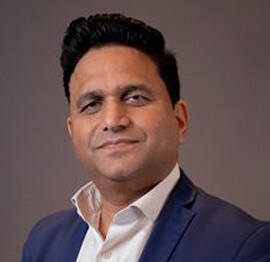
Raj Tiwari
Digital Transformation Leader, Futurist and Visionary

Joseph Guadagno
Microsoft MVP, Lead Quicken Loans

Nikita Sachdev
Entrepreneur, Blockchain Enthusiast & Advisor, Social Media Influencer

Doug Wagner
COO & Founder Adapt Technical Group

Ritesh Modi
Architect, Senior Evangelist, Cloud Architect

Crystal Wenrick
Director Communications Mindcracker

Allen O’Neill
Microsoft MVP, Consulting Engineer/Architect
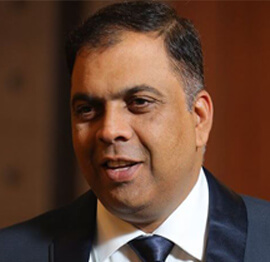
Praveen Kumar
CEO MCN Solutions

Chris Love
Founder Love2Dev, Microsoft MVP, Author

Sanjay Vyas
Microsoft Regional Director, Microsoft MVP, Founder & CEO SkillLabs Technologies

Veena Sarda
Deep Learning Consultant, Author

Sekhar Srinivasan
C# Corner MVP, Microsoft Certified Trainer, Pluralsight Author

Lalit Bansal
Founder & CEO - EIY SYS

Navdeep Garg
CEO Revinfotech

Prakash Tripathi
Tech Manager/Leader, Microsoft MVP, Blogger
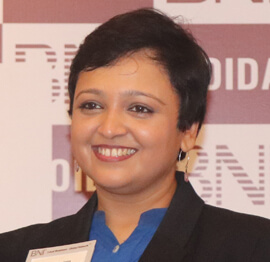
Bhavna Jain
Breakthrough Consultant

Naveen Sharma
Enterprise Architect, Leadership Coach, Author

Vidya Vrat Agarwal
Principal Architect, Microsoft MVP, Author

Sheetal Agarwal
Founder Clownselors, Medical Clown, Trainer

Abhishek Kant
Founder GTM Catalyst

Vishnu Saran
Founder & CEO VoiceQube

Sandeep Soni
Founder & CEO Deccansoft, Microsoft Certified Trainer

Parveen Malik
AVP InfoSec & Vulnerability Management, Information Security Expert

Nitin Pandit
Microsoft MVP, Developer Evangelist, Author

Niloshima Srivastava
C# Corner MVP, Tech Architect, Trainer, Blogger

Bala Chirtsabesan
Senior Software Engineer at Microsoft, Author

Manoj Mittal
Sr. Technical Architect, C# Corner MVP, Author

Chandni Di
Co-Founder Voice of Slum

Vithal Wadje
Technical Lead, Microsoft MVP, Author

Shivam Ahuja
Founder SkillCircle, Business Mentor

Chervine Bhiwoo
Solution Architect, Microsoft MVP, Author

Saurabh Jain
Vice President Paytm, Founder Fun2Do Labs, Author

Vinay Solanki
Head IoT at Lenovo, Founder IoT-NCR

Anshu kumari
Founder Blockchainkids, Inventor, Trainer

Amit Singal
CEO Startup Buddy

Dev Pratap
Co-Founder & CEO Voice of Slum

Amey Vartak
Technology Consultant, Full Stack Developer, C# Corner MVP, Author

Viswanatha Swamy
Principal Software Engineer, C# Corner MVP, Author

Sanket Verma
Research Engineer @ Ballistics (Forensics) and Chair, PyData Delhi

Sourabh Somani
Lead Developer, Microsoft MVP, Author

Abhishek Mishra
Software Architect, C# Corner MVP, Author

Siddharth Vaghasia
Technical Consultant, C# Corner MVP, Blogger

Bassam Alugili
Senior Software Specialist, Database Expert

S Ravi Kumar
Solution Architect, C# Corner MVP, Author

Sundaram Subramanian
Full Stack Developer, C# Corner MVP, Speaker

Deepesh Somani
Solution Architect, Microsoft MVP, Author

Debasis Saha
Technical Project Manager, C# Corner MVP, Blogger, Author

Vipul Jain
Software Architect, C# Corner MVP, Author

Akshay Patel
Technical Architect, Microsoft Certified Trainer, C# Corner MVP, Author

Stephen Simon
RPA Developer, Evangelist, Author

Vivek Sharma
Founder Kingster636, AR/VR Specialist

Jeetendra Gund
Technical Lead, C# Corner MVP, Author

Sujal Beniwal
AI Enthusiast, Student

M Viknaraj
Microsoft MVP, Azure Architect, Author

Prasham Sabadra
Software Architect, C# Corner MVP, Trainer, Author

Aakash Maurya
Senior Developer, C# Corner MVP, Speaker

Ankit Sharma
Senior Software Engineer, C# Corner MVP, Author

Mangesh Gaherwar
Team Lead, C# Corner MVP, Author

Viral Jain
Technical Consultant, C# Corner MVP, Author

Bhasker Das
Solution Architect, Evangelist

Manish Dwivedi
Associate Project Manager

Ck Nitin
Programmer, Author

Rohit Gupta
Technical Trainer, Author

Manish Tewatia
Full-stack Marketer, UX Designer

Bhavya Gaur
Technical Illustrator

Rohit Tomar
SEO/SMO Expert
Web Track
Cloud & Data Track
Dev Track
Registration & Breakfast
Future of Desktop Apps with JS (ElectronJs)
Nitin Pandit
Building Serverless Microservices Using Microsoft Azure
Vithal Wadje
Innovating RPA: A Robot for Every Person
Stephen Simon
Managing Cloud Storage Accounts using Logic Apps
Viknaraj Manogararajah
Data visualization using Python
Sekhar Srinivasan
Going Cross platform with AR Foundation
Vivek Sharma
Keynote
Managing your Azure dependencies in ASP.NET Core apps using VS
Bala Chirtsabesan
Securing Applications on Intelligent Azure
Abhishek Mishra
Getting started with Blazor the Framework of Future
S Ravi Kumar
Lunch
Build Progressive Web Apps using Angular 9
Debasis Saha
Build and deploy to any platform using Azure DevOps
Chervine Bhiwoo
Deep Dive in Azure Service Bus
Akshay Patel
Build a Native Mobile Application using React Native and JavaScript
Joseph Guadagno
Making sense of Web Job, Web Job SDK and Functions in Azure
Prakash Tripathi
CloudFront Distribution in AWS
Viral Jain
Tea Break
Introduction to PowerBI
Aakash Maurya
Build Advanced SPFx solutions with React and Graph API
Siddharth Vaghasia
Build Business Intelligence Analyst (BIA) Skills
Sundaram Subramanian
Deep dive of Power Platform – AI BUILDER
Prasham Sabadra
Panel 1
What's new in SharePoint development
Vipul Jain
Build a SSO (Single Sign On) based Native JavaScript application with Microsoft Identity within 10 minutes
Manoj Mittal
Panel 2
Applications and working of AI
Veena Sarda
Deploying serverless API's with .Net core 3.0 on AWS & Azure
Amey Vartak
Panel 3
Blockchain with .NET Core (Ark)
Anshu Kumari
Closing Note & Prize Distribution
Dev Track
Cloud Track
Architecture Track
Emerging Tech Track
Registration & Breakfast
Creating Full-Stack Web Apps Using Server-Side Blazor
Ankit Sharma
Real time face recognition with MS Cognitive Services
Niloshima Srivastava
Building Scalable APIs with GraphQL
Jeetendra Gund
Future of development with AI and Blockchain
Navdeep Garg
Debugging Tips and Tricks with Visual Studio 2019
Joseph Guadagno
Azure Containers
Abhishek Kant
Enterprise Architecture
Naveen Sharma
Bot Framework - learn it fast and look like a boss!
Allen O’Neill
Keynote
.Net Core & C# 8 Performance
David McCarter
Working with Azure kubernetes services
Ritesh Modi
Becoming an Architect
Vidyavrat Agarwal
Why Techies Need to Learn Product Management
Saurabh Jain
Lunch
Build a rules engine in .Net Core
Sanjay Vyas
Building CI and CD Pipeline using Azure DevOps
Sandeep Soni
Entity Framework Core - Tips and Tricks, Performance Optimization, and Tuning
Bassam Alugili
Hacking your way into Data Science
Sanket Verma
Speed up your .Net Core Website
Sourabh Somani
Azure
Magnus Mårtensson
Demystifying Open Distro for Elasticsearch
Suman Debnath
Future of Data
Shivam Ahuja
Tea Break
gRPC with C# and .Net Core
Mangesh Gaherwar
Panel 1
Essentials of Cloud security
Parveen Malik
Power platform and Dynamics 365
Deepesh Somani
Microservices - the gRPC Way
Viswanatha Swamy
Panel 2
Reserved
Reserved
Closing Note & Prize Distribution
Using Azure Machine Learning to predict customer churn
Customer churn is rarely caused by a single event. A customer may reduce usage gradually, encounter repeated service problems, stop opening messages, or discover a more attractive alternative. By the time an account is formally canceled, the most useful intervention window may have already passed. Machine learning helps organizations identify those warning patterns while there is still time to respond.
Azure Machine Learning provides a managed environment for preparing customer data, training predictive models, comparing experiments, and deploying scoring services. It connects naturally with Azure Data Lake Storage, Synapse Analytics, Azure SQL, Power BI, and application services, making it practical for teams already working in the Microsoft ecosystem.
The objective is not simply to produce a churn probability. A useful solution explains which customers are at risk, estimates the value of retaining them, and supports a measured business action. This combination of data science, cloud engineering, and customer strategy is especially relevant to the software professionals attending a technology conference with tracks covering Azure, data, AI, and DevOps.
Define churn as a measurable business outcome
Before opening Azure Machine Learning Studio, establish exactly what “churn” means. For a subscription company, it could mean a canceled plan within the next 30 days. For a marketplace, it might mean no purchase during a 90-day period. A streaming provider may define it as account closure or the expiration of a paid membership without renewal.
The prediction window must be separate from the observation window. For example, a model may use customer behavior from January through March to predict whether an account will churn in April. This arrangement gives every training record a clear cutoff date and prevents information from the future entering the features.
Labels should also reflect the action the organization can take. If the retention team needs two weeks to contact an account, a seven-day churn label may be too late to use. Documenting the definition, time horizon, and intervention process creates a shared standard between business stakeholders, analysts, and developers.
Assemble reliable behavioral and customer data
Useful signals often include login frequency, session duration, purchase recency, support tickets, failed payments, product adoption, contract age, plan type, and changes in usage. Aggregated measures are usually more informative than raw event records. Examples include the number of active days in the last 30 days, the change in usage compared with the previous month, and the time since the last support interaction.
Data quality has a direct effect on model quality. Duplicate customer IDs, missing cancellation dates, inconsistent time zones, and changing product names can create misleading patterns. A feature such as “number of support tickets” may also be unfairly interpreted if one region records every interaction while another combines cases into a single ticket.
Retention behavior differs across industries, but the analytical principle is consistent. A business that sells digital entertainment, for example, may examine engagement frequency, payment history, and whether promotional offers affect retention. The link between a promotion and continued activity should be evaluated carefully, since a short-term response does not necessarily represent durable loyalty.
Azure Data Factory or Synapse pipelines can consolidate these sources into a curated dataset. Feature definitions should be versioned and documented so that the same logic is applied during training and when new customers are scored.
Train and evaluate a churn model in Azure
An Azure Machine Learning workspace acts as the central project environment. Teams can register datasets, create compute clusters, track runs, store model artifacts, and manage deployments. A small experiment can begin with a notebook, while a mature implementation can use reusable pipeline components for ingestion, transformation, training, validation, and registration.
For a first model, logistic regression offers an interpretable baseline. Tree-based methods such as LightGBM, XGBoost, or a random forest often capture nonlinear relationships between customer activity and churn risk. Azure Machine Learning AutoML can test several algorithms and preprocessing options, but automated search should support sound validation rather than replace it.
Randomly splitting rows can produce overly optimistic results when customers have repeated monthly records. A time-based split is generally safer: train on earlier periods, validate on a later period, and reserve the most recent period for a final test. This approach better represents how the model will perform after deployment.
Accuracy is a weak measure when churn is relatively uncommon. The following metrics provide a more useful view of model behavior and business value:
| Measure | What it shows | Why it matters |
|---|---|---|
| ROC-AUC | Ranking quality across classification thresholds | Useful for broad model comparison |
| PR-AUC | Performance on the churn class and precision trade-off | More informative with imbalanced outcomes |
| Recall at a fixed capacity | Churners found within the available outreach volume | Aligns predictions with team workload |
| Precision at a fixed capacity | Share of targeted customers who actually churn | Helps control wasted incentives |
| Lift | Improvement over random targeting | Shows the value of prioritization |
| Calibration | Whether predicted probabilities match observed outcomes | Supports reliable financial planning |
A model with slightly lower AUC may be more valuable if its top-scored customers respond better to retention campaigns. Threshold selection should therefore include incentive cost, contact-center capacity, expected customer value, and the financial impact of false positives.
Explain predictions and control model risk
A churn score is easier to trust when users can see the factors behind it. Azure Machine Learning supports explainability techniques that can show global feature importance and local explanations for individual predictions. A retention specialist might learn that declining weekly usage, three unresolved support tickets, and a recent payment failure drove a particular score.
Explanations should be presented as contributing signals rather than claims of causation. If a model identifies a correlation between support contacts and churn, automatically offering a discount may be inappropriate. The customer may need a technical fix, clearer onboarding, or a conversation with a service representative instead.
Sensitive attributes require careful treatment. Age, location, language, disability, and other protected characteristics may create ethical and regulatory concerns, even when they are not included directly. Proxy variables can carry similar information. Teams should test performance across relevant customer segments and establish a review process for unexpected disparities.
Monitoring continues after deployment. Data drift can occur when pricing changes, a new product launches, or customer behavior shifts. Performance drift may appear when the relationship between usage and cancellation weakens. Azure Machine Learning monitoring, scheduled evaluation jobs, and operational dashboards can help identify these changes before they damage retention campaigns.
Deploy scores into a practical workflow
Once a model meets the acceptance criteria, register it with its preprocessing code, environment, features, and evaluation results. Deployment options include managed online endpoints for real-time scoring and batch endpoints for scheduled scoring of an entire customer population. The choice depends on how quickly the business needs results.
A daily batch process may be sufficient for a monthly subscription service. An online endpoint may suit an application that wants to calculate risk when a customer visits a cancellation page or contacts support. In either case, authentication, network security, logging, version control, and rollback procedures should be defined before production use.
The score must reach the people and systems that can act on it. A pipeline might write predictions to Azure SQL, publish segments to a marketing platform, display priority accounts in Power BI, or create tasks in a customer service system. Each record should include the score date, model version, risk band, major contributing features, and recommended action.
Testing should cover more than endpoint response time. Validate that feature transformations match training logic, missing values are handled safely, duplicate messages are avoided, and a failed scoring run does not trigger a large campaign with stale predictions. A champion model can run alongside a challenger model for a controlled period before any replacement occurs.
Turn risk scores into retention decisions
The best intervention depends on why an account is at risk. A customer with declining product adoption may benefit from training content. Someone reporting repeated defects may need expedited support. A payment issue may require a simple billing reminder, while a high-value account with low engagement could receive a personal success review.
Avoid treating every high-risk customer identically. Segment predictions by customer lifetime value, product tier, service history, and preferred communication channel. A low-cost educational message may be appropriate for one segment, whereas a dedicated account manager is justified for another.
Measure outcomes with controlled experiments. Randomly assign eligible high-risk customers to different offers or to a control group, then compare renewal rates, revenue, support costs, and long-term engagement. This reveals whether the intervention caused improvement instead of assuming that customers who received an offer would have churned otherwise.
The feedback loop should return campaign outcomes to the data platform. Record who was contacted, what action was taken, whether the customer responded, and whether the account remained active. Over time, these results can improve targeting and help estimate the incremental value of each retention action.
Recommendations for a responsible implementation
A strong Azure-based churn program can begin with a limited, measurable use case rather than a company-wide prediction engine.
- Define one churn event, one prediction horizon, and one operational owner.
- Build a time-aware dataset that excludes information unavailable at scoring time.
- Establish a simple interpretable baseline before comparing complex algorithms.
- Evaluate lift, calibration, segment performance, and financial impact alongside AUC.
- Monitor data drift, intervention outcomes, and customer experience after deployment.
Documentation is part of the production system. Keep a model card describing training data, intended use, limitations, known risks, evaluation results, and the conditions under which the model should be retrained. Store experiment metadata in Azure Machine Learning so another team member can reproduce the selected run.
Human review remains valuable for high-impact decisions. A prediction should prioritize investigation or support, not silently deny service or impose unfavorable treatment. Clear escalation paths allow employees to challenge an incorrect score and provide feedback that improves later versions.
A well-designed churn solution turns Azure services into an ongoing decision process: collect trustworthy signals, predict future behavior, select an appropriate response, and measure what happened. Start with a focused pilot, connect its predictions to a real retention workflow, and use the resulting evidence to build a reliable customer intelligence capability.









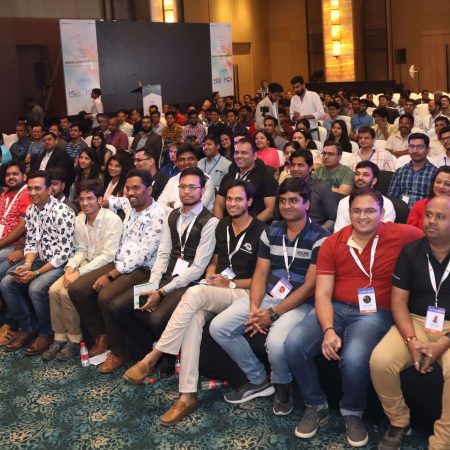





1, CBD, Maharaj Surajmal Road, Near Yamuna Sports Complex, Delhi, 110032





GENERAL QUERIES
Manish Tewatia
manish@csharpcon.com
+91-9718-431-042
TICKET QUERIES
Atul Gupta
conference@csharpcon.com
+91-9910-125-804