

Presents


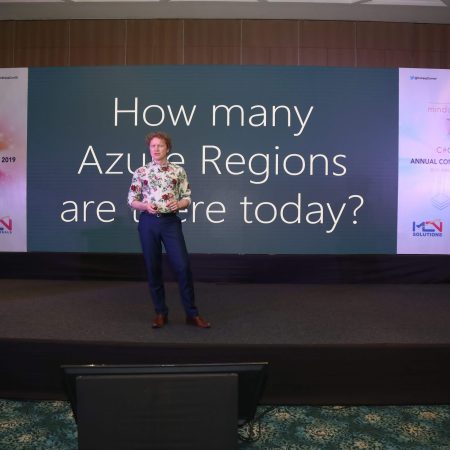
Magnus Mårtensson
Microsoft Regional Director, Azure MVP, CEO Loftysoft

Avirag Jain
Director & CTO R Systems

Mahesh Chand
Founder C# Corner, CEO Mindcracker

Chris Gali
CEO & Co-Founder Graphite

Subinder Khurana
Chief Architect StoryProcess, Founder NASSCOM DeepTech Club

Bryan Rishforth
Investor, Chairman Graphite

Bryn Everson
Director Biz Dev Graphite

Raj Tiwari
Digital Transformation Leader, Futurist and Visionary

Joseph Guadagno
Microsoft MVP, Lead Quicken Loans

Nikita Sachdev
Entrepreneur, Blockchain Enthusiast & Advisor, Social Media Influencer

Doug Wagner
COO & Founder Adapt Technical Group

Ritesh Modi
Architect, Senior Evangelist, Cloud Architect

Crystal Wenrick
Director Communications Mindcracker

Allen O’Neill
Microsoft MVP, Consulting Engineer/Architect

Praveen Kumar
CEO MCN Solutions

Chris Love
Founder Love2Dev, Microsoft MVP, Author

Sanjay Vyas
Microsoft Regional Director, Microsoft MVP, Founder & CEO SkillLabs Technologies

Veena Sarda
Deep Learning Consultant, Author

Sekhar Srinivasan
C# Corner MVP, Microsoft Certified Trainer, Pluralsight Author

Lalit Bansal
Founder & CEO - EIY SYS

Navdeep Garg
CEO Revinfotech

Prakash Tripathi
Tech Manager/Leader, Microsoft MVP, Blogger

Bhavna Jain
Breakthrough Consultant

Naveen Sharma
Enterprise Architect, Leadership Coach, Author

Vidya Vrat Agarwal
Principal Architect, Microsoft MVP, Author

Sheetal Agarwal
Founder Clownselors, Medical Clown, Trainer

Abhishek Kant
Founder GTM Catalyst

Vishnu Saran
Founder & CEO VoiceQube

Sandeep Soni
Founder & CEO Deccansoft, Microsoft Certified Trainer

Parveen Malik
AVP InfoSec & Vulnerability Management, Information Security Expert

Nitin Pandit
Microsoft MVP, Developer Evangelist, Author

Niloshima Srivastava
C# Corner MVP, Tech Architect, Trainer, Blogger

Bala Chirtsabesan
Senior Software Engineer at Microsoft, Author

Manoj Mittal
Sr. Technical Architect, C# Corner MVP, Author

Chandni Di
Co-Founder Voice of Slum

Vithal Wadje
Technical Lead, Microsoft MVP, Author

Shivam Ahuja
Founder SkillCircle, Business Mentor

Chervine Bhiwoo
Solution Architect, Microsoft MVP, Author

Saurabh Jain
Vice President Paytm, Founder Fun2Do Labs, Author

Vinay Solanki
Head IoT at Lenovo, Founder IoT-NCR

Anshu kumari
Founder Blockchainkids, Inventor, Trainer

Amit Singal
CEO Startup Buddy

Dev Pratap
Co-Founder & CEO Voice of Slum

Amey Vartak
Technology Consultant, Full Stack Developer, C# Corner MVP, Author

Viswanatha Swamy
Principal Software Engineer, C# Corner MVP, Author

Sanket Verma
Research Engineer @ Ballistics (Forensics) and Chair, PyData Delhi

Sourabh Somani
Lead Developer, Microsoft MVP, Author

Abhishek Mishra
Software Architect, C# Corner MVP, Author

Siddharth Vaghasia
Technical Consultant, C# Corner MVP, Blogger

Bassam Alugili
Senior Software Specialist, Database Expert

S Ravi Kumar
Solution Architect, C# Corner MVP, Author

Sundaram Subramanian
Full Stack Developer, C# Corner MVP, Speaker

Deepesh Somani
Solution Architect, Microsoft MVP, Author

Debasis Saha
Technical Project Manager, C# Corner MVP, Blogger, Author

Vipul Jain
Software Architect, C# Corner MVP, Author

Akshay Patel
Technical Architect, Microsoft Certified Trainer, C# Corner MVP, Author

Stephen Simon
RPA Developer, Evangelist, Author

Vivek Sharma
Founder Kingster636, AR/VR Specialist

Jeetendra Gund
Technical Lead, C# Corner MVP, Author

Sujal Beniwal
AI Enthusiast, Student

M Viknaraj
Microsoft MVP, Azure Architect, Author

Prasham Sabadra
Software Architect, C# Corner MVP, Trainer, Author

Aakash Maurya
Senior Developer, C# Corner MVP, Speaker

Ankit Sharma
Senior Software Engineer, C# Corner MVP, Author

Mangesh Gaherwar
Team Lead, C# Corner MVP, Author

Viral Jain
Technical Consultant, C# Corner MVP, Author

Bhasker Das
Solution Architect, Evangelist

Manish Dwivedi
Associate Project Manager

Ck Nitin
Programmer, Author

Rohit Gupta
Technical Trainer, Author

Manish Tewatia
Full-stack Marketer, UX Designer

Bhavya Gaur
Technical Illustrator

Rohit Tomar
SEO/SMO Expert
Web Track
Cloud & Data Track
Dev Track
Registration & Breakfast
Future of Desktop Apps with JS (ElectronJs)
Nitin Pandit
Building Serverless Microservices Using Microsoft Azure
Vithal Wadje
Innovating RPA: A Robot for Every Person
Stephen Simon
Managing Cloud Storage Accounts using Logic Apps
Viknaraj Manogararajah
Data visualization using Python
Sekhar Srinivasan
Going Cross platform with AR Foundation
Vivek Sharma
Keynote
Managing your Azure dependencies in ASP.NET Core apps using VS
Bala Chirtsabesan
Securing Applications on Intelligent Azure
Abhishek Mishra
Getting started with Blazor the Framework of Future
S Ravi Kumar
Lunch
Build Progressive Web Apps using Angular 9
Debasis Saha
Build and deploy to any platform using Azure DevOps
Chervine Bhiwoo
Deep Dive in Azure Service Bus
Akshay Patel
Build a Native Mobile Application using React Native and JavaScript
Joseph Guadagno
Making sense of Web Job, Web Job SDK and Functions in Azure
Prakash Tripathi
CloudFront Distribution in AWS
Viral Jain
Tea Break
Introduction to PowerBI
Aakash Maurya
Build Advanced SPFx solutions with React and Graph API
Siddharth Vaghasia
Build Business Intelligence Analyst (BIA) Skills
Sundaram Subramanian
Deep dive of Power Platform – AI BUILDER
Prasham Sabadra
Panel 1
What's new in SharePoint development
Vipul Jain
Build a SSO (Single Sign On) based Native JavaScript application with Microsoft Identity within 10 minutes
Manoj Mittal
Panel 2
Applications and working of AI
Veena Sarda
Deploying serverless API's with .Net core 3.0 on AWS & Azure
Amey Vartak
Panel 3
Blockchain with .NET Core (Ark)
Anshu Kumari
Closing Note & Prize Distribution
Dev Track
Cloud Track
Architecture Track
Emerging Tech Track
Registration & Breakfast
Creating Full-Stack Web Apps Using Server-Side Blazor
Ankit Sharma
Real time face recognition with MS Cognitive Services
Niloshima Srivastava
Building Scalable APIs with GraphQL
Jeetendra Gund
Future of development with AI and Blockchain
Navdeep Garg
Debugging Tips and Tricks with Visual Studio 2019
Joseph Guadagno
Azure Containers
Abhishek Kant
Enterprise Architecture
Naveen Sharma
Bot Framework - learn it fast and look like a boss!
Allen O’Neill
Keynote
.Net Core & C# 8 Performance
David McCarter
Working with Azure kubernetes services
Ritesh Modi
Becoming an Architect
Vidyavrat Agarwal
Why Techies Need to Learn Product Management
Saurabh Jain
Lunch
Build a rules engine in .Net Core
Sanjay Vyas
Building CI and CD Pipeline using Azure DevOps
Sandeep Soni
Entity Framework Core - Tips and Tricks, Performance Optimization, and Tuning
Bassam Alugili
Hacking your way into Data Science
Sanket Verma
Speed up your .Net Core Website
Sourabh Somani
Azure
Magnus Mårtensson
Demystifying Open Distro for Elasticsearch
Suman Debnath
Future of Data
Shivam Ahuja
Tea Break
gRPC with C# and .Net Core
Mangesh Gaherwar
Panel 1
Essentials of Cloud security
Parveen Malik
Power platform and Dynamics 365
Deepesh Somani
Microservices - the gRPC Way
Viswanatha Swamy
Panel 2
Reserved
Reserved
Closing Note & Prize Distribution
Securing .NET APIs with Azure API Management
Modern .NET applications often expose several APIs for web clients, mobile apps, partner integrations, background services, and internal tools. As the number of consumers grows, security becomes more complex than adding authentication to an ASP.NET Core project. Teams must control access, protect sensitive traffic, limit abuse, monitor behavior, and change APIs without breaking existing clients.
Azure API Management provides a managed gateway between consumers and backend services. It can publish an API, validate tokens, enforce quotas, transform requests, hide internal endpoints, and provide analytics without requiring every security concern to be implemented inside each .NET service.
For software professionals working with Azure, C#, cloud architecture, DevOps, and web development, the platform offers a practical way to centralize API security. The strongest results come from combining gateway policies with secure application design rather than treating API Management as a replacement for backend authorization.
Why place a gateway in front of .NET APIs
A direct connection between a client and an ASP.NET Core API gives the client a clear path to the service. That simplicity can become a weakness when internal hostnames, service topology, ports, or deployment details are exposed. Azure API Management creates a controlled public surface while keeping backend services behind a consistent gateway address.
The gateway can receive a request, inspect its headers and token, apply policy rules, and forward only approved traffic. It can also reject malformed requests before they consume application resources. This is especially useful for microservices, where every service might otherwise need separate implementations for throttling, header validation, subscription management, and request transformation.
API Management also separates the public API contract from the implementation. A .NET team can refactor controllers, move workloads between App Service and containers, or introduce a new service while consumers continue using a stable gateway URL. That separation supports gradual modernization and reduces the security risk of exposing internal infrastructure.
Establish strong identity and access controls
Authentication answers who is making an API call, while authorization determines what that identity can do. Azure API Management commonly works with Microsoft Entra ID, formerly Azure Active Directory, to validate OAuth 2.0 access tokens issued to users, applications, or services. For an ASP.NET Core API, the same token can be validated again at the backend, creating defense in depth.
A gateway policy can inspect the token’s issuer, audience, expiration, and required claims. The audience check is particularly important: a valid token issued for one resource should not automatically be accepted by another API. Claims such as roles, scopes, tenant identifiers, or application IDs can support fine-grained access decisions.
Subscription keys provide another control layer. They identify a product or consumer and support usage tracking, quotas, and commercial access models, but they should not be treated as a replacement for identity. A leaked subscription key can be copied, and it does not prove who is using it. Use HTTPS everywhere, keep keys out of source code, rotate them regularly, and pair them with OAuth or another suitable authentication method.
For service-to-service communication, managed identities can remove the need to store client secrets. When a .NET workload calls an Azure resource, its assigned identity can obtain a token through Azure’s identity platform. Mutual TLS certificates may be appropriate for high-trust partner integrations, particularly where the client must be authenticated at the transport layer before a request reaches the API.
Apply policies at the gateway
Azure API Management policies are XML-based rules that execute during different stages of request processing. Inbound policies run before the backend call, backend policies can influence the connection to the service, outbound policies can modify responses, and error policies can provide consistent failure handling.
A useful inbound policy may validate a JWT, require a subscription key, restrict permitted HTTP methods, and enforce a request rate limit. IP filtering can reduce exposure for administrative or partner endpoints. Header checks can require correlation IDs or remove headers that might reveal implementation details. Policies can also rewrite URLs, set backend credentials, and add trusted headers for downstream services.
Rate limiting and quotas protect availability as well as cost. A short burst limit can absorb accidental spikes, while a longer quota can control consumption by a product, user, or application. These limits should reflect the API’s workload. A search endpoint may need a stricter policy than a lightweight health or metadata endpoint, and public consumers may require different limits from internal applications.
Request and response transformation should be used carefully. Removing sensitive response fields at the gateway can provide an additional safeguard, but business authorization belongs in the .NET service. The backend must still verify that the caller can access a specific record, account, or operation. A gateway policy can enforce broad controls; it should not become a substitute for domain security.
Choose the right protection layers
Different controls address different risks. OAuth and JWT validation establish identity and delegated permissions. Subscription keys support consumer tracking and product access. TLS protects traffic in transit, while network restrictions reduce the number of systems that can reach the backend. Applying these controls together creates a stronger boundary than relying on a single credential.
The following comparison helps clarify where each mechanism fits in an Azure API Management design:
| Control | Primary purpose | Useful for | Important limitation |
|---|---|---|---|
| OAuth 2.0 and JWT validation | Verify identity and delegated access | User and application APIs | Requires correct issuer, audience, scope, and expiration checks |
| Subscription keys | Identify consumers and manage products | Quotas, plans, partner access, usage tracking | A key is not proof of user identity |
| TLS and mutual TLS | Protect or authenticate the transport | All APIs, especially trusted partner links | Certificates require secure issuance, storage, and rotation |
| Rate limits and quotas | Control traffic volume | Abuse prevention, cost management, fair usage | Limits do not authorize individual business actions |
| IP filtering and private networking | Reduce network exposure | Internal or restricted APIs | Static network controls can be difficult for distributed clients |
| Backend authorization | Enforce resource and business permissions | Record-level and operation-level security | Must be implemented and tested in the application |
For sensitive APIs, combine public gateway access with a private backend. Azure Private Link, virtual network integration, internal mode, firewall rules, and private DNS can help ensure that the API service is reachable only through approved paths. The exact architecture depends on the API Management tier, application hosting model, and connectivity requirements, so network design should be planned alongside authentication rather than added at the end.
Protect secrets, data, and backend communication
A secure API gateway still depends on sound secret management. Backend credentials, certificate material, signing keys, and connection strings should be stored in Azure Key Vault or another approved secret store. Policies should avoid embedding secrets in plain text, and access to the gateway configuration should follow least privilege.
Sensitive data requires attention at every stage. Use HTTPS for client-to-gateway and gateway-to-backend communication. Avoid placing access tokens, passwords, personal data, or confidential identifiers in query strings because URLs may appear in browser history, proxy logs, analytics systems, and monitoring records. Prefer authorization headers and carefully designed request bodies.
Logging must balance visibility with privacy. API Management analytics can reveal response codes, latency, operation names, and usage patterns, while Azure Monitor and Application Insights can connect gateway activity to .NET application traces. Correlation IDs make distributed troubleshooting easier, but log filters should remove tokens and redact sensitive payload content.
Error responses should be consistent and restrained. A client needs a useful status code and a safe error message, not a stack trace, database name, internal hostname, or framework version. Configure policies and ASP.NET Core exception handling so that diagnostic details remain available to authorized operators while external consumers receive limited information.
Design for versioning and secure change
API security is affected by lifecycle decisions. Azure API Management products can group APIs for different consumers, while versions and revisions let teams introduce changes in a controlled manner. A revision is useful for testing or correcting an implementation without changing the public version. A version is more appropriate when the contract or behavior changes incompatibly.
Security policies should be applied consistently across every version. A common mistake is to secure the original API and forget to copy authentication, quota, or header policies to a newly published version. Policy fragments can reduce duplication for shared rules, such as JWT validation or standard response headers, while still allowing operation-specific controls.
Use separate environments for development, testing, staging, and production. Infrastructure as code and automated deployment pipelines can publish APIs and policies repeatably. Security tests should verify rejected tokens, incorrect audiences, missing scopes, invalid subscription keys, excessive requests, unsupported methods, and attempts to access another user’s data.
A gateway configuration is part of the application’s security perimeter and should receive the same review discipline as C# code. Store policy definitions in source control, require peer review, scan for accidentally committed secrets, and record changes through deployment logs. This makes it easier to identify when a permission, route, or network rule changed.
Recommended implementation sequence
A structured rollout helps teams avoid adding isolated controls without understanding the complete request path. Begin by identifying every consumer, backend, data classification, trust boundary, and expected traffic pattern. Then select the smallest set of controls that addresses the real risks while leaving room for stricter policies on sensitive operations.
- Define the public API surface and keep internal service addresses private.
- Register applications and scopes in Microsoft Entra ID, then validate issuer, audience, expiration, and required claims.
- Add subscription products, quotas, and rate limits based on consumer behavior and backend capacity.
- Store certificates and secrets in Azure Key Vault, and use managed identities wherever supported.
- Configure centralized logging, correlation IDs, alerts, and redaction before production traffic arrives.
After the first deployment, test the gateway as an attacker and as a legitimate consumer. Send expired and altered tokens, replay subscription keys, exceed rate limits, call unsupported methods, and attempt access to resources belonging to another identity. Confirm that the gateway rejects inappropriate traffic and that the .NET backend independently protects business data.
Azure API Management becomes most valuable when it is treated as a continuously managed security boundary. Review policies as APIs evolve, rotate credentials on a defined schedule, monitor unusual traffic, and retire obsolete versions. Teams preparing conference demonstrations or production platforms can use the same workflow: model the threat, apply layered controls, automate the configuration, and verify the result with repeatable tests.
Build a small protected API first, place it behind Azure API Management, and validate the complete flow from client authentication to backend authorization. Once the foundation is working, add quotas, private connectivity, observability, and versioning according to the needs of each service. This approach gives .NET applications a durable Azure gateway without moving essential business security out of the application itself.






























1, CBD, Maharaj Surajmal Road, Near Yamuna Sports Complex, Delhi, 110032





GENERAL QUERIES
Manish Tewatia
manish@csharpcon.com
+91-9718-431-042
TICKET QUERIES
Atul Gupta
conference@csharpcon.com
+91-9910-125-804