
Presents


Magnus Mårtensson
Microsoft Regional Director, Azure MVP, CEO Loftysoft

Avirag Jain
Director & CTO R Systems

Mahesh Chand
Founder C# Corner, CEO Mindcracker

Chris Gali
CEO & Co-Founder Graphite

Subinder Khurana
Chief Architect StoryProcess, Founder NASSCOM DeepTech Club

Bryan Rishforth
Investor, Chairman Graphite

Bryn Everson
Director Biz Dev Graphite
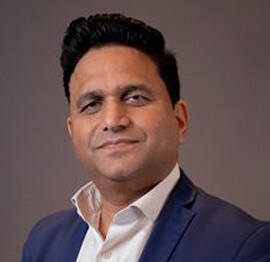
Raj Tiwari
Digital Transformation Leader, Futurist and Visionary

Joseph Guadagno
Microsoft MVP, Lead Quicken Loans

Nikita Sachdev
Entrepreneur, Blockchain Enthusiast & Advisor, Social Media Influencer

Doug Wagner
COO & Founder Adapt Technical Group

Ritesh Modi
Architect, Senior Evangelist, Cloud Architect

Crystal Wenrick
Director Communications Mindcracker

Allen O’Neill
Microsoft MVP, Consulting Engineer/Architect
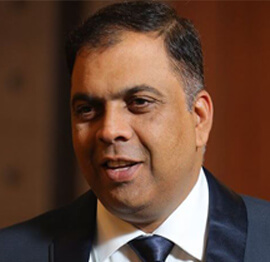
Praveen Kumar
CEO MCN Solutions

Chris Love
Founder Love2Dev, Microsoft MVP, Author

Sanjay Vyas
Microsoft Regional Director, Microsoft MVP, Founder & CEO SkillLabs Technologies

Veena Sarda
Deep Learning Consultant, Author

Sekhar Srinivasan
C# Corner MVP, Microsoft Certified Trainer, Pluralsight Author

Lalit Bansal
Founder & CEO - EIY SYS

Navdeep Garg
CEO Revinfotech

Prakash Tripathi
Tech Manager/Leader, Microsoft MVP, Blogger
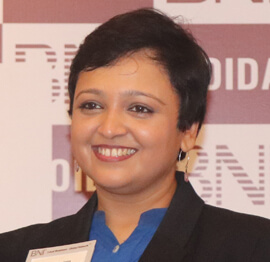
Bhavna Jain
Breakthrough Consultant

Naveen Sharma
Enterprise Architect, Leadership Coach, Author

Vidya Vrat Agarwal
Principal Architect, Microsoft MVP, Author

Sheetal Agarwal
Founder Clownselors, Medical Clown, Trainer

Abhishek Kant
Founder GTM Catalyst

Vishnu Saran
Founder & CEO VoiceQube

Sandeep Soni
Founder & CEO Deccansoft, Microsoft Certified Trainer

Parveen Malik
AVP InfoSec & Vulnerability Management, Information Security Expert

Nitin Pandit
Microsoft MVP, Developer Evangelist, Author

Niloshima Srivastava
C# Corner MVP, Tech Architect, Trainer, Blogger

Bala Chirtsabesan
Senior Software Engineer at Microsoft, Author

Manoj Mittal
Sr. Technical Architect, C# Corner MVP, Author

Chandni Di
Co-Founder Voice of Slum

Vithal Wadje
Technical Lead, Microsoft MVP, Author

Shivam Ahuja
Founder SkillCircle, Business Mentor

Chervine Bhiwoo
Solution Architect, Microsoft MVP, Author

Saurabh Jain
Vice President Paytm, Founder Fun2Do Labs, Author

Vinay Solanki
Head IoT at Lenovo, Founder IoT-NCR

Anshu kumari
Founder Blockchainkids, Inventor, Trainer

Amit Singal
CEO Startup Buddy

Dev Pratap
Co-Founder & CEO Voice of Slum

Amey Vartak
Technology Consultant, Full Stack Developer, C# Corner MVP, Author

Viswanatha Swamy
Principal Software Engineer, C# Corner MVP, Author

Sanket Verma
Research Engineer @ Ballistics (Forensics) and Chair, PyData Delhi

Sourabh Somani
Lead Developer, Microsoft MVP, Author

Abhishek Mishra
Software Architect, C# Corner MVP, Author

Siddharth Vaghasia
Technical Consultant, C# Corner MVP, Blogger

Bassam Alugili
Senior Software Specialist, Database Expert

S Ravi Kumar
Solution Architect, C# Corner MVP, Author

Sundaram Subramanian
Full Stack Developer, C# Corner MVP, Speaker

Deepesh Somani
Solution Architect, Microsoft MVP, Author

Debasis Saha
Technical Project Manager, C# Corner MVP, Blogger, Author

Vipul Jain
Software Architect, C# Corner MVP, Author

Akshay Patel
Technical Architect, Microsoft Certified Trainer, C# Corner MVP, Author

Stephen Simon
RPA Developer, Evangelist, Author

Vivek Sharma
Founder Kingster636, AR/VR Specialist

Jeetendra Gund
Technical Lead, C# Corner MVP, Author

Sujal Beniwal
AI Enthusiast, Student

M Viknaraj
Microsoft MVP, Azure Architect, Author

Prasham Sabadra
Software Architect, C# Corner MVP, Trainer, Author

Aakash Maurya
Senior Developer, C# Corner MVP, Speaker

Ankit Sharma
Senior Software Engineer, C# Corner MVP, Author

Mangesh Gaherwar
Team Lead, C# Corner MVP, Author

Viral Jain
Technical Consultant, C# Corner MVP, Author

Bhasker Das
Solution Architect, Evangelist

Manish Dwivedi
Associate Project Manager

Ck Nitin
Programmer, Author

Rohit Gupta
Technical Trainer, Author

Manish Tewatia
Full-stack Marketer, UX Designer

Bhavya Gaur
Technical Illustrator

Rohit Tomar
SEO/SMO Expert
Web Track
Cloud & Data Track
Dev Track
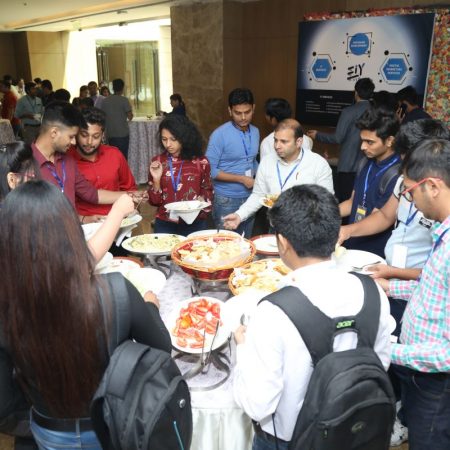
Registration & Breakfast
Future of Desktop Apps with JS (ElectronJs)
Nitin Pandit
Building Serverless Microservices Using Microsoft Azure
Vithal Wadje
Innovating RPA: A Robot for Every Person
Stephen Simon
Managing Cloud Storage Accounts using Logic Apps
Viknaraj Manogararajah
Data visualization using Python
Sekhar Srinivasan
Going Cross platform with AR Foundation
Vivek Sharma
Keynote
Managing your Azure dependencies in ASP.NET Core apps using VS
Bala Chirtsabesan
Securing Applications on Intelligent Azure
Abhishek Mishra
Getting started with Blazor the Framework of Future
S Ravi Kumar
Lunch
Build Progressive Web Apps using Angular 9
Debasis Saha
Build and deploy to any platform using Azure DevOps
Chervine Bhiwoo
Deep Dive in Azure Service Bus
Akshay Patel
Build a Native Mobile Application using React Native and JavaScript
Joseph Guadagno
Making sense of Web Job, Web Job SDK and Functions in Azure
Prakash Tripathi
CloudFront Distribution in AWS
Viral Jain
Tea Break
Introduction to PowerBI
Aakash Maurya
Build Advanced SPFx solutions with React and Graph API
Siddharth Vaghasia
Build Business Intelligence Analyst (BIA) Skills
Sundaram Subramanian
Deep dive of Power Platform – AI BUILDER
Prasham Sabadra
Panel 1
What's new in SharePoint development
Vipul Jain
Build a SSO (Single Sign On) based Native JavaScript application with Microsoft Identity within 10 minutes
Manoj Mittal
Panel 2
Applications and working of AI
Veena Sarda
Deploying serverless API's with .Net core 3.0 on AWS & Azure
Amey Vartak
Panel 3
Blockchain with .NET Core (Ark)
Anshu Kumari
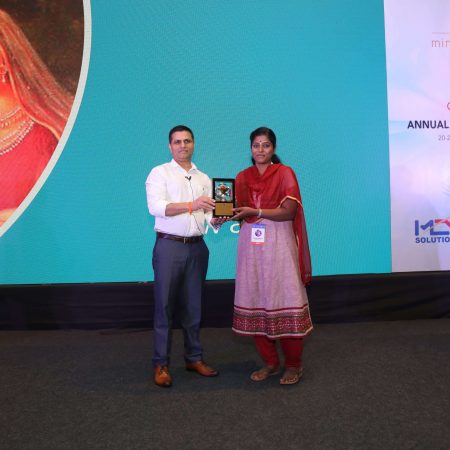
Closing Note & Prize Distribution
Dev Track
Cloud Track
Architecture Track
Emerging Tech Track
Registration & Breakfast
Creating Full-Stack Web Apps Using Server-Side Blazor
Ankit Sharma
Real time face recognition with MS Cognitive Services
Niloshima Srivastava
Building Scalable APIs with GraphQL
Jeetendra Gund
Future of development with AI and Blockchain
Navdeep Garg
Debugging Tips and Tricks with Visual Studio 2019
Joseph Guadagno
Azure Containers
Abhishek Kant
Enterprise Architecture
Naveen Sharma
Bot Framework - learn it fast and look like a boss!
Allen O’Neill
Keynote
.Net Core & C# 8 Performance
David McCarter
Working with Azure kubernetes services
Ritesh Modi
Becoming an Architect
Vidyavrat Agarwal
Why Techies Need to Learn Product Management
Saurabh Jain
Lunch
Build a rules engine in .Net Core
Sanjay Vyas
Building CI and CD Pipeline using Azure DevOps
Sandeep Soni
Entity Framework Core - Tips and Tricks, Performance Optimization, and Tuning
Bassam Alugili
Hacking your way into Data Science
Sanket Verma
Speed up your .Net Core Website
Sourabh Somani
Azure
Magnus Mårtensson
Demystifying Open Distro for Elasticsearch
Suman Debnath
Future of Data
Shivam Ahuja
Tea Break
gRPC with C# and .Net Core
Mangesh Gaherwar
Panel 1
Essentials of Cloud security
Parveen Malik
Power platform and Dynamics 365
Deepesh Somani
Microservices - the gRPC Way
Viswanatha Swamy
Panel 2
Reserved
Reserved
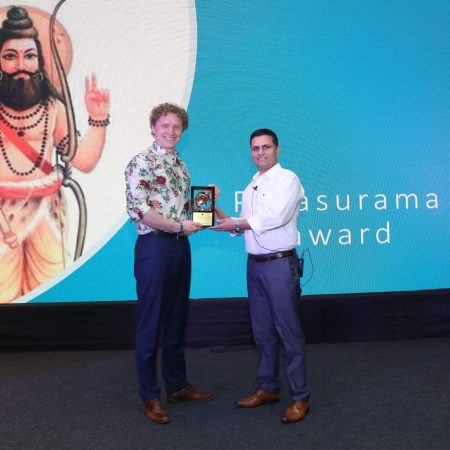
Closing Note & Prize Distribution
Migrating Legacy .NET Framework Applications to .NET Core on Azure
Many organizations still depend on applications built with the .NET Framework. These systems may support essential business processes, yet they often rely on Windows Server, IIS, older libraries, and tightly coupled deployment procedures. Moving them to modern .NET and Microsoft Azure can improve scalability, security, release speed, and operational visibility without requiring an immediate rewrite.
The transition is best treated as a modernization program rather than a simple platform switch. Teams must assess application dependencies, select a realistic migration path, redesign parts of the hosting model, and validate behavior under cloud conditions. A careful sequence reduces disruption while creating opportunities to adopt containers, managed services, automated delivery, and cloud-native architecture.
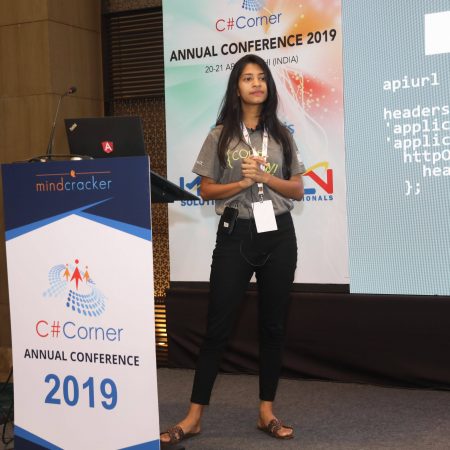
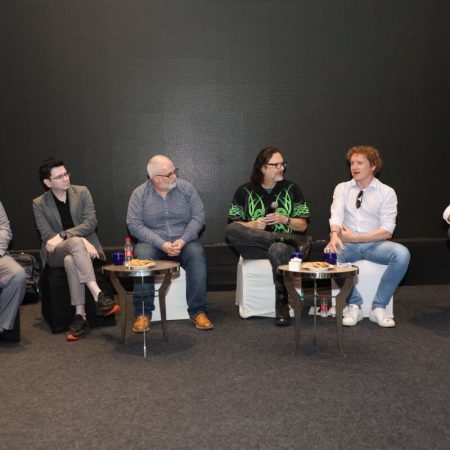
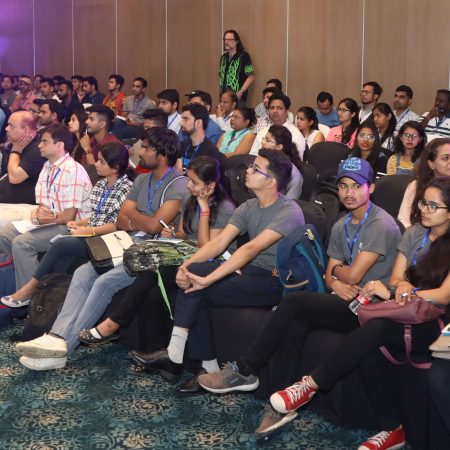
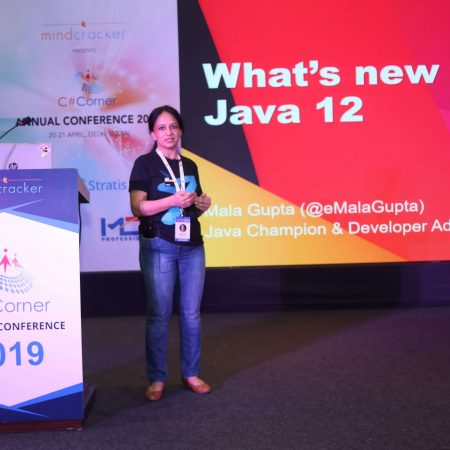
The subject fits naturally within the broader discussions around C#, Azure, DevOps, web development, data platforms, and distributed systems. Developers and technical leaders looking for conference perspectives on these areas can explore the C# Corner Annual Conference for sessions and speaker insights connected to modern Microsoft technologies.
Assessing the application before migration
A reliable migration begins with an inventory. Record the application type, target framework version, project structure, database engine, authentication method, file-system usage, scheduled tasks, third-party packages, external integrations, and operational dependencies. An application that appears to be a simple ASP.NET website may also include Windows services, COM components, registry settings, reporting engines, and background jobs that require separate treatment.
Dependency analysis tools can reveal APIs that are unavailable or behave differently in modern .NET. Review packages for maintained alternatives, check whether vendor libraries support .NET or .NET Standard, and identify components tied specifically to Windows. Native DLLs, legacy encryption providers, System.Drawing usage, WCF services, and old configuration APIs deserve early attention because they frequently influence the target architecture.
The team should also establish measurable goals. These might include reducing infrastructure maintenance, supporting Linux containers, improving deployment frequency, lowering hosting costs, or handling seasonal traffic more effectively. Defining success criteria prevents the project from becoming a technology exercise with no clear business outcome.
Choosing a migration path
There is no single route from .NET Framework to modern .NET. A small, well-structured ASP.NET Core application may be suitable for a direct port. A large monolith with extensive Web Forms, WCF, or proprietary dependencies may require incremental modernization. In that case, the existing system can continue serving users while selected capabilities move behind APIs or newly developed services.
The strangler pattern is useful for gradually replacing legacy functionality. New endpoints can be implemented in ASP.NET Core and routed through Azure Application Gateway, Azure Front Door, or another suitable entry point. Over time, individual modules are redirected to modern services until the remaining framework code becomes small enough to retire or isolate.
A side-by-side deployment can also reduce risk. The original application remains available while a modern version receives controlled traffic through a staging slot, reverse proxy, or feature flag. This approach supports comparison of response times, error rates, business results, and user behavior before a wider release.
Preparing code and dependencies
Modern .NET uses a different project system, hosting model, and configuration approach. Older applications commonly store settings in web.config, depend on machine-level configuration, or expect IIS to manage application behavior. ASP.NET Core typically uses appsettings files, environment variables, dependency injection, middleware, and an explicit startup pipeline.
Refactoring should focus on boundaries rather than cosmetic changes. Extract business rules from Web Forms code-behind, isolate data access, introduce interfaces around external systems, and replace static global state with managed services or scoped dependencies. This work makes the application easier to test and gives the migration team clearer seams for later decomposition.
Authentication deserves particular care. Forms Authentication, Windows Authentication, and custom membership providers may need to evolve toward Microsoft Entra ID, OpenID Connect, OAuth 2.0, or a centralized identity service. Session state, data protection keys, and cryptographic settings must be configured consistently when multiple instances run in Azure.
| Migration concern | Legacy .NET Framework approach | Modern .NET and Azure approach |
|---|---|---|
| Hosting | Windows Server and IIS | Azure App Service, containers, or Azure Kubernetes Service |
| Configuration | web.config and machine settings | appsettings, environment variables, and Key Vault |
| Scaling | Manual server provisioning | Autoscale, managed instances, and load balancing |
| Authentication | Forms, Windows, or custom providers | Microsoft Entra ID and OpenID Connect |
| Background work | Windows Services or scheduled tasks | WebJobs, Functions, worker services, or container jobs |
| Deployment | Manual copying or server packages | CI/CD pipelines with slots and automated tests |
| Observability | Event Viewer and custom logs | Application Insights, Azure Monitor, and centralized logging |
Designing the Azure landing zone
Azure architecture should be selected according to the application’s workload, not simply because a service is available. Azure App Service is often appropriate for web applications that need managed hosting, deployment slots, autoscaling, and straightforward integration with databases and identity services. It can provide a relatively low-friction destination for many ASP.NET Core workloads.
Containers offer a stronger boundary when the application needs a consistent runtime, custom system packages, or portability across environments. Azure Container Apps can suit event-driven or containerized services with less operational overhead, while Azure Kubernetes Service is better suited to organizations that already have Kubernetes expertise and genuinely need its orchestration capabilities.
The data tier may need as much planning as the application tier. Azure SQL Database can host many SQL Server workloads, but compatibility checks should cover stored procedures, linked servers, SQL Agent jobs, collation, permissions, and transaction behavior. Large file shares, local uploads, and cached data should be moved toward Azure Blob Storage, Azure Files, or a distributed caching service rather than retained on ephemeral application instances.
Network and security design should be established before production deployment. Use private endpoints where appropriate, apply managed identities instead of embedded credentials, store secrets in Azure Key Vault, and define network rules through a controlled landing zone. Logging, backup, disaster recovery, and cost monitoring should be treated as core architecture rather than later additions.
Validating performance and behavior
A successful build does not prove that a migration is safe. Automated unit, integration, regression, and user-acceptance tests should cover critical workflows before traffic is moved. Pay close attention to date and time handling, encoding, culture settings, serialization, authorization rules, file uploads, and database transactions, since these areas can change subtly across runtimes.
Load testing should represent real usage patterns. Measure startup time, memory consumption, connection pool behavior, database latency, queue depth, and response times under both steady and burst traffic. Cloud hosting can expose assumptions that were hidden on a dedicated server, such as reliance on local disk, in-process session state, or a single machine’s clock and memory.
Observability enables safe decisions during cutover. Instrument requests, dependencies, exceptions, business events, and background jobs with Application Insights or another compatible monitoring platform. Establish baseline metrics from the existing system, then compare them with the Azure deployment. A canary release or staged traffic shift allows the team to detect problems while the rollback path remains available.
Deployment automation should build the application, run security and quality checks, execute database migration steps, publish artifacts, and promote environments consistently. Infrastructure as code helps reproduce resources and reduces configuration drift. Blue-green deployment, deployment slots, and feature flags can further separate release activity from user impact.
Managing cost, security, and team readiness
Cloud migration changes the financial model. A server purchase becomes a combination of compute, storage, database, network, monitoring, backup, and support costs. Estimate usage with realistic traffic assumptions, configure budgets and alerts, review idle resources, and select reserved capacity only after usage patterns are stable. A technically successful migration can still disappoint if the operating model is not financially controlled.
Security practices must evolve with the platform. Scan dependencies, remove unsupported libraries, enforce modern TLS settings, limit administrative access, and apply least-privilege permissions to applications and pipelines. Managed identities reduce secret exposure, while centralized policy and vulnerability monitoring provide stronger governance across environments.
Teams also need practical knowledge of modern .NET, Azure operations, distributed caching, cloud networking, container workflows, and automated delivery. Pairing application developers with platform engineers can shorten the learning curve. Documentation should cover deployment, diagnostics, recovery procedures, configuration ownership, and decisions made during the migration.
A practical execution sequence
A phased plan keeps technical uncertainty visible and limits the size of each release. Start with a representative but non-critical workload or module, then use its findings to refine tooling, standards, and estimates. Avoid choosing only the easiest application, because a proof of concept that contains no meaningful legacy constraints may provide false confidence.
The following recommendations create a practical foundation:
- Build a complete dependency and runtime inventory before changing project files.
- Select a pilot that exposes important integration and hosting risks without threatening core operations.
- Externalize configuration, secrets, sessions, files, and scheduled work before scaling out.
- Automate testing, infrastructure provisioning, deployment, monitoring, and rollback.
- Measure business outcomes alongside technical metrics such as latency, availability, and cloud spend.
After the pilot, migrate related capabilities in vertical slices that include code, data access, deployment, monitoring, and operational documentation. Retire obsolete infrastructure as soon as the replacement is stable, but preserve a tested rollback path during the agreed transition period. Each completed slice should leave the platform simpler, more observable, and easier to change.
A disciplined approach to migrating legacy .NET Framework apps to .NET Core on Azure allows modernization to proceed without treating the existing system as disposable. Assess the current estate, select the right hosting model, replace hidden server assumptions, and move traffic through measurable stages. Begin with a dependency review and a small production-relevant pilot, then use the results to guide the next release.









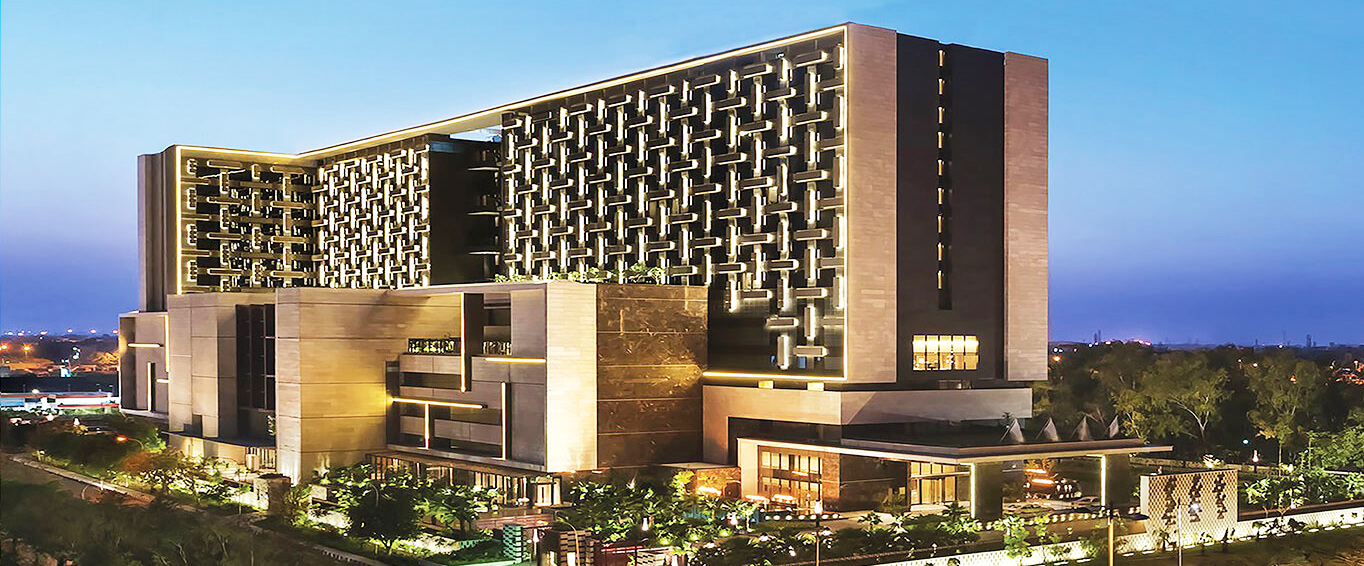
1, CBD, Maharaj Surajmal Road, Near Yamuna Sports Complex, Delhi, 110032




GENERAL QUERIES
Manish Tewatia
manish@csharpcon.com
+91-9718-431-042
TICKET QUERIES
Atul Gupta
conference@csharpcon.com
+91-9910-125-804