

Presents


Magnus Mårtensson
Microsoft Regional Director, Azure MVP, CEO Loftysoft

Avirag Jain
Director & CTO R Systems

Mahesh Chand
Founder C# Corner, CEO Mindcracker

Chris Gali
CEO & Co-Founder Graphite

Subinder Khurana
Chief Architect StoryProcess, Founder NASSCOM DeepTech Club

Bryan Rishforth
Investor, Chairman Graphite

Bryn Everson
Director Biz Dev Graphite

Raj Tiwari
Digital Transformation Leader, Futurist and Visionary

Joseph Guadagno
Microsoft MVP, Lead Quicken Loans

Nikita Sachdev
Entrepreneur, Blockchain Enthusiast & Advisor, Social Media Influencer

Doug Wagner
COO & Founder Adapt Technical Group

Ritesh Modi
Architect, Senior Evangelist, Cloud Architect

Crystal Wenrick
Director Communications Mindcracker

Allen O’Neill
Microsoft MVP, Consulting Engineer/Architect
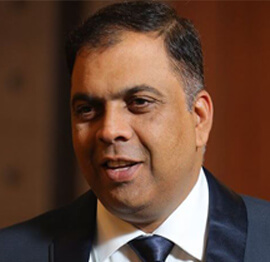
Praveen Kumar
CEO MCN Solutions

Chris Love
Founder Love2Dev, Microsoft MVP, Author

Sanjay Vyas
Microsoft Regional Director, Microsoft MVP, Founder & CEO SkillLabs Technologies

Veena Sarda
Deep Learning Consultant, Author

Sekhar Srinivasan
C# Corner MVP, Microsoft Certified Trainer, Pluralsight Author

Lalit Bansal
Founder & CEO - EIY SYS

Navdeep Garg
CEO Revinfotech

Prakash Tripathi
Tech Manager/Leader, Microsoft MVP, Blogger

Bhavna Jain
Breakthrough Consultant

Naveen Sharma
Enterprise Architect, Leadership Coach, Author

Vidya Vrat Agarwal
Principal Architect, Microsoft MVP, Author

Sheetal Agarwal
Founder Clownselors, Medical Clown, Trainer

Abhishek Kant
Founder GTM Catalyst

Vishnu Saran
Founder & CEO VoiceQube

Sandeep Soni
Founder & CEO Deccansoft, Microsoft Certified Trainer

Parveen Malik
AVP InfoSec & Vulnerability Management, Information Security Expert

Nitin Pandit
Microsoft MVP, Developer Evangelist, Author

Niloshima Srivastava
C# Corner MVP, Tech Architect, Trainer, Blogger

Bala Chirtsabesan
Senior Software Engineer at Microsoft, Author

Manoj Mittal
Sr. Technical Architect, C# Corner MVP, Author

Chandni Di
Co-Founder Voice of Slum

Vithal Wadje
Technical Lead, Microsoft MVP, Author

Shivam Ahuja
Founder SkillCircle, Business Mentor

Chervine Bhiwoo
Solution Architect, Microsoft MVP, Author

Saurabh Jain
Vice President Paytm, Founder Fun2Do Labs, Author

Vinay Solanki
Head IoT at Lenovo, Founder IoT-NCR

Anshu kumari
Founder Blockchainkids, Inventor, Trainer

Amit Singal
CEO Startup Buddy

Dev Pratap
Co-Founder & CEO Voice of Slum

Amey Vartak
Technology Consultant, Full Stack Developer, C# Corner MVP, Author

Viswanatha Swamy
Principal Software Engineer, C# Corner MVP, Author

Sanket Verma
Research Engineer @ Ballistics (Forensics) and Chair, PyData Delhi

Sourabh Somani
Lead Developer, Microsoft MVP, Author

Abhishek Mishra
Software Architect, C# Corner MVP, Author

Siddharth Vaghasia
Technical Consultant, C# Corner MVP, Blogger

Bassam Alugili
Senior Software Specialist, Database Expert

S Ravi Kumar
Solution Architect, C# Corner MVP, Author

Sundaram Subramanian
Full Stack Developer, C# Corner MVP, Speaker

Deepesh Somani
Solution Architect, Microsoft MVP, Author

Debasis Saha
Technical Project Manager, C# Corner MVP, Blogger, Author

Vipul Jain
Software Architect, C# Corner MVP, Author

Akshay Patel
Technical Architect, Microsoft Certified Trainer, C# Corner MVP, Author

Stephen Simon
RPA Developer, Evangelist, Author

Vivek Sharma
Founder Kingster636, AR/VR Specialist

Jeetendra Gund
Technical Lead, C# Corner MVP, Author

Sujal Beniwal
AI Enthusiast, Student

M Viknaraj
Microsoft MVP, Azure Architect, Author

Prasham Sabadra
Software Architect, C# Corner MVP, Trainer, Author

Aakash Maurya
Senior Developer, C# Corner MVP, Speaker

Ankit Sharma
Senior Software Engineer, C# Corner MVP, Author

Mangesh Gaherwar
Team Lead, C# Corner MVP, Author

Viral Jain
Technical Consultant, C# Corner MVP, Author

Bhasker Das
Solution Architect, Evangelist

Manish Dwivedi
Associate Project Manager

Ck Nitin
Programmer, Author

Rohit Gupta
Technical Trainer, Author

Manish Tewatia
Full-stack Marketer, UX Designer

Bhavya Gaur
Technical Illustrator

Rohit Tomar
SEO/SMO Expert
Web Track
Cloud & Data Track
Dev Track
Registration & Breakfast
Future of Desktop Apps with JS (ElectronJs)
Nitin Pandit
Building Serverless Microservices Using Microsoft Azure
Vithal Wadje
Innovating RPA: A Robot for Every Person
Stephen Simon
Managing Cloud Storage Accounts using Logic Apps
Viknaraj Manogararajah
Data visualization using Python
Sekhar Srinivasan
Going Cross platform with AR Foundation
Vivek Sharma
Keynote
Managing your Azure dependencies in ASP.NET Core apps using VS
Bala Chirtsabesan
Securing Applications on Intelligent Azure
Abhishek Mishra
Getting started with Blazor the Framework of Future
S Ravi Kumar
Lunch
Build Progressive Web Apps using Angular 9
Debasis Saha
Build and deploy to any platform using Azure DevOps
Chervine Bhiwoo
Deep Dive in Azure Service Bus
Akshay Patel
Build a Native Mobile Application using React Native and JavaScript
Joseph Guadagno
Making sense of Web Job, Web Job SDK and Functions in Azure
Prakash Tripathi
CloudFront Distribution in AWS
Viral Jain
Tea Break
Introduction to PowerBI
Aakash Maurya
Build Advanced SPFx solutions with React and Graph API
Siddharth Vaghasia
Build Business Intelligence Analyst (BIA) Skills
Sundaram Subramanian
Deep dive of Power Platform – AI BUILDER
Prasham Sabadra
Panel 1
What's new in SharePoint development
Vipul Jain
Build a SSO (Single Sign On) based Native JavaScript application with Microsoft Identity within 10 minutes
Manoj Mittal
Panel 2
Applications and working of AI
Veena Sarda
Deploying serverless API's with .Net core 3.0 on AWS & Azure
Amey Vartak
Panel 3
Blockchain with .NET Core (Ark)
Anshu Kumari
Closing Note & Prize Distribution
Dev Track
Cloud Track
Architecture Track
Emerging Tech Track
Registration & Breakfast
Creating Full-Stack Web Apps Using Server-Side Blazor
Ankit Sharma
Real time face recognition with MS Cognitive Services
Niloshima Srivastava
Building Scalable APIs with GraphQL
Jeetendra Gund
Future of development with AI and Blockchain
Navdeep Garg
Debugging Tips and Tricks with Visual Studio 2019
Joseph Guadagno
Azure Containers
Abhishek Kant
Enterprise Architecture
Naveen Sharma
Bot Framework - learn it fast and look like a boss!
Allen O’Neill
Keynote
.Net Core & C# 8 Performance
David McCarter
Working with Azure kubernetes services
Ritesh Modi
Becoming an Architect
Vidyavrat Agarwal
Why Techies Need to Learn Product Management
Saurabh Jain
Lunch
Build a rules engine in .Net Core
Sanjay Vyas
Building CI and CD Pipeline using Azure DevOps
Sandeep Soni
Entity Framework Core - Tips and Tricks, Performance Optimization, and Tuning
Bassam Alugili
Hacking your way into Data Science
Sanket Verma
Speed up your .Net Core Website
Sourabh Somani
Azure
Magnus Mårtensson
Demystifying Open Distro for Elasticsearch
Suman Debnath
Future of Data
Shivam Ahuja
Tea Break
gRPC with C# and .Net Core
Mangesh Gaherwar
Panel 1
Essentials of Cloud security
Parveen Malik
Power platform and Dynamics 365
Deepesh Somani
Microservices - the gRPC Way
Viswanatha Swamy
Panel 2
Reserved
Reserved
Closing Note & Prize Distribution
Building serverless APIs with Azure Functions and Durable Functions
Serverless APIs let development teams expose business capabilities without managing virtual machines, operating system patches, or an always-running web server. On Microsoft Azure, Azure Functions provides the execution model for HTTP endpoints, event handlers, scheduled jobs, and background processing. Its consumption-based options can also align infrastructure cost with actual demand.
Durable Functions extends this model with stateful workflows. Instead of forcing a request handler to complete every operation in one short execution, developers can coordinate multiple activities, pause for external input, retry unreliable work, and track progress through a durable orchestration. This is useful for order processing, document analysis, approvals, data synchronization, and long-running integrations.
A sound design still requires more than selecting a trigger and deploying code. API contracts, authentication, idempotency, observability, data access, and hosting limits all influence whether a serverless application remains reliable under real traffic. The following practices show how to combine ordinary function endpoints with durable workflows in a maintainable architecture.
Why serverless API design matters
A typical Azure Functions API begins with an HTTP-triggered function. The endpoint validates the request, applies authorization, and either returns a response directly or starts a background orchestration. Simple operations, such as retrieving a product or updating a preference, can remain short-lived and stateless. Keeping these paths small improves response time and makes them easier to test.
Long-running work follows a different pattern. An API can accept a command, create a unique instance identifier, and return HTTP 202 Accepted with a status URL. The client then checks the orchestration status or receives a callback when processing finishes. This avoids holding an HTTP connection open while several services perform work.
The separation also clarifies responsibility. HTTP functions handle protocol concerns such as headers, status codes, and content negotiation. Activity functions perform individual tasks, such as resizing an image, charging a payment provider, or writing a record. The orchestrator coordinates those activities and records progress through the Durable Task framework.
Shape HTTP functions around clear contracts
A production API should treat its request and response schemas as deliberate contracts. Use typed C# models, validate required fields early, and return consistent error objects with meaningful status codes. A malformed payload should produce a client error, while a failed dependency should be represented as a service error without exposing stack traces or internal connection details.
Functions should remain stateless between requests. Durable state belongs in an orchestration, while business data belongs in an appropriate persistence service. Dependency injection can supply repositories, clients, and configuration, but those dependencies should be safe for the Functions hosting model. Reusing HTTP clients and SDK clients prevents unnecessary socket exhaustion and connection overhead.
Bindings can reduce boilerplate for common integrations, but direct SDK usage is often preferable when an operation needs fine-grained control over transactions, consistency, pagination, or retry behavior. For workloads that need rapid writes and flexible partitioning, teams can review Cosmos DB guidance before deciding how API requests and workflow activities should distribute data.
Coordinate long-running work with Durable Functions
A durable orchestrator describes a workflow as code. It can call activities in sequence, run independent activities in parallel, wait for timers, or pause for an external event. For example, an onboarding process might create an account, provision resources, send a verification message, and wait for approval. Each step can be tracked without keeping a server process alive.
Orchestrator code must be deterministic because the runtime may replay it to rebuild state. Avoid placing direct network calls, random number generation, current-time reads, or non-repeatable side effects inside the orchestrator. Put those operations in activity functions and pass the results back to the coordinator. When a timestamp is needed, use the orchestration context's time abstraction rather than the system clock.
Retries should reflect the behavior of the dependency. A transient database timeout may deserve a few delayed attempts, while an invalid payment request should fail immediately. Durable Functions supports retry policies with intervals and backoff, but retrying an activity that is not idempotent can create duplicate effects. Use operation identifiers, deduplication records, or conditional writes so a replayed or retried step remains safe.
Fan-out and fan-in patterns are valuable for independent work, such as processing many files or calculating results for multiple customers. The orchestrator starts several activities, waits for them together, and aggregates their outputs. Large batches still require care: limit concurrency, avoid oversized orchestration history, and split massive jobs into manageable sub-orchestrations.
Protect, monitor, and evolve the API
Authentication should be enforced at the edge whenever possible. Azure API Management, Microsoft Entra ID, or an identity-aware gateway can validate tokens before requests reach the function. Function keys are useful for limited scenarios, but they should not be treated as a complete identity and authorization strategy for sensitive APIs. Within the application, verify scopes, roles, tenant boundaries, and resource ownership.
Managed identities allow functions to access Azure Storage, Key Vault, databases, and other services without embedding long-lived secrets in application settings. Store configuration in environment-specific settings and use Key Vault references or a comparable secret-management approach. Network restrictions, private endpoints, and carefully scoped role assignments add protection for internal services.
Observability must cover both the HTTP request and the workflow instance. Application Insights can capture dependencies, exceptions, latency, and custom telemetry. Include a correlation identifier in API responses and logs, and pass the durable instance ID through downstream calls when appropriate. For a failed orchestration, operators should be able to identify the activity, input, retry history, and dependency response that caused the failure.
Versioning deserves attention because serverless APIs can change frequently. Use route versions or content negotiation for incompatible schema changes, and keep old workflow definitions available until active instances finish. Durable orchestration history can outlive a deployment, so changing serialized data shapes or renaming activity references requires a migration strategy rather than an immediate code replacement.
Compare hosting and workflow choices
Azure Functions offers several hosting options, and the right selection depends on traffic patterns, startup requirements, networking, and execution duration. A consumption-oriented plan can minimize idle cost, while Premium or dedicated hosting can provide prewarmed instances, more predictable performance, and advanced networking controls.
| Concern | HTTP-triggered function | Durable orchestration | Dedicated or Premium hosting |
|---|---|---|---|
| Best fit | Short API requests and lightweight commands | Stateful, multi-step, long-running processes | Consistent latency and specialized networking |
| State model | External state only | Runtime-managed workflow state plus external data | Depends on the application design |
| Scaling behavior | Scales with incoming events | Scales orchestrators and activities separately | Scales through configured instances and rules |
| Main risk | Cold starts or request timeouts | Replay mistakes, oversized history, duplicate effects | Paying for capacity during low demand |
| Typical response | Immediate result or accepted command | Status endpoint, callback, or completed result | Direct API response or background processing |
| Operational focus | Endpoint latency and dependency health | Instance progress, retries, and stuck activities | Capacity, deployment slots, and availability |
The table highlights why a durable workflow should not be used for every endpoint. Adding orchestration introduces state, history, replay behavior, and operational concepts. A direct function is usually the better fit for a quick read or uncomplicated write. Durable Functions earns its place when the process must survive delays, coordinate steps, or wait for an event.
The storage provider also affects behavior. Durable Functions commonly relies on Azure Storage, while alternative providers may be appropriate for particular scale or consistency requirements. Evaluate partitioning, transaction boundaries, regional placement, and operational ownership instead of choosing a provider solely because it is familiar.
Avoid common reliability traps
Cold starts can affect applications with infrequent traffic, especially when the function uses a large dependency graph or heavy startup logic. Reduce initialization work, keep packages focused, and select a hosting plan with prewarmed capacity when latency requirements justify it. Load testing should measure the first request after idle periods as well as steady-state performance.
Timeouts should be designed across the entire request chain. An API gateway, function host, database client, and downstream service may each impose a different limit. If a process can exceed the shortest limit, return an accepted response and move the work into a durable orchestration. Clients need a documented status resource and a clear policy for expiration or cancellation.
Idempotency is essential for commands that may be retried by clients, gateways, queues, or the Functions runtime. Accept an idempotency key, associate it with the intended operation, and return the original result when the same request arrives again. For workflow activities, use durable business identifiers and transactional checks where possible.
Testing should include unit tests for validation and business rules, orchestration tests for branching and retry paths, and integration tests against realistic Azure dependencies. Local emulators can help with fast feedback, but they do not replace tests in a deployment environment. Include failure injection for throttling, timeouts, partial completion, and duplicate delivery.
Recommendations for production readiness
A practical implementation sequence begins with the smallest reliable vertical slice: one authenticated endpoint, one persistence operation, and one observable deployment. Add durable coordination after the direct API contract is stable. This makes it easier to distinguish protocol defects from workflow defects and prevents premature complexity.
Before opening the API to broad usage, review the following controls:
- Define request, response, error, and status-resource schemas with explicit versioning.
- Use managed identity, least-privilege roles, and centralized secret management.
- Make every external side effect idempotent before adding retries or fan-out.
- Set alerts for failed orchestrations, excessive latency, throttling, and repeated retries.
- Load-test cold starts, concurrency limits, dependency failures, and large workflow histories.
Deployment automation should publish infrastructure, configuration, code, and role assignments consistently across environments. Staged releases or deployment slots can reduce risk, while durable instances require special care during rollouts. Keep backward-compatible activity names and data contracts until existing executions have completed.
Serverless architecture becomes valuable when its boundaries are intentional. Use HTTP-triggered functions for concise API behavior, Durable Functions for stateful coordination, and managed Azure services for storage, identity, messaging, and monitoring. With those roles separated, the platform can scale individual responsibilities without turning every request into an opaque background job.
Use these patterns as a design baseline for your next Azure project, then validate them through a small working API and a failure-focused test cycle. A well-defined contract, a deterministic workflow, and clear operational telemetry provide the foundation for serverless services that are easier to release and safer to run.














1, CBD, Maharaj Surajmal Road, Near Yamuna Sports Complex, Delhi, 110032





GENERAL QUERIES
Manish Tewatia
manish@csharpcon.com
+91-9718-431-042
TICKET QUERIES
Atul Gupta
conference@csharpcon.com
+91-9910-125-804