

Presents


Magnus Mårtensson
Microsoft Regional Director, Azure MVP, CEO Loftysoft

Avirag Jain
Director & CTO R Systems

Mahesh Chand
Founder C# Corner, CEO Mindcracker

Chris Gali
CEO & Co-Founder Graphite

Subinder Khurana
Chief Architect StoryProcess, Founder NASSCOM DeepTech Club

Bryan Rishforth
Investor, Chairman Graphite

Bryn Everson
Director Biz Dev Graphite
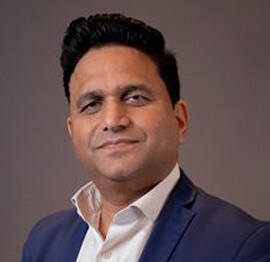
Raj Tiwari
Digital Transformation Leader, Futurist and Visionary

Joseph Guadagno
Microsoft MVP, Lead Quicken Loans

Nikita Sachdev
Entrepreneur, Blockchain Enthusiast & Advisor, Social Media Influencer

Doug Wagner
COO & Founder Adapt Technical Group

Ritesh Modi
Architect, Senior Evangelist, Cloud Architect

Crystal Wenrick
Director Communications Mindcracker

Allen O’Neill
Microsoft MVP, Consulting Engineer/Architect
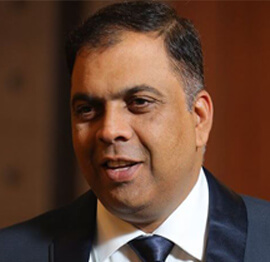
Praveen Kumar
CEO MCN Solutions

Chris Love
Founder Love2Dev, Microsoft MVP, Author

Sanjay Vyas
Microsoft Regional Director, Microsoft MVP, Founder & CEO SkillLabs Technologies

Veena Sarda
Deep Learning Consultant, Author

Sekhar Srinivasan
C# Corner MVP, Microsoft Certified Trainer, Pluralsight Author
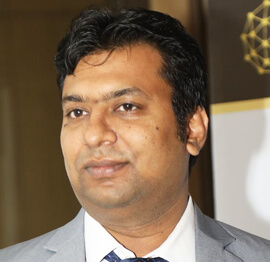
Lalit Bansal
Founder & CEO - EIY SYS

Navdeep Garg
CEO Revinfotech

Prakash Tripathi
Tech Manager/Leader, Microsoft MVP, Blogger
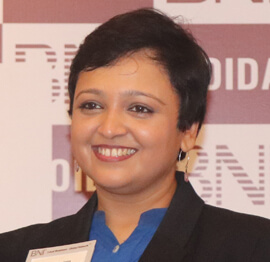
Bhavna Jain
Breakthrough Consultant

Naveen Sharma
Enterprise Architect, Leadership Coach, Author

Vidya Vrat Agarwal
Principal Architect, Microsoft MVP, Author

Sheetal Agarwal
Founder Clownselors, Medical Clown, Trainer

Abhishek Kant
Founder GTM Catalyst

Vishnu Saran
Founder & CEO VoiceQube

Sandeep Soni
Founder & CEO Deccansoft, Microsoft Certified Trainer

Parveen Malik
AVP InfoSec & Vulnerability Management, Information Security Expert

Nitin Pandit
Microsoft MVP, Developer Evangelist, Author

Niloshima Srivastava
C# Corner MVP, Tech Architect, Trainer, Blogger

Bala Chirtsabesan
Senior Software Engineer at Microsoft, Author

Manoj Mittal
Sr. Technical Architect, C# Corner MVP, Author

Chandni Di
Co-Founder Voice of Slum

Vithal Wadje
Technical Lead, Microsoft MVP, Author

Shivam Ahuja
Founder SkillCircle, Business Mentor

Chervine Bhiwoo
Solution Architect, Microsoft MVP, Author

Saurabh Jain
Vice President Paytm, Founder Fun2Do Labs, Author

Vinay Solanki
Head IoT at Lenovo, Founder IoT-NCR

Anshu kumari
Founder Blockchainkids, Inventor, Trainer

Amit Singal
CEO Startup Buddy

Dev Pratap
Co-Founder & CEO Voice of Slum

Amey Vartak
Technology Consultant, Full Stack Developer, C# Corner MVP, Author

Viswanatha Swamy
Principal Software Engineer, C# Corner MVP, Author

Sanket Verma
Research Engineer @ Ballistics (Forensics) and Chair, PyData Delhi

Sourabh Somani
Lead Developer, Microsoft MVP, Author

Abhishek Mishra
Software Architect, C# Corner MVP, Author

Siddharth Vaghasia
Technical Consultant, C# Corner MVP, Blogger

Bassam Alugili
Senior Software Specialist, Database Expert

S Ravi Kumar
Solution Architect, C# Corner MVP, Author

Sundaram Subramanian
Full Stack Developer, C# Corner MVP, Speaker

Deepesh Somani
Solution Architect, Microsoft MVP, Author

Debasis Saha
Technical Project Manager, C# Corner MVP, Blogger, Author

Vipul Jain
Software Architect, C# Corner MVP, Author

Akshay Patel
Technical Architect, Microsoft Certified Trainer, C# Corner MVP, Author

Stephen Simon
RPA Developer, Evangelist, Author

Vivek Sharma
Founder Kingster636, AR/VR Specialist

Jeetendra Gund
Technical Lead, C# Corner MVP, Author

Sujal Beniwal
AI Enthusiast, Student

M Viknaraj
Microsoft MVP, Azure Architect, Author

Prasham Sabadra
Software Architect, C# Corner MVP, Trainer, Author

Aakash Maurya
Senior Developer, C# Corner MVP, Speaker

Ankit Sharma
Senior Software Engineer, C# Corner MVP, Author

Mangesh Gaherwar
Team Lead, C# Corner MVP, Author

Viral Jain
Technical Consultant, C# Corner MVP, Author

Bhasker Das
Solution Architect, Evangelist

Manish Dwivedi
Associate Project Manager

Ck Nitin
Programmer, Author

Rohit Gupta
Technical Trainer, Author

Manish Tewatia
Full-stack Marketer, UX Designer

Bhavya Gaur
Technical Illustrator

Rohit Tomar
SEO/SMO Expert
Web Track
Cloud & Data Track
Dev Track
Registration & Breakfast
Future of Desktop Apps with JS (ElectronJs)
Nitin Pandit
Building Serverless Microservices Using Microsoft Azure
Vithal Wadje
Innovating RPA: A Robot for Every Person
Stephen Simon
Managing Cloud Storage Accounts using Logic Apps
Viknaraj Manogararajah
Data visualization using Python
Sekhar Srinivasan
Going Cross platform with AR Foundation
Vivek Sharma
Keynote
Managing your Azure dependencies in ASP.NET Core apps using VS
Bala Chirtsabesan
Securing Applications on Intelligent Azure
Abhishek Mishra
Getting started with Blazor the Framework of Future
S Ravi Kumar
Lunch
Build Progressive Web Apps using Angular 9
Debasis Saha
Build and deploy to any platform using Azure DevOps
Chervine Bhiwoo
Deep Dive in Azure Service Bus
Akshay Patel
Build a Native Mobile Application using React Native and JavaScript
Joseph Guadagno
Making sense of Web Job, Web Job SDK and Functions in Azure
Prakash Tripathi
CloudFront Distribution in AWS
Viral Jain
Tea Break
Introduction to PowerBI
Aakash Maurya
Build Advanced SPFx solutions with React and Graph API
Siddharth Vaghasia
Build Business Intelligence Analyst (BIA) Skills
Sundaram Subramanian
Deep dive of Power Platform – AI BUILDER
Prasham Sabadra
Panel 1
What's new in SharePoint development
Vipul Jain
Build a SSO (Single Sign On) based Native JavaScript application with Microsoft Identity within 10 minutes
Manoj Mittal
Panel 2
Applications and working of AI
Veena Sarda
Deploying serverless API's with .Net core 3.0 on AWS & Azure
Amey Vartak
Panel 3
Blockchain with .NET Core (Ark)
Anshu Kumari
Closing Note & Prize Distribution
Dev Track
Cloud Track
Architecture Track
Emerging Tech Track
Registration & Breakfast
Creating Full-Stack Web Apps Using Server-Side Blazor
Ankit Sharma
Real time face recognition with MS Cognitive Services
Niloshima Srivastava
Building Scalable APIs with GraphQL
Jeetendra Gund
Future of development with AI and Blockchain
Navdeep Garg
Debugging Tips and Tricks with Visual Studio 2019
Joseph Guadagno
Azure Containers
Abhishek Kant
Enterprise Architecture
Naveen Sharma
Bot Framework - learn it fast and look like a boss!
Allen O’Neill
Keynote
.Net Core & C# 8 Performance
David McCarter
Working with Azure kubernetes services
Ritesh Modi
Becoming an Architect
Vidyavrat Agarwal
Why Techies Need to Learn Product Management
Saurabh Jain
Lunch
Build a rules engine in .Net Core
Sanjay Vyas
Building CI and CD Pipeline using Azure DevOps
Sandeep Soni
Entity Framework Core - Tips and Tricks, Performance Optimization, and Tuning
Bassam Alugili
Hacking your way into Data Science
Sanket Verma
Speed up your .Net Core Website
Sourabh Somani
Azure
Magnus Mårtensson
Demystifying Open Distro for Elasticsearch
Suman Debnath
Future of Data
Shivam Ahuja
Tea Break
gRPC with C# and .Net Core
Mangesh Gaherwar
Panel 1
Essentials of Cloud security
Parveen Malik
Power platform and Dynamics 365
Deepesh Somani
Microservices - the gRPC Way
Viswanatha Swamy
Panel 2
Reserved
Reserved
Closing Note & Prize Distribution
Building Resilient Microservices with Azure Service Fabric
Microservices can help teams release features independently, scale individual workloads, and align software boundaries with business capabilities. They also introduce more network calls, distributed state, asynchronous processing, and operational decisions than a monolithic application. Resilience must therefore be designed into the system rather than added after the first outage.
Azure Service Fabric provides a platform for deploying and managing distributed applications, including stateless services, stateful services, containers, and guest executables. Its programming models, service placement, health monitoring, and upgrade controls give engineering teams useful foundations for building systems that continue operating when processes, nodes, networks, or dependencies fail.
The subject fits naturally within the cloud, DevOps, and Microsoft development themes explored through the conference program. For developers working with C#, Azure, and distributed systems, Service Fabric offers practical patterns for turning failure handling into an everyday engineering discipline.
Why Resilience Starts With Architecture
A resilient microservice has a clear responsibility, a carefully defined contract, and a controlled relationship with other services. Bounded contexts should avoid unnecessary coupling, while APIs should communicate expected errors, timeouts, idempotency rules, and versioning policies. A service that owns a capability should also own the data and business decisions associated with that capability.
Failure modeling should begin before implementation. Consider what happens when a downstream API responds slowly, a message is delivered twice, a replica becomes unavailable, or a deployment interrupts several instances at once. These scenarios reveal whether the architecture can degrade gracefully or whether one unhealthy dependency can stop an entire business workflow.
Synchronous calls are useful for short operations with immediate responses, but they create availability dependencies. Asynchronous messaging can separate workloads and absorb temporary pressure through queues. The best design uses each communication style deliberately, with clear limits on retries, payload sizes, and processing time.
Service Fabric Building Blocks
Service Fabric applications are organized into services that run as replicated instances or replicas across a cluster. Stateless services are suitable for compute operations where state resides in an external store or arrives with each request. Stateful services maintain replicated data within the platform, which can reduce application-level coordination for selected workloads.
Reliable Services provide lifecycle management, partitioning, replication, and communication support. Reliable Actors offer a virtual actor model for workloads that benefit from isolated state and single-threaded access patterns. These models can simplify distributed programming, but they do not eliminate the need to understand consistency, partition design, storage limits, and recovery behavior.
A Service Fabric cluster uses nodes, node types, fault domains, and upgrade domains to distribute workloads. Appropriate placement reduces the chance that a rack, host group, or planned maintenance operation removes all replicas of a service. Capacity planning should include CPU, memory, disk, network bandwidth, and the temporary resources required during upgrades or failover.
Designing for Failure and Recovery
Replication improves availability only when replicas are placed and operated correctly. A stateful service should have enough replicas to tolerate the expected number of failures, with primary and secondary replicas spread across suitable fault and upgrade domains. Teams should test quorum loss, replica movement, disk pressure, and node restarts rather than assuming that replication makes every failure invisible.
Partitioning is equally important. A partition key should distribute traffic and state evenly while keeping related operations together. Hot partitions can overwhelm a single replica even when the overall cluster appears underused. Review key distribution with production-like traffic, and establish a migration strategy before partition boundaries become difficult to change.
Client-side resilience also matters. Timeouts should be shorter than the user or workflow deadline, and retries should use bounded exponential backoff with jitter. Retrying a non-idempotent operation can create duplicate charges, records, or side effects. Use idempotency keys, deduplication records, or transactional boundaries where repeated delivery is possible.
| Resilience Concern | Service Fabric Capability | Application Responsibility |
|---|---|---|
| Process or node failure | Replica placement and service failover | Set appropriate replica counts and validate recovery |
| Uneven workload distribution | Partitions and placement policies | Choose effective keys and monitor hot partitions |
| Deployment interruption | Rolling upgrades and health policies | Define health checks, rollback rules, and upgrade timeouts |
| Duplicate messages | Reliable communication and service recovery | Make handlers idempotent and track processing state |
| Dependency outage | Service lifecycle and monitoring | Apply timeouts, circuit breakers, and graceful degradation |
| Data loss risk | Replication and durable storage options | Define backup, restore, retention, and recovery objectives |
Managing State, Data, and Messaging
Stateful microservices should keep only the data they can responsibly replicate, restore, and operate. Reliable Collections can support key-value and queue-style patterns within a Reliable Service, while external databases may be more appropriate for reporting, complex queries, or shared analytical access. The choice should reflect consistency requirements, transaction boundaries, query needs, and recovery objectives.
A distributed transaction spanning several services is usually expensive and fragile. Prefer local transactions within a service and coordinate business workflows with events or sagas. A saga records progress through multiple steps and defines compensating actions when a later step fails. Compensation is a business operation, not a generic database rollback, so it must be designed and tested with domain owners.
Messaging systems need explicit delivery semantics. At-least-once delivery is common and requires consumers to tolerate duplicates. A durable inbox can record received message identifiers, while an outbox can store an event beside the local business change before publishing it. Dead-letter handling, poison-message limits, and replay procedures prevent a single malformed event from repeatedly blocking progress.
Backpressure keeps a busy service from exhausting its resources. Limit concurrent work, cap queue depth where appropriate, reject requests early when capacity is unavailable, and expose meaningful status signals. A service that returns a fast, controlled failure is often more resilient than one that accepts unlimited work and eventually collapses.
Observability, Security, and Operations
Health checks should measure more than whether a process is running. A liveness check can indicate that a process should be restarted, while a readiness check can show whether the instance is prepared to receive traffic. Dependency checks must be used carefully: making readiness depend on every external system can remove all instances during a temporary downstream outage.
Centralized logs, metrics, and distributed traces help teams connect a user-visible error to a specific service, partition, dependency, and deployment. Include correlation identifiers, operation names, retry counts, partition information, and failure categories. Avoid logging secrets or sensitive personal data, and apply consistent retention and access controls.
Service Fabric health reports and cluster events can support automated decisions, but alerts should represent actionable conditions. Useful signals include replica health, failover frequency, queue age, request latency, error rate, resource saturation, and upgrade progress. Alert thresholds should account for normal traffic patterns so that operators can distinguish a short spike from a deteriorating service.
Security is part of availability. Use managed identities where possible, restrict network access, rotate credentials, encrypt data in transit and at rest, and apply least-privilege permissions to services and deployment pipelines. A compromised dependency or expired certificate can produce an outage even when application code is functioning correctly.
Safe Delivery and Disaster Recovery
Rolling upgrades reduce deployment risk by updating services in controlled stages. Health policies should stop or roll back an upgrade when replicas fail to stabilize, error rates rise, or essential dependencies become unavailable. Keep changes small, maintain backward-compatible contracts, and support coexistence between old and new message or API versions during the rollout window.
Testing should include more than unit and integration checks. Run failure-injection exercises that terminate processes, disable nodes, delay dependencies, fill queues, and interrupt deployments. Validate that alerts fire, traffic is redirected, retries remain bounded, and operators can identify the cause from available telemetry.
Disaster recovery requires a separate plan for regional or cluster-level loss. Define recovery time objectives and recovery point objectives for each service, then map them to backups, replicated data, infrastructure automation, and documented runbooks. A backup that has never been restored is an assumption, not a recovery strategy.
Practice restoration on a schedule. Measure how long it takes to provision a cluster, deploy the application, restore data, rebuild secrets, and validate critical workflows. Recovery exercises often expose hidden dependencies such as manually created firewall rules, undocumented configuration, or certificates stored only on an engineer’s workstation.
A Practical Resilience Checklist
Teams can turn these principles into repeatable engineering standards by reviewing them during design, implementation, and release activities:
- Define service ownership, failure boundaries, data ownership, and contract versioning before implementation.
- Select replica counts, partition keys, and placement policies using realistic traffic and failure scenarios.
- Set deadlines, bounded retries, circuit breakers, idempotency controls, and backpressure for every important workflow.
- Instrument logs, metrics, traces, health reports, and deployment events with shared correlation data.
- Automate upgrades, backups, restores, failover tests, and disaster recovery validation through version-controlled pipelines.
A resilience review should involve developers, platform engineers, security specialists, and operations staff. Each group sees different risks: developers understand business consistency, platform teams understand cluster behavior, security teams understand access and exposure, and operators understand the practical cost of diagnosis and recovery.
Turning Reliability Into a Team Habit
Resilient microservices emerge from repeated feedback. Track incidents, near misses, failed deployments, recovery times, and recurring dependency problems. Convert those findings into architecture decisions, automated tests, improved dashboards, and runbook updates instead of treating each event as an isolated interruption.
Azure Service Fabric is most effective when its platform features are paired with disciplined application design. Replication, placement, health policies, and rolling upgrades provide valuable mechanisms, while idempotent workflows, well-defined contracts, observability, secure operations, and tested recovery plans determine how the system behaves under pressure.
Start with one critical workflow, map its dependencies, inject realistic failures, and measure recovery from the perspective of the user and the business. Then apply the lessons across the cluster, the delivery pipeline, and the wider engineering organization to build a cloud platform that can keep serving customers when individual components cannot.














1, CBD, Maharaj Surajmal Road, Near Yamuna Sports Complex, Delhi, 110032





GENERAL QUERIES
Manish Tewatia
manish@csharpcon.com
+91-9718-431-042
TICKET QUERIES
Atul Gupta
conference@csharpcon.com
+91-9910-125-804